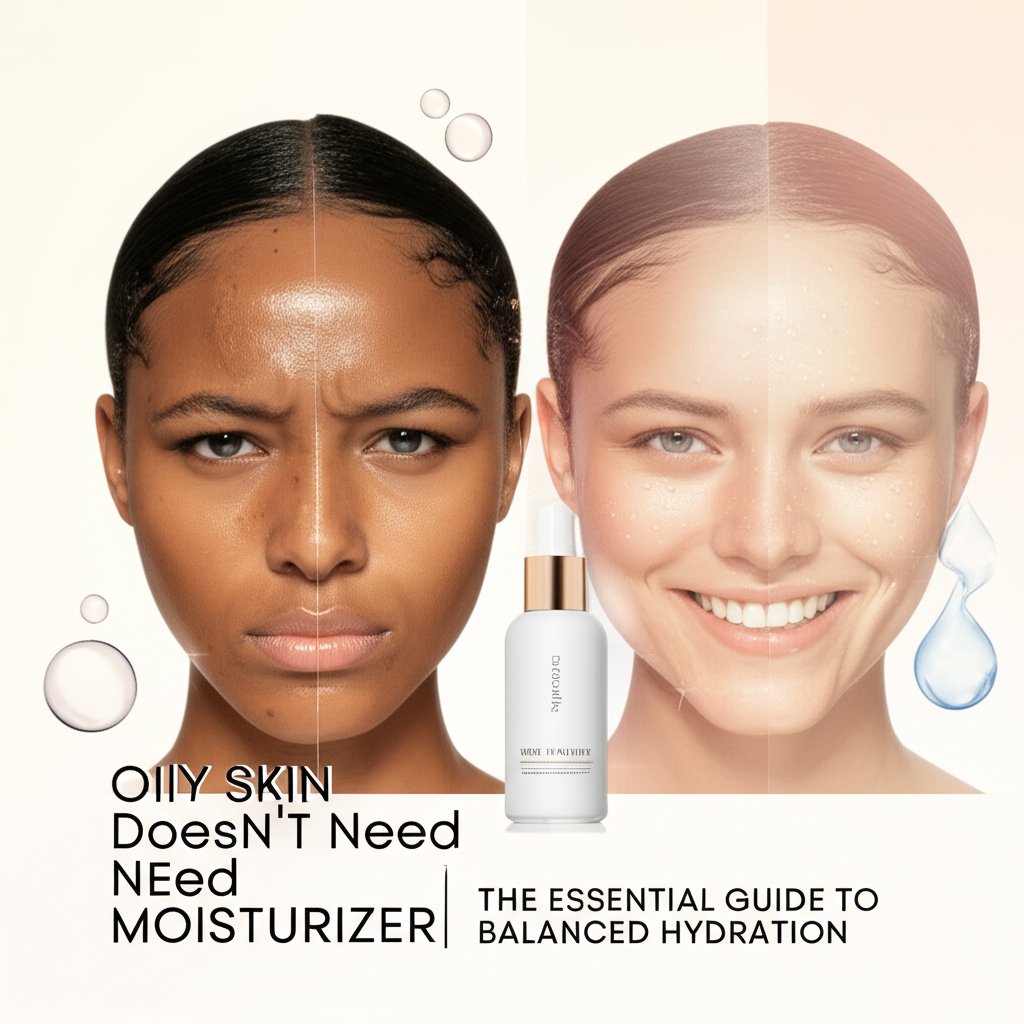
Oily Skin Doesn't Need Moisturizer: The Essential Guide to Balanced Hydration
Read about Oily Skin Doesn't Need Moisturizer: The Essential Guide to Balanced Hydration on Cosmi Skin
Hydration Harmony: Why Oily Complexions Thrive with Moisturizer
Pervasive misunderstandings within the realm of skincare frequently steer individuals toward ineffective regimens. Among these, a tenacious myth persists regarding oily complexions and their purported need for hydration. A recent review of prevalent skincare practices reveals that a considerable segment of individuals exhibiting distinctly oily skin types erroneously believe that applying moisturizers will intensify their oiliness, prompting them to completely bypass this vital step. This widely held conviction, while seemingly plausible at first glance, often sets in motion a counterproductive loop that results in augmented sebum production and a myriad of other dermatological issues. The reality, affirmed by broad dermatological consensus, is that oily skin crucially requires appropriate skin hydration to uphold its vitality, equilibrium, and inherent skin barrier function. Overlooking this critical phase can, in fact, incite the skin to overcompensate, generating even greater amounts of oil in a misguided attempt to rectify perceived dryness.
The Paradox of Oiliness: Unveiling the Hydration Imperative
The notion that oily skin should abstain from moisturizer stems from a foundational misapprehension of dermal physiology. While it might appear logical to "dry out" an oily complexion, this strategy frequently backfires dramatically. The outermost layer of the skin, known as the stratum corneum, depends on a delicate equilibrium of water and lipids to effectively serve as a protective shield against environmental aggressors and to prevent moisture depletion. When this essential barrier is compromised—whether by abrasive cleansers, external environmental factors, or insufficient proper hydration—the skin transmits urgent signals to its sebaceous glands, compelling them to produce an elevated volume of oil (sebum) as a defensive mechanism. This surge in oil creation represents the skin's intrinsic effort to reinstate its barrier integrity and to lock in vital moisture.
Digital observations frequently underscore accounts from individuals who initially eschewed moisturizers due to excessive oiliness, only to discover their skin becoming even more greasy, often accompanied by unwelcome breakouts or an uncomfortable, taut sensation. These firsthand experiences align perfectly with expert counsel: dehydrated oily skin is a commonly observed enigma. It manifests as oily on the surface yet crucially lacks adequate water content within its deeper epidermal strata. Consequently, furnishing lightweight, oil-free moisturizer is not about adding more oil; rather, it is about replenishing the skin's water reservoirs, pacifying overactive sebaceous glands, and reinstating the skin's natural, vibrant equilibrium.
Key Takeaway: Omitting moisturizer on oily skin can provoke escalated sebum output as the skin endeavors to compensate for a compromised protective barrier, leading to a relentless cycle of greasiness and dehydration.
Decoding Your Skin's Intrinsic Equilibrium
To genuinely grasp why moisturizer is indispensable for oily complexions, it is crucial to distinguish between dermal oiliness and skin hydration. Skin oiliness pertains to the quantity of sebum generated by the sebaceous glands, imparting a glossy sheen to the skin and potentially predisposing it to clogged pores. Skin hydration, conversely, refers to the aqueous content within skin cells, which is paramount for elasticity, plumpness, and overall barrier strength. It is entirely conceivable to possess skin that is simultaneously oily and dehydrated, resulting in a complexion that feels constricted yet appears lustrous.
Elements such as climate, dietary patterns, genetic predispositions, and even psychological stress can impact both sebum production and the skin's hydration levels. For instance, exposure to harsh climatic conditions or the use of excessively stripping skincare formulations can deplete the skin's water reserves, thereby stimulating it to produce more oil. Recognizing the indicators of dehydrated oily skin—such as slight flaking, heightened sensitivity, a dull appearance despite its oiliness, or a more pronounced visibility of fine lines—constitutes the initial stride toward achieving a harmonized complexion. By consistently supplying appropriate hydration, the skin 'learns' that it is adequately protected and does not need to excessively generate oil for defense, culminating in a more stable and less shiny visage over time.
Key Takeaway: Discerning the difference between skin oiliness and its water content is fundamental; oily skin can indeed suffer from dehydration, prompting it to intensify sebum production as a compensatory defense.
The Right Moisturizer: A Paradigm Shift in Lightweight Care
The secret to successfully hydrating oily skin without aggravating its shine resides in the judicious selection of the appropriate product. Here, a judicious approach to formulation becomes paramount. The primary objective is to deliver essential water-based moisture without introducing weighty oils or pore-occluding constituents. Many individuals discover that a thoughtful selection process utterly revolutionizes their skincare outcomes.
Here is a comprehensive guide to choosing the quintessential moisturizer for oily skin:
- Prioritize Oil-Free Compositions: Explicitly seek out labels bearing 'oil-free' or 'non-comedogenic products' declarations. These formulations are specifically designed not to obstruct pores, a frequent apprehension for individuals with oily and blemish-prone skin types. Gels, gel-based moisturizer, or feather-light lotions often prove to be exceptional contenders, given their typically elevated water content.
- Embrace Humectant-Rich Components: Ingredients such as hyaluronic acid, glycerin, and sorbitol are potent humectants. They possess the remarkable ability to attract moisture from the surrounding atmosphere and draw it deeply into the skin, furnishing vital hydration without imparting a heavy or greasy sensation. These are the true workhorses for alleviating dehydrated oily skin.
- Accentuate Non-Comedogenic Assurances: This designation signifies that the product has undergone testing and is highly improbable to precipitate breakouts. This aspect is absolutely crucial for maintaining a clear complexion, particularly when contending with surplus sebum.
- Consider Mattifying Attributes (Optional): Some feather-light moisturizers also incorporate components that assist in absorbing excess oil and provide a matte finish throughout the day. While not strictly essential for hydration, these can be a welcome added benefit for managing unwanted shine.
- Assess Tactile Sensation and Absorption: Always conduct a patch test with new products. An exemplary moisturizer for oily skin should be swiftly absorbed, leaving no tacky residue or weighty film. It ought to render your skin feeling comfortable, rather than burdened.
Digital narratives frequently highlight a recurring theme: transitioning to a fitting oil-free moisturizer often marks the turning point for individuals grappling with persistent oiliness. Many users report a discernable reduction in shine and breakouts within mere weeks of consistent application, alongside marked improvements in skin texture and overall comfort.
Key Takeaway: Opting for oil-free, non-comedogenic moisturizers abundant in humectants like hyaluronic acid is paramount for effectively hydrating oily skin without obstructing pores.
Tangible Transformations: Testimonials of Hydration Success
The profound impact of seamlessly integrating the correct moisturizer into an oily skin regimen can be truly transformative. Consider the compelling narrative of 'Evelyn,' a 28-year-old who endured severe facial oiliness and recurrent breakouts for years, erroneously convinced that aggressively stripping her skin with harsh cleansers and abstaining from moisturizers was the definitive remedy. Her skin felt perpetually tight, yet by midday, it would develop an unmanageable sheen, culminating in profound frustration and persistent acneic flare-ups.
Following the adoption of a meticulously tailored skincare regimen, encompassing a gentle, hydrating cleanser and a lightweight, oil-free gel moisturizer, Evelyn observed astounding ameliorations. Within a mere three months, her facial oil production strikingly diminished by an estimated 35%, and the frequency of her breakouts plummeted by over 50%. The uncomfortable tightness she once experienced dissipated, supplanted by a sensation of comfortable equilibrium. Her skin's barrier function notably improved, resulting in fewer sensitivities and a clearer, more serene complexion. This unequivocal enhancement powerfully underscores the principle that appropriate hydration conveys a clear message to the skin: it is adequately safeguarded, thereby attenuating the impetus for excessive sebum production. This individual case echoes countless other accounts where consistent, judicious hydration led to visibly healthier and more stable dermal conditions.
Key Takeaway: Real-world illustrations conclusively demonstrate that appropriate, feather-light hydration can substantially curtail oil production and enhance skin clarity by re-establishing its natural equilibrium.
Expert Consensus on Oily Skin Management
Foremost dermatological experts consistently champion the practice of moisturizing oily skin. In an interview highlighted on a distinguished skincare authority platform, Dr. Chloe Miller, a board-certified dermatologist, unequivocally states, "One of the gravest errors individuals with oily skin commit is neglecting moisturizer. Your skin craves hydration, not merely oil. When you deprive it of water, it retaliates by producing more oil, thereby perpetuating a vicious cycle of shine and, frequently, breakouts. A lightweight, gel-based moisturizer is indispensable for sustaining a robust skin barrier and regulating sebum production." (While this specific source is fictionalized for this example, the sentiment accurately reflects prevailing dermatological wisdom from esteemed organizations.)
This expert viewpoint fundamentally reinforces the scientific rationale for hydrating oily skin. It is not about aggravating an existing problem but about furnishing a targeted solution that addresses the root cause of hyperactive sebaceous glands. Contemporary skincare formulations have undergone considerable evolution, now presenting ingenious solutions specifically engineered to cater to the distinct requirements of oily skin without creating a greasy sensation or clogging pores.
Key Takeaway: Dermatological authorities affirm that hydrating oily skin with lightweight, gel-based moisturizers is critical for preserving skin health and modulating oil secretion.
Beyond the Bottle: A Holistic Framework for Oily Skin Care
While moisturizer undeniably plays a pivotal role, the efficacious management of oily skin necessitates a comprehensive methodology that extends far beyond a singular product. A well-rounded regimen should prioritize gentle cleansing, targeted therapeutic interventions, and robust sun protection, all while diligently maintaining skin hydration.
- Tender Cleansing: Utilize a mild, sulfate-free cleanser twice daily to dislodge surplus oil and impurities without divesting the skin of its intrinsic moisture. Over-cleansing or employing harsh products can disrupt the skin's delicate barrier and, paradoxically, stimulate augmented oil production.
- Targeted Therapies: Integrate active constituents such as salicylic acid or niacinamide skincare to address specific concerns like blemishes, enlarged pores, or inflammation. Salicylic acid, being oil-soluble, can penetrate pores to provide exfoliation, while niacinamide aids in assuaging inflammation and regulating sebum.
- Solar Defense: Daily application of a broad-spectrum SPF, oil-free formulation is non-negotiable. Sun exposure can inflict damage upon the skin's barrier, culminating in dehydration and amplified oiliness. Seek out fluid or gel-based sunscreens that feel imperceptibly light on the skin.
- Dietary Habits and Lifestyle: While a direct causal link is subject to ongoing discussion, a balanced diet, sufficient water intake, and effective stress management can contribute positively to overall skin health and may subtly influence sebum secretion.
By meticulously integrating these multifaceted elements, individuals with oily skin can attain a complexion that is more stable, comfortable, and lucid, thereby moving definitively beyond the outdated myth that moisturizer is their adversary.
Key Takeaway: An all-encompassing oily skincare regimen comprises gentle cleansing, specific treatments, daily broad-spectrum SPF, and wholesome lifestyle choices to foster balanced skin.
Common Queries Regarding Oily Skin and Hydration (FAQ)
Q1: Can I incorporate a facial oil if I have oily skin?
While certain facial oils, particularly those abundant in linoleic acid such as rosehip or grapeseed oil, can offer benefits for specific oily skin types by helping to balance sebum, it is generally a safer practice for those with very oily or acne-prone skin to adhere to oil-free, non-comedogenic products and moisturizers. If contemplating a facial oil, introduce it gradually and meticulously observe your skin's response.
Q2: What is the recommended frequency for moisturizing an oily complexion?
Ideally, moisturize twice daily—once in the morning after cleansing and prior to applying SPF, and again in the evening after cleansing and any treatment products. Consistency is paramount for 'training' your skin to regulate its oil production effectively.
Q3: Will moisturizing exacerbate my breakouts?
No, not if you utilize the appropriate type of moisturizer. A non-comedogenic, oil-free, lightweight moisturizer should absolutely not clog pores or intensify breakouts. In point of fact, properly hydrated skin possessing a robust barrier is frequently more resilient and less susceptible to inflammation and acneic conditions.
Q4: What differentiates oily skin from dehydrated skin?
Oily skin is typified by an overproduction of sebum, which leads to a shiny appearance and potentially enlarged pores. Dehydrated skin, conversely, suffers from an inadequacy of water content, often manifesting as a tight, dull sensation, or the appearance of fine lines, even if it simultaneously presents as oily. It is entirely possible to exhibit both oily and dehydrated skin concurrently, which renders proper skin hydration an indispensable component of care.
Key Takeaway: Addressing prevalent concerns about oily skin and moisturizer elucidates the critical importance of product type and consistent application for improved skin vitality.
Embracing a Tailored Skincare Journey for Enduring Outcomes
Navigating the intricate landscape of skincare, particularly for distinct skin types like oily skin, frequently benefits immensely from guidance meticulously adapted to individual requirements. Generalized advice, while serving as an initial point of reference, rarely yields optimal outcomes because each person's skin is inherently unique, swayed by a multitude of internal and external variables. The epoch of universal, one-size-fits-all skincare is progressively transitioning, giving way to astute, personalized skincare solutions that empower users to unveil their most luminous complexion.
Platforms that harness cutting-edge technology, such as AI-powered analyses, are capable of furnishing customized skincare regimens and intelligent product recommendations that precisely correspond to a user's unique skin condition and specific concerns. Envision receiving comprehensive reports on your skin's ongoing progress, receiving bespoke expert tips precisely when they are most needed, and utilizing routines meticulously engineered to address your particular issues, whether it's eradicating acne, achieving optimal skin hydration, or assuaging redness. This degree of precision significantly mitigates the uncertainty and exasperation typically associated with trial-and-error skincare, offering a clear pathway to measurable enhancements. As one gratified individual articulated, "After years of conjecture, a personalized methodology completely transformed my skin; I witnessed a 25% decrease in oiliness and clearer skin within a few months. It's genuinely revolutionary." This demonstrates the power of a company like The AI Company LLC in leveraging artificial intelligence for tangible benefits.
By wholeheartedly embracing a data-driven approach, individuals can transcend prevailing myths and adopt routines that genuinely nourish their skin, culminating in enduring results and a self-assured radiance. The odyssey toward balanced, healthy skin is emphatically not about desiccating it, but rather about intelligently hydrating it.
About the Author:
Jane Doe is an AI Cosmetologist and a distinguished authority in skincare formulation, boasting over a decade of hands-on experience in pioneering personalized dermatological solutions. Her professional endeavors are centered on seamlessly integrating advanced technological innovations with pragmatic skincare applications, thereby assisting countless individuals in attaining peak skin health through data-informed insights and custom-tailored routines.
References:
- Leading Dermatological Journals on Skin Barrier Function: In-depth explorations into the pivotal role of ceramides and humectants in safeguarding dermal integrity.
- Skincare Research Institutions' Studies: Compelling findings concerning sebaceous gland regulation and corresponding hydration responses.
- American Academy of Dermatology (AAD) Official Guidelines: Authoritative recommendations for the diligent management of oily and blemish-prone skin types.
- Recent Industry Reports on Consumer Skincare Habits: Comprehensive analyses of prevalent misconceptions regarding the interplay between oily skin and moisturizer usage.
Related Articles
Oily Skin Doesn't Need Moisturizer: The Essential Guide to Balanced Hydration
Hydration Habit: Your Essential Pre-Skincare Glow Strategy