Mastering Sun Protection: AI's Smart SPF Guide
Read about Mastering Sun Protection: AI's Smart SPF Guide on Cosmi Skin
For generations, advice on sun protection has been straightforward: choose an SPF and apply generously. Yet, despite shelves brimming with options, many of us struggle to find truly effective suncare. We often make generic choices that fail to align with our unique needs, leading to inadequate protection or skin concerns. Optimal sun protection is not a one-size-fits-all solution; it demands a personalized understanding of an individual's skin type, tone, lifestyle, and environmental factors.
This gap between broad guidance and effective, personalized suncare is where Artificial Intelligence is making a significant impact. AI is now poised to transform this landscape by offering a highly personalized approach that goes far beyond generic recommendations. In this new paradigm, your sun protection is not just a number on a bottle, but a dynamically tailored strategy designed to safeguard your skin.
In this guide, we will explore the complexities of selecting the right SPF and unveil how AI can find your perfect sunscreen match. We will delve into innovative technologies like SkinGPT and advanced selfie analysis that empower smart recommendations, revealing the intelligence behind these personalized insights. You’ll learn how AI platforms scientifically analyze and rank sunscreens, cutting through marketing claims to recommend products based on factors like UV coverage, stability, and suitability for your skin. We will also demonstrate how AI can visualize the long-term effects of sun exposure on your face, making the impact of protection undeniable. Finally, we will address important considerations such as data privacy and algorithmic bias, ensuring you can navigate this new frontier with confidence.
TL;DR
The era of guessing your ideal SPF is over. AI is revolutionizing sun protection by making it precise and tailored to you. Artificial intelligence now analyzes individual skin characteristics, lifestyle, and environment to recommend the perfect sunscreen. This shift moves beyond generic advice, offering data-driven insights for truly effective protection. Tools like Haut.AI's 'SPF Truth Booth' use generative AI to visualize future skin impacts, while its 'SPF Protection Power List' objectively ranks sunscreens (Haut.AI).
- AI personalizes SPF based on your unique skin, lifestyle, and location.
- Generative AI visualizes sun damage on your face, making protection tangible.
- Scientific analysis ranks sunscreens, cutting through marketing claims.
- Be mindful of data privacy and potential algorithmic bias in these tools.
This technological leap promises a future where sun protection is not just a routine, but a personalized strategy for long-term skin health.
Beyond the Bottle: The Challenge of Choosing the Right SPF
The sunscreen aisle presents a perplexing array of choices, with each bottle making complex claims. Traditional 'one-size-fits-all' skincare often falls short because every individual's skin is unique. Your specific skin type, tone, lifestyle, and even the climate you live in critically influence your sun protection needs. This complexity is compounded by marketing hype, making it difficult to discern effective products from mere promises. Research indicates that traditional skincare approaches frequently rely on generalized formulations, overlooking the critical intersection between individual skin physiology and contextual variables (NCBI 2025).
Here are the key challenges consumers face:
- Individual Skin Variability: No single SPF works for everyone; needs vary based on skin type, tone, and sensitivity.
- Lifestyle and Environmental Factors: Active outdoor lifestyles or specific climates demand different protection levels than indoor routines.
- Confusing Marketing Claims: Distinguishing between effective UV filters and marketing jargon requires significant effort and knowledge.
- Trial-and-Error Costs: Experimenting with multiple products is expensive, time-consuming, and can lead to skin irritation or inadequate protection.
Navigating the vast array of sunscreens without personalized insight often results in frustration, wasted resources, and inadequate protection against harmful UV rays.
How AI is Creating Your Perfect Sunscreen Match
Finding the right sunscreen can feel like a game of trial and error. Generic advice based on broad skin types—oily, dry, or combination—often falls short of addressing your unique needs and environment. Artificial intelligence offers a more precise and effective path forward by synthesizing vast amounts of personal and environmental data to deliver highly customized sunscreen recommendations. This technology moves beyond basic categories to analyze the complex interplay of factors that determine how your skin reacts to the sun.
This advanced approach is already being implemented by leaders in the beauty industry. L'Oréal, for instance, utilizes deep learning algorithms in tools like its Perso device, which analyzes user photos and local environmental data to create on-demand formulations. This mirrors a broader trend in dermatological research, where AI is used to analyze millions of data points to predict outcomes and personalize treatments. Emerging platforms like Cosmi.skin are designed to leverage this data, offering a seamless user experience that guides you to the perfect product. The power of AI lies in its ability to cross-reference multiple layers of information to find the ideal match based on a comprehensive set of inputs:
- Intrinsic Skin Factors: Deep analysis of your skin type, tone (using scales like the Fitzpatrick scale), genetic predispositions, age, and specific concerns like acne, rosacea, or hyperpigmentation.
- Extrinsic Environmental Factors: Real-time, location-specific data on the UV index, air quality and pollution levels, humidity, and even altitude, which can significantly impact UV radiation intensity.
- Lifestyle & Behavioral Data: Information about your daily activities, such as average time spent outdoors, exercise habits that may cause sweating, and even dietary patterns that can influence skin sensitivity.
- Ingredient & Formulation Analysis: Cross-referencing millions of product reviews and scientific articles to understand how specific active ingredients and product textures perform for individuals with profiles similar to yours.
This data-driven personalization ensures you receive not just a good sunscreen, but the optimal one for your unique skin at any given moment.
SkinGPT and Selfie Analysis: The Technology Behind Smart SPF
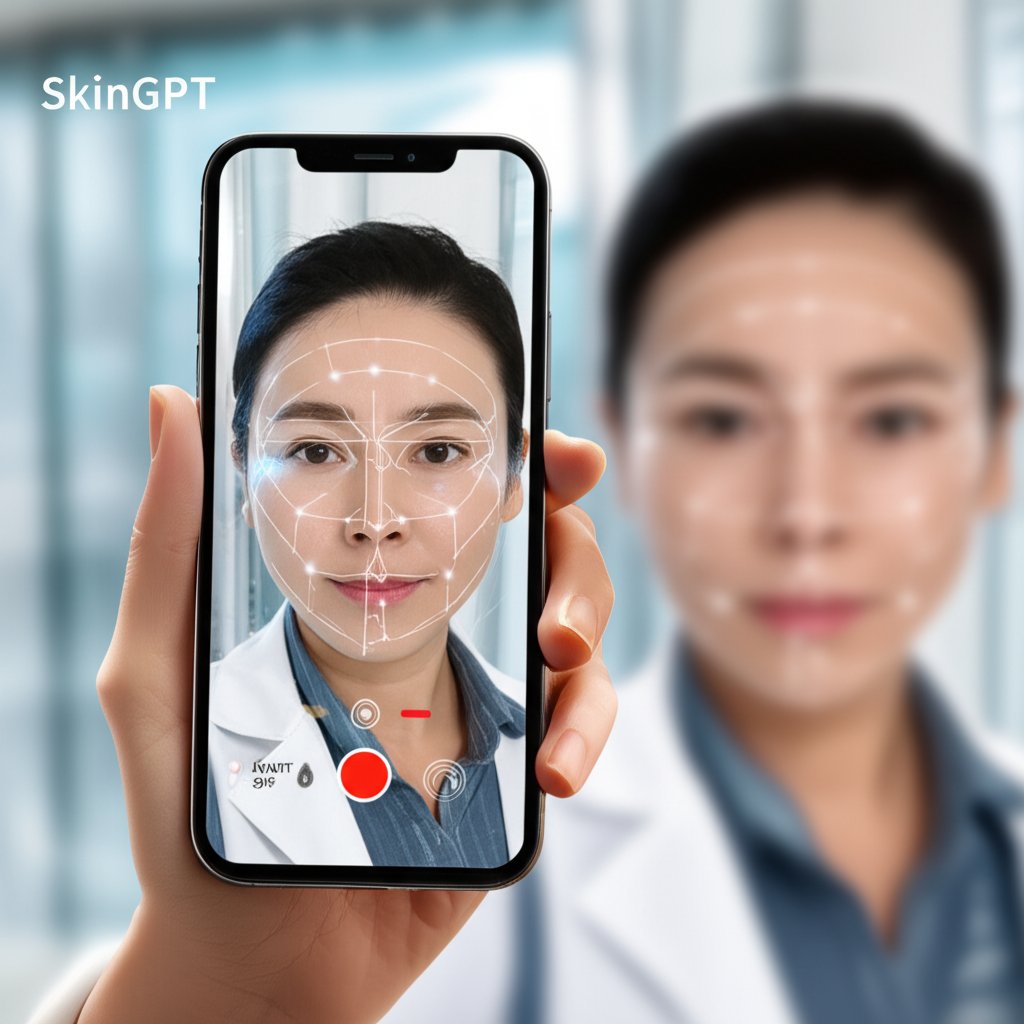
Imagine seeing your skin's future, guided by science, before you step into the sun. Advanced generative AI, like Haut.AI's SkinGPT, transforms a simple selfie into a powerful diagnostic tool. It establishes a biological baseline of your skin, analyzing tone, texture, and existing conditions to simulate scientifically accurate changes over time. This is not a simple filter but a predictive visualization grounded in extensive dermatological research on UV exposure and its long-term effects. Developed over two years, SkinGPT's models are informed by published research on cumulative UV exposure and skin aging, and its precision stems from training on over 3 million data points (Haut.AI; WWD 2025; CosmeticsDesign-Europe).
| Feature | Traditional Analysis | AI-Powered Analysis (e.g., SkinGPT) |
|---|---|---|
| Input | Visual inspection, questionnaires | High-resolution selfie |
| Analysis Depth | Subjective observation, broad categories | Objective, granular data (tone, texture, existing conditions) |
| Predictive Capability | Anecdotal, general advice | Scientifically simulated, visual future skin changes |
| Data Foundation | Dermatologist expertise, general research | Millions of data points, published dermatological research |
| Personalization Level | General recommendations | Hyper-personalized, data-driven insights |
This sophisticated blend of AI and dermatology empowers individuals with unprecedented visual insights, making proactive sun protection an informed and tangible reality.
From Questions to Quintessence: An AI Sunscreen Finder in Action
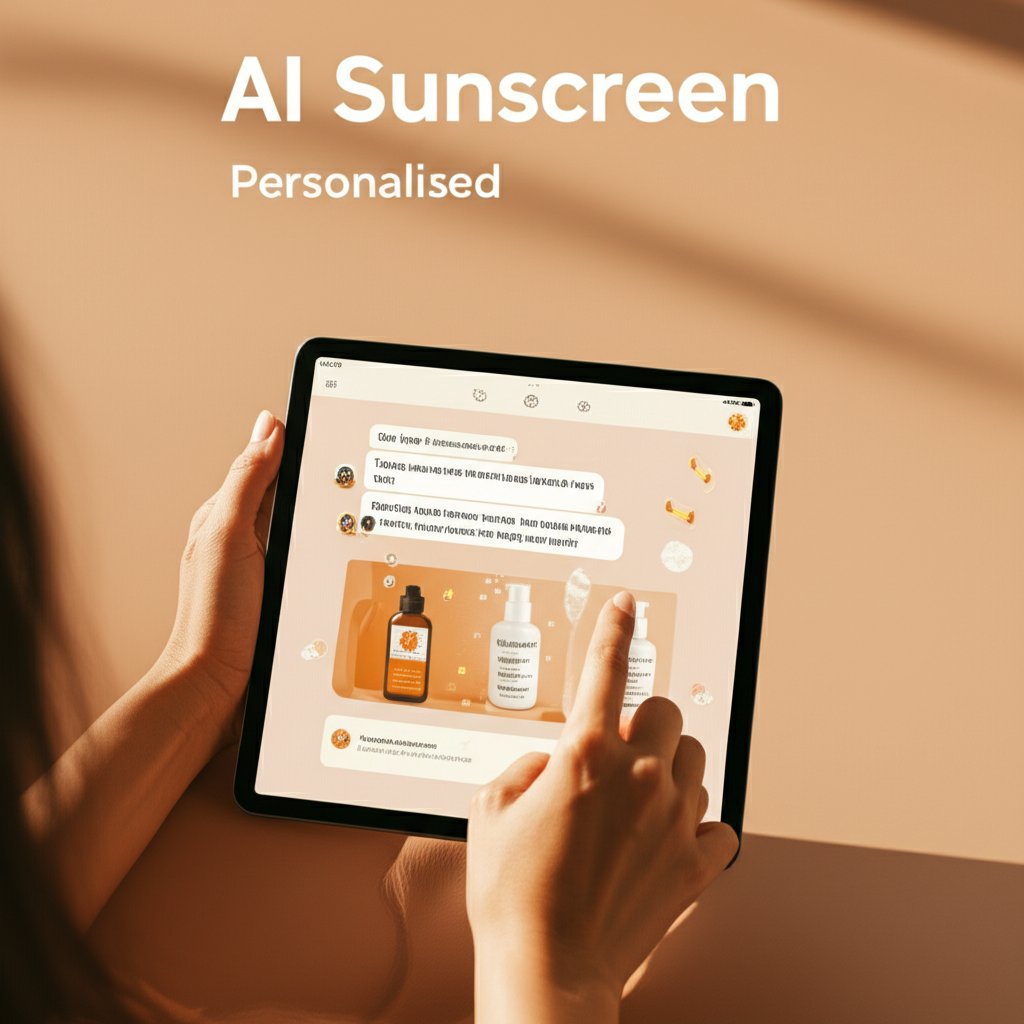
Navigating the vast array of sunscreens can be overwhelming, often leaving consumers uncertain about the best choice for their unique skin. AI-powered sunscreen finders are transforming this experience, acting as a virtual expert to pinpoint ideal products. These tools replicate and enhance a dermatological consultation, asking intelligent questions to deliver a curated list of suitable sunscreens in minutes, as exemplified by tools like the 'What’s In My Jar' Sunscreen Finder (InsiderBeautyBuzz 2020).
Here’s how an AI sunscreen finder typically guides you through its personalized recommendation process:
- Initial Profile Building: The AI begins by asking about your location to refine product availability. It then delves into your skin's characteristics, such as how it feels upon waking, its sensitivity levels, and any proneness to acne.
- Skin Tone Assessment: For precise recommendations, you might be prompted to compare your skin against a colored dot chart, allowing the AI to accurately gauge your skin tone.
- Lifestyle and Preference Queries: The conversation extends to your lifestyle, inquiring about preferences like tinted versus non-tinted formulas, the necessity for water resistance, and environmental considerations such as reef safety. The AI also asks if certain formulations cause eye-stinging, which can influence mineral versus chemical filter recommendations.
- Curated Product List: Based on your comprehensive responses, the AI processes the data to generate a small, highly personalized list of products, eliminating the guesswork and decision fatigue of skincare shopping.
This intelligent dialogue ensures that the recommended sunscreens are not just popular, but scientifically aligned with your specific skin needs and lifestyle.
Seeing is Believing: How AI Visualizes the Impact of Sun Protection
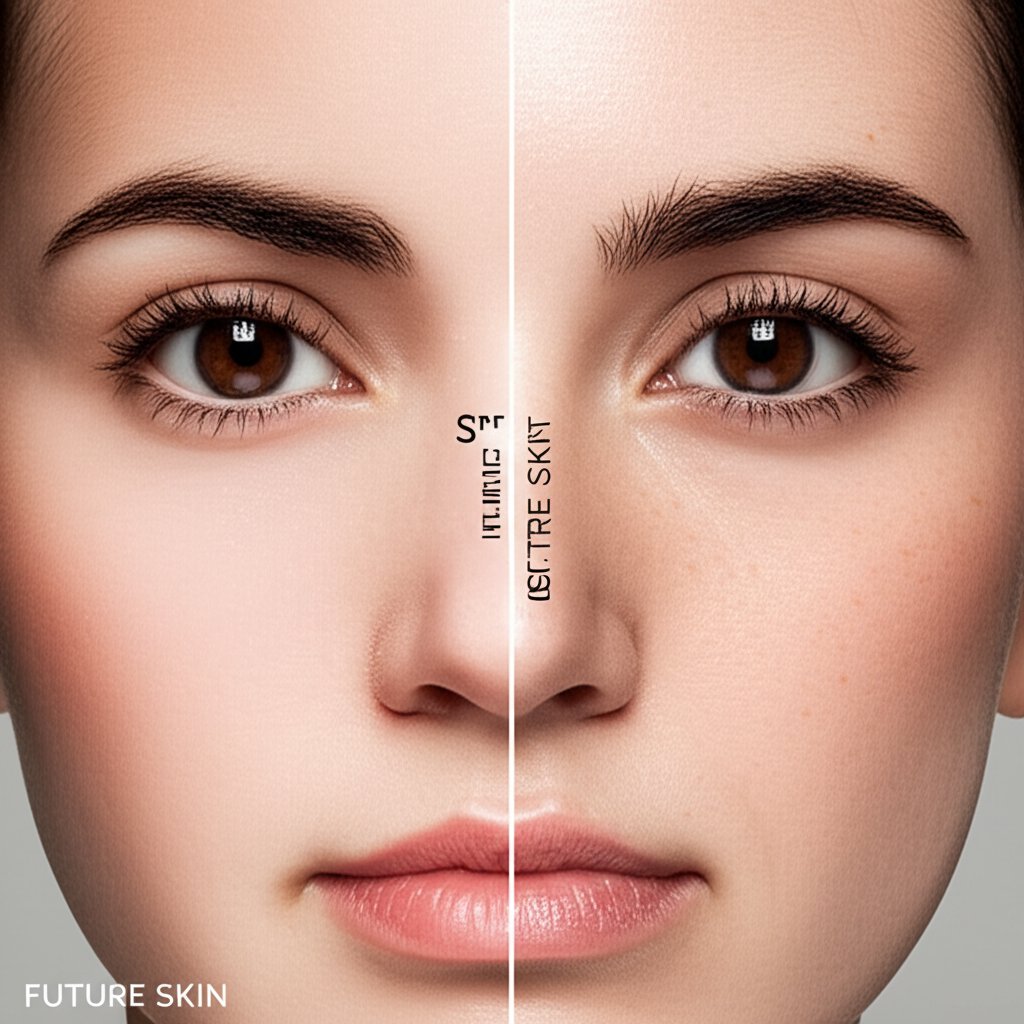
The long-term consequences of sun exposure can feel abstract, making consistent SPF use a difficult habit to maintain. Generative AI is now making this tangible by simulating the future effects of UV exposure on your own skin, providing a powerful visual motivator for consistent sun protection. A leading example is Haut.AI's 'SPF Truth Booth,' an interactive experience that allows users to visualize how their face could look up to 10 years from now, with and without SPF use (CosmeticsDesign-Europe; WWD 2025).
Users simply upload a selfie to receive a side-by-side simulation. One projection illustrates the impact of consistent SPF application, while the other displays the effects of neglecting sun protection. These visualizations are based on real skin biology and integrate research-backed modeling, powered by Haut.AI's SkinGPT technology.
Note: These AI simulations are grounded in validated dermatological research on photoaging, offering a realistic depiction rather than a speculative alteration. They provide a personal understanding of UV exposure's tangible consequences.
This direct, personalized visualization fosters a profound understanding of prevention, empowering individuals to make informed choices for their skin's future.
Decoding the Label: AI's Scientific Approach to Ranking Sunscreens
Deciphering sunscreen labels can be a complex task, with marketing claims often overshadowing critical scientific information. AI systems, leveraging advanced sunscreen technology insights, are emerging as unbiased experts, meticulously analyzing sunscreen formulations based on objective criteria to reveal a product's true "Protection Power." This scientific rigor is demonstrated by initiatives like Haut.AI's 'SPF Protection Power List,' a comprehensive review of over 100 popular facial sunscreens. The AI systematically evaluates and scores products across several key factors, empowering consumers to make choices grounded in evidence.
| Ranking Factor | Description |
|---|---|
| UV Coverage | Assesses broad-spectrum efficacy against UVA and UVB rays. |
| Formula Stability | Evaluates how well active ingredients maintain their protective qualities. |
| Skin Benefits | Considers added ingredients like antioxidants or hydrating compounds. |
| Environmental Safety | Reviews impact on ecosystems, particularly reef safety. |
| Filter Type | Differentiates between mineral (physical) and chemical UV filters. |
By applying these criteria, AI tools provide clear insights into product performance. For instance, top-ranked products in such analyses have included Avene’s Solaire UV Mineral Multi-Defense Sunscreen and Beauty of Joseon Relief Sun, showcasing how AI can highlight scientifically superior options.
Ultimately, AI acts as a powerful consumer advocate, ensuring that your sun protection choices are informed by robust scientific evidence.
Smart Tech, Smart Questions: Navigating AI's Limitations in Suncare
AI promises a revolution in personalized sun protection, but a thoughtful approach requires understanding the boundaries of these tools. While AI offers unprecedented personalization, users must remain mindful of critical issues like data privacy, potential algorithmic bias, and the value of personal experience. AI-based systems often require users to share sensitive data, including images of their skin and lifestyle details, which poses significant privacy risks (NCBI, 2025).
Here are key considerations when leveraging AI in sun protection:
- Data Privacy: AI-powered suncare tools frequently request personal data, from facial images to lifestyle information. It is crucial to understand the developer's policies regarding how this information is stored, processed, and protected.
- Algorithmic Bias: The effectiveness of AI models hinges on the diversity of their training data. If datasets lack adequate representation across various skin tones, the resulting recommendations may be less accurate for individuals with darker complexions.
- The Human Element: AI cannot account for subjective preferences like the scent of a product, its texture, or how it feels under makeup. These sensory experiences are often critical to consistent use and user satisfaction.
- Technological Accuracy: The precision of an AI's analysis can be influenced by external factors. The quality of your smartphone camera and ambient lighting conditions can affect the input data, potentially leading to less reliable recommendations.
Navigating AI-powered suncare tools requires informed engagement, ensuring that technological advancements serve diverse needs responsibly and ethically.
Your Smartest Summer Yet: Embracing an AI-Powered Sun Protection Strategy
Imagine a sun protection strategy so precise, it feels custom-made for you. With AI, this vision is now a reality, transforming how we safeguard our skin. This approach moves beyond generic advice to truly understand and cater to your unique needs. Integrating AI tools into your suncare strategy allows for a proactive, personalized, and effective approach to lifelong skin health, shifting skincare from static methods to a dynamic model that evolves with you (NCBI, 2025).
Note: AI is transforming sun protection from a guessing game into a precise science. From personalized recommendations to visualizing long-term effects, these tools empower you to make better, more informed choices for your skin health.
By combining data-driven insights with your own personal preferences, you can build the most effective and adaptive suncare routine of your life.
As we conclude our deep dive into "Mastering Sun Protection: AI's Smart SPF Guide," it’s evident that artificial intelligence is a powerful ally in achieving effective skincare. This innovative approach is reshaping how we understand, choose, and apply sun protection, moving beyond one-size-fits-all solutions to embrace a new standard of precision.
Here are the key insights into AI's impact on your suncare routine:
- AI Delivers Personalized Sun Protection: By analyzing your unique skin type, tone, lifestyle, and real-time environmental data, AI provides SPF recommendations tailored to your individual requirements.
- Tangible Visualization for Lasting Impact: Cutting-edge AI tools can visualize the long-term effects of sun exposure on your facial imagery, making the need for consistent protection a compelling reality.
- Unbiased Product Selection: AI platforms scientifically evaluate and rank sunscreens based on factors like UV coverage and formulation stability, empowering you to navigate marketing claims and select truly effective products.
While the promise of AI in sun protection is immense, a mindful approach to data privacy and an awareness of potential algorithmic biases remain important as these technologies evolve. Ultimately, this represents a significant leap forward in empowering individuals to make intelligent, data-driven choices for their skin's health.
Are you ready to transform your sun protection strategy? Explore the growing array of AI-powered tools and advanced skincare platforms designed to offer you bespoke SPF guidance. Taking this proactive step can lead to a more effective, confident, and enduring approach to safeguarding your skin.
Tags
Related Articles

AI Skincare for Tropical Climates: Adapt & Thrive
AI in Skincare: Unlock Your Best Complexion with Cosmi