City Pollution Defense: How AI is Building Our Urban Skin Shield
Read about City Pollution Defense: How AI is Building Our Urban Skin Shield on Cosmi Skin

Stop for a moment. Take a deep breath. Really feel it. Now, how clean do you honestly believe that air is? For billions of us living in sprawling urban centers, the answer is often unsettling. Urban air pollution isn't just an inconvenience; it's a silent, insidious enemy — a global crisis silently eroding public health, straining our infrastructure, and sabotaging sustainability efforts in nearly every major city on Earth. For far too long, our fight against these microscopic threats has been a losing battle, reactive and reliant on broad, slow-moving data that misses the critical, hyper-local realities of our daily lives.
But here's the game-changer: the era of guesswork is over. We're on the cusp of a profound revolution, powered by Artificial Intelligence. Imagine a sophisticated, digital guardian taking watch over our cities, constructing an "Urban Skin Shield" — a dynamic, intelligent defense system designed to actively protect our environments, from the ground up. This isn't just about adding more sensors; it's about teaching our cities to see pollution patterns in real-time, predict their trajectory with astonishing precision, and intelligently plan our infrastructure to prevent exposure before it happens.
Why now? Because the sheer complexity of modern emissions — a chaotic blend of traffic congestion, industrial output, and unpredictable weather shifts — has simply overwhelmed traditional analysis. This is precisely where AI thrives. It sifts through the noise, synthesizing countless disparate data streams into unified, actionable intelligence that finally gives us a fighting chance.
In this vital deep dive, we'll explore this transformative revolution. You’ll discover how AI is giving us a sharper vision for detecting and forecasting pollution with unprecedented accuracy. We’ll then uncover how this intelligence moves beyond generalized maps to deliver personalized exposure insights, empowering you to make healthier daily choices. Finally, we’ll examine how these data-driven revelations are radically reshaping proactive urban design, showcasing real-world examples of how AI is literally building the foundation for cleaner, healthier, and truly sustainable cities for everyone.
The Invisible Threat: Why Urban Air Pollution is a Global Crisis
Let's be brutally honest: Urban air pollution is the ultimate silent killer, quietly transforming our bustling cities into hazardous zones. This isn't just an environmental concern; it's a full-blown global crisis that impacts lives, health, and economies on a scale that's truly staggering.
Consider these stark realities:
- A Devastating Human Toll: This invisible enemy is directly responsible for over 8 million premature deaths every single year. To put that in perspective, it’s one of the leading risk factors for mortality across the globe — a silent pandemic we rarely discuss.
- An Astronomical Economic Drain: The financial hit is equally staggering, siphoning an estimated $8 trillion from the global economy annually. Think of the healthcare costs, lost productivity, and damaged infrastructure.
- Ubiquitous Exposure: Billions of individuals, right now, are forced to inhale air that consistently violates the World Health Organization’s strict guidelines for harmful pollutants like PM2.5 and NO2. This isn't theoretical; it’s happening in your city, your neighborhood.
- Critical Data Blind Spots: For too long, our grasp of this threat has been tragically incomplete. We've relied on scattered, fixed monitoring stations that paint only a fragmented, often misleading, picture. They completely miss the crucial, hyper-local variations in exposure that people encounter every single day.
- Urbanization's Cost: While bringing prosperity, rapid urbanization is also a double-edged sword, escalating issues like traffic gridlock, inefficient waste systems, and, inevitably, intensified pollution.
These are not simple problems. They are complex, dynamic challenges that demand equally innovative solutions. As our cities continue to grow and evolve, Artificial Intelligence (AI) isn't just an option; it's emerging as a powerful, indispensable ally, offering a radically new toolkit to tackle this multifaceted crisis head-on.
AI's Sharper Vision: Detecting and Forecasting Pollution with Precision
What if you could literally see the invisible threats lurking in the air around you? Thanks to advanced Artificial Intelligence, this is no longer science fiction; it’s a powerful, tangible reality. AI is fundamentally revolutionizing our capacity to detect, forecast, and map urban air pollution with an unprecedented level of precision, completely transforming how we safeguard public health.
At its heart, AI sifts through mind-bogglingly vast datasets — pulling information from an incredible array of sources: advanced ground-based sensors, sophisticated satellite imagery, and even crowdsourced environmental data. This comprehensive intake paints a truly holistic, 360-degree picture of our urban atmosphere. Then, powerful machine learning models, like random forest and gradient boosting, spring into action. They don't just predict pollution concentrations; they meticulously disentangle complex environmental variables — think intricate weather patterns versus specific emission sources — offering crystal-clear insights into the exact forces driving air quality changes. A fantastic example? Cornell University engineers are using AI to generate street-level PM2.5 pollution views by brilliantly merging traffic flows, city topography, and real-time meteorological data.
And the insights don't stop there. To accurately forecast future pollution events, specialized Recurrent Neural Networks (RNNs) are deployed. Consider Imperial College London's groundbreaking DyNA system, which processes complex time-series data to anticipate upcoming pollution challenges with remarkable foresight. On a broader scale, global initiatives like Google's Air Quality API are leveraging these diverse inputs to estimate pollutant concentrations worldwide, making this critical data far more accessible than ever before.
The ultimate outcome of these AI breakthroughs? The creation of high-resolution, near-real-time pollution maps. These dynamic digital canvases are invaluable, precisely pinpointing pollution hotspots and even forecasting breaches of legal limits — sometimes on an hourly basis, as demonstrated by pioneering scientists in Barcelona for NO2 levels. This dramatically sharper vision empowers everyone, from city planners drafting policy to individuals making daily choices, to take truly informed public health actions, fostering healthier choices and ultimately shaping smarter, more breathable urban environments.
Beyond the Map: AI-Powered Personalized Pollution Insights
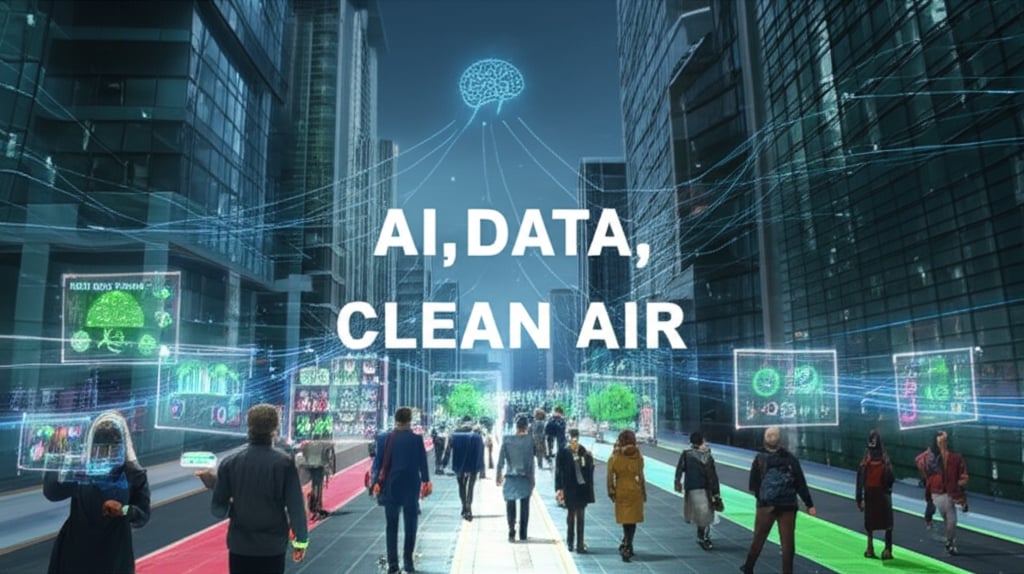
Remember when air quality data felt like an abstract, distant number — broad, generalized, and utterly useless for your daily life? Those days are rapidly fading. Today, Artificial Intelligence is radically transforming our relationship with urban pollution, putting hyper-local, truly actionable insights directly into your hands. This isn’t just about seeing a map; it's about owning a personalized shield against the unseen dangers in our city air, empowering you to make healthier choices, every single day.
Cutting-edge AI models are now predicting street-level pollution with astonishing precision. Think about it: Cornell University’s innovative PM2.5 model gives you granular, block-by-block insights into fine particulate matter concentrations across a massive city like New York. Similarly, pioneering systems developed in Barcelona can pinpoint exactly when and where nitrogen dioxide (NO2) levels are poised to exceed safe limits, arming communities with a clear understanding of their specific exposure risks.
But this potent data isn't confined to city halls and research labs. It's being actively democratized for every citizen. Imagine wearing a compact sensor, like HabitatMap’s AirBeam, which allows you to collect and understand your personal exposure to air pollution as you move through your routine. This real-time, intimately personal data then feeds into sophisticated applications such as AirTrack by Air Aware Labs, which provides instant alerts and even suggests healthier routes for commuters, athletes, or simply anyone navigating the urban jungle. Seriously, picture rerouting your morning run to avoid a temporary pollution hotspot, all guided by intelligent AI!
This newfound empowerment isn't just for individual protection. Empowered citizens are becoming powerful agents of change. They're leveraging their collective insights to fuel crucial environmental justice campaigns and demand concrete policy shifts, actively pushing their cities towards a cleaner, genuinely more sustainable future. This is what true civic engagement looks like in the AI era.
AI in Urban Design: Proactive Planning for Healthier Cities
The blueprint for future urban living is undergoing a profound transformation, all thanks to artificial intelligence. We're witnessing a pivotal shift in city planning: from merely reacting to problems, we're now embracing proactive design for inherently healthier environments. AI is stepping in as the ultimate intelligent guide, meticulously steering critical urban systems — from transportation and energy to land use — towards a cleaner, more sustainable equilibrium. This fundamental shift gives cities the superpower to anticipate and mitigate pollution long before it ever impacts residents, ultimately fostering healthier, more vibrant communities by design.
AI's impact ripples through every aspect of urban development. It's revolutionizing how we optimize mobility networks, informing groundbreaking strategies like dynamic road pricing, ultra-efficient mobility-on-demand services, and the seamless integration of electric autonomous vehicles — all precisely aligned with stringent air quality goals. What's more, sophisticated AI models can now meticulously analyze how proposed building designs will influence airflow, emissions, and even pedestrian movement, effectively preventing the creation of new pollution hotspots before a single brick is laid. This ensures that urban development inherently prioritizes health and clean air from the absolute ground up.
In trailblazing cities like Wuhan (which we'll explore deeper shortly), AI is already showcasing its immense power, precisely identifying the most effective strategies for dramatically reducing pollution. This includes optimizing everything from the strategic placement of green infrastructure to the overhaul of public transportation networks. A true game-changer in this proactive approach is the deployment of digital twins — incredibly detailed, dynamic virtual models of entire cities. These sophisticated Technology Digital Twin simulations empower planners to test countless scenarios for green infrastructure deployment, traffic flow adjustments, and innovative management solutions, accurately predicting their environmental impact long before any physical implementation. This ensures optimal outcomes, making our urban spaces not just smarter, but genuinely healthier, more resilient, and truly breathable for generations to come.
Wuhan's Wake-Up Call: Data-Driven Insights into Urban Air Quality
For bustling megacities across the globe, the invisible threat of air pollution remains a formidable opponent, posing a critical challenge to public health and the very idea of urban sustainability. To genuinely comprehend and effectively combat this pervasive issue, we must turn to the power of data-driven insights and sophisticated AI-powered analysis. A truly compelling case study emerges from Wuhan, China — a colossal metropolis that has confronted, and is now actively tackling, severe atmospheric challenges, offering invaluable, hard-won lessons for urban centers worldwide.
Between 2014 and 2017, Wuhan grappled with alarmingly high levels of air pollution. The data paints a grim picture: an average PM2.5 concentration of 136.71 µg/m³. To put that into shocking perspective, it's a figure that dwarfs the World Health Organization's (WHO) annual guideline of a mere 5 µg/m³ by nearly 27 times! These years were punctuated by frequent, intense pollution peaks, screaming out for urgent intervention. However, a significant turning point arrived post-2017. A noticeable and sustained decline in pollution levels began, hinting at the positive reverberations of improved environmental regulations and, notably, the temporary slowdown in industrial and transportation activities during the COVID-19 pandemic. This period isn't just a historical footnote; it powerfully demonstrates that concerted efforts, alongside unforeseen global events, can indeed trigger measurable and impactful improvements in air quality.
The real game-changer came from AI-powered analysis of Wuhan's extensive air quality data, which unveiled crucial correlations and intricate causal relationships among various pollutants. Researchers discovered a robust positive relationship connecting PM2.5, PM10, NO2, SO2, and CO. This isn't random; it strongly suggests that these pollutants frequently share common emission sources – predominantly urban transportation and intense industrial activities. When one pollutant's level surged, others often followed suit, vividly underscoring their profound interconnectedness.
Deepening our understanding even further, advanced Granger causality tests illuminated striking bi-directional relationships among many of these pollutants. For example, past concentrations of PM10 proved to be a powerful predictor of future PM2.5 values, and astonishingly, vice versa. Similarly, PM2.5 and Ozone (O3), as well as NO2 and SO2, were found to mutually influence each other's presence.
Key Insight: This intricate web of interdependencies delivers a vital message: attempting to tackle one pollutant in isolation is often a futile exercise. High NO2 levels can directly contribute to the formation of secondary PM2.5, while SO2 emanating from industrial sources can aggressively drive up PM2.5 concentrations.
This complex, interwoven dynamic absolutely underscores the critical, undeniable need for integrated, AI-informed air quality management strategies. Instead of fragmented, 'whack-a-mole' approaches, cities desperately require a holistic, bird's-eye view that profoundly accounts for how different pollutants interact with each other and their shared origins. This, precisely, is where AI truly comes into its own:
- Unrivaled Predictive Modeling: AI models can devour and analyze staggering volumes of data — encompassing everything from nuanced industrial development patterns and complex urban activity levels to shifting meteorological conditions — enabling them to predict future pollution changes with a foresight that was once unimaginable.
- Precision-Guided Interventions: By unlocking these complex dynamics, AI empowers urban planners to identify the most effective and efficient strategies for pollution reduction. It optimizes resource allocation and significantly enhances urban design, proactively preventing future pollution hotspots from ever forming.
Wuhan’s ongoing journey serves as a powerful, living testament to the unparalleled potential of data-driven insights and cutting-edge AI to fundamentally transform urban environmental health. By fully embracing and leveraging these advanced tools, cities can gracefully transition from outdated reactive measures to sophisticated, proactive, and truly intelligent defense systems, forging a cleaner, healthier future for all their residents.
The Broader Canvas: AI's Transformative Impact on Green Cities
While AI is clearly revolutionizing how we breathe, its transformative power in forging truly sustainable, green urban environments stretches far beyond just air quality. Think of Artificial Intelligence as the ultimate catalyst, driving unprecedented efficiency and innovation across virtually every single facet of city life, making our urban spaces demonstrably more resilient, more intelligent, and profoundly more environmentally conscious.
Here’s a glimpse into how AI is meticulously crafting the comprehensive green city of tomorrow, right before our eyes:
- Smart Energy Grids That Breathe: AI isn't just optimizing energy distribution; it’s building a smarter grid that predicts demand with uncanny accuracy and seamlessly integrates renewable sources like solar and wind power. This intelligent orchestration drastically minimizes waste, slashes carbon footprints, and ensures a truly sustainable, reliable energy supply for the entire city.
- Intelligent Water Management: Every Drop Counts: From real-time water quality monitoring and pinpoint leak detection in aging infrastructure to predicting extreme weather events like floods, AI is empowering cities to design and build water-sensitive infrastructure. This proactive guardianship helps conserve our most precious resource and profoundly mitigates disaster risks, securing water for generations.
- Revolutionizing Urban Mobility for a Greener Commute: AI-powered adaptive traffic systems are actively dismantling congestion, leading to dramatically reduced emissions and quicker, less stressful commutes. It's accelerating the widespread adoption of electric vehicles and supercharging public transit networks, ultimately creating more walkable, bike-friendly neighborhoods that put human well-being and planetary health at their core.
- Enhancing Urban Biodiversity: Reconnecting with Nature: AI is a silent partner in the strategic planning of vital green corridors, diligently monitoring species health, and facilitating critical habitat restoration. By precisely analyzing ecological data and satellite imagery, AI helps cities brilliantly weave nature-based solutions into their fabric, cooling urban heat islands, sequestering carbon, and enriching our invaluable urban ecosystems.
- Driving Economic Sustainability Through Innovation: Beyond the undeniable environmental victories, AI is a powerful engine for significant innovation in urban utilities and infrastructure management. By relentlessly optimizing operations and resource allocation, AI directly fuels economic sustainability, making cities not only more efficient and cost-effective but also incredibly attractive hubs for future sustainable development.
AI's unparalleled ability to analyze gargantuan datasets and distill them into actionable insights is nothing short of breathtaking. It’s fundamentally transforming urban development, propelling us closer, day by day, to a future where our cities don't just exist but truly thrive in perfect harmony with nature.
Navigating the Future: Ethical Deployment and Equitable Access
As we stand on the precipice of AI's transformative potential in urban pollution defense, we must confront a profound, non-negotiable responsibility: ensuring its deployment is not only ethical but also universally, unequivocally accessible. For AI to truly be a force for good, its life-changing benefits must be inclusive, extending to every single corner of our cities and empowering all communities, not just those already equipped with advanced technological infrastructure.
A critical ethical imperative weighs heavily: we must design these intricate systems to absolutely avoid inadvertently displacing pollution onto communities that are already disproportionately overburdened. Our solutions must guarantee equitable outcomes, ensuring that environmental triumphs in one neighborhood never come at the expense of another. Furthermore, the bedrock of public trust depends on paramount considerations: implementing robust, ironclad data privacy measures and actively, tirelessly preventing algorithmic bias, which could tragically exacerbate existing societal inequalities.
A significant, undeniable challenge persists in the form of glaring data gaps, especially prevalent in underserved global regions. Recent research starkly highlights this reality: powerful platforms like Google's Air Quality API, for all their reach, still lack crucial coverage in many African cities. This isn't just a technical oversight; it's an urgent call to action for collaborative, global efforts to bridge these disparities. Ultimately, truly successful AI integration demands crystal-clear transparent governance, open access to relevant, actionable data, and meaningful, proactive community engagement at every level. This approach isn't optional; it's essential to guarantee that AI solutions are not merely technically sound, but profoundly socially just and genuinely impactful for every single person.
Breathing Easier: The Promise of AI-Enhanced Urban Sustainability

Let’s be clear: Artificial intelligence isn't just helpful; it’s genuinely transformative in our collective quest for cleaner, healthier cities. AI offers unparalleled, almost superhuman tools to accurately measure, predict, optimize, and act against the relentless threat of urban air pollution, leveraging vast, complex datasets from an intricate network of sensors and satellites. This isn't a minor upgrade; it's a monumental paradigm shift towards smart, truly proactive urban planning and development. We're moving far beyond reactive firefighting to intelligently design healthier environments from the very ground up, evident in game-changing initiatives like dynamic road pricing and the strategic avoidance of pollution hotspots.
However, and this is crucial, technology alone will never be enough. Forging a sustainable, cleaner future demands nothing less than intentional, unwavering collaboration — a united front between visionary governments, pioneering researchers, innovative industry leaders, and engaged, empowered citizens. It’s also absolutely paramount to close critical data gaps in underrepresented regions, ensuring equitable access to these life-changing clean air solutions, especially given that pollution disproportionately impacts our most vulnerable communities. With AI as our incredibly powerful partner, coupled with an unshakeable commitment to equity, we can build truly sustainable cities where clean air is not just a dream, but a universal right, accessible to all.
The incredible journey we've just navigated reveals a profound truth: Artificial Intelligence is rapidly, radically redefining our resilience against urban air pollution. AI has moved the needle decisively, offering far more than just broad, abstract statistics. It delivers hyper-local precision in detection and forecasting, empowering individuals with personalized, actionable data for healthier daily choices, and arming urban designers with the indispensable tools for truly proactive, sustainable city planning. This isn't just a shift; it's a revolution. By intelligently optimizing everything from complex traffic management to the strategic deployment of green infrastructure, AI is actively weaving a more resilient, healthier urban fabric — we are now equipped to see the invisible threats with unparalleled clarity and react with unprecedented intelligence.
Yet, this extraordinary advanced capability comes with a profound, undeniable responsibility. To achieve genuine, lasting air quality gains for all residents, we must champion ethical implementation and uncompromising transparency. Ensuring that these data-driven benefits are shared equitably across every single community remains paramount; the 'Urban Skin Shield' must protect everyone equally, without exception.
The foundation for our Urban Skin Shield is being meticulously laid through cutting-edge data science and brilliant, human-centric smart design. By fully embracing these powerful technological advancements while simultaneously championing accountable governance and deep empathy, we move confidently toward a future where thriving, radiant urban life isn't merely a hopeful aspiration — it’s the engineered, accessible standard. It's no longer a question of 'if,' but 'how soon.' It is time for each of us to actively participate in building the cleaner, healthier city we all deserve.