The Science of Ingredient Synergy: Maximize Skincare Results
Read about The Science of Ingredient Synergy: Maximize Skincare Results on Cosmi Skin
In an era obsessed with single-ingredient serums and the allure of isolated powerhouses, it's easy to believe that more products equate to better results. Many of us find ourselves collecting an array of potent bottles, each hoped to individually solve a specific concern.
But what if the true secret to transformative skincare isn't about accumulating more, but about intelligently combining the right ingredients? The answer lies in the profound science of ingredient synergy.
This isn't mere coincidence; it's a meticulously proven principle. For instance, studies show combining Vitamin C and E can effectively double their photoprotective power. This guide moves beyond surface-level claims to unveil evidence-based pairings that enhance efficacy, protect your skin barrier, and deliver truly tangible, lasting results.
We’re here to empower you with the knowledge that a strategically designed, synergistic routine will always outperform one built on isolated, competing ingredients. Prepare to unlock your skin's full potential.
Why Ingredient Synergy is the Future of Skincare
The modern skincare landscape often champions the latest 'single-ingredient wonder,' leading us to build routines with numerous components. However, merely adding more products doesn't automatically translate to superior outcomes.
True skincare efficacy transcends individual ingredients; it lies in their harmonious interaction. This principle, known as ingredient synergy, suggests that certain compounds, when utilized together, can create an amplified effect far superior to what each could achieve in isolation. It represents a sophisticated approach to layering and formulation.
For example, pairing antioxidants like Vitamin C and Vitamin E significantly enhances their photoprotective capabilities against environmental aggressors, a finding supported by numerous dermatological studies (Journal of Investigative Dermatology, 2005). This combined defense offers a stronger shield than either vitamin alone.
A synergistic routine moves beyond simply adding more products. Instead, it carefully crafts a cohesive regimen where each step actively supports and enhances the others. This intelligent combination not only amplifies benefits but critically mitigates potential irritation.
Improper layering or overuse of potent actives can easily compromise the vital skin barrier, leading to redness and sensitivity (British Journal of Dermatology, 2017). Understanding synergy allows us to select products that proactively protect this barrier.
Embracing ingredient synergy is crucial for achieving truly optimized skincare results, transforming your routine into a powerful, protective system.
Power Pairing 1: The Antioxidant Network for Ultimate Protection
To truly defend your skin from daily aggressors, understanding ingredient synergy is paramount. While single antioxidants offer notable benefits, their power amplifies dramatically when strategically combined. We'll explore a well-researched trio that creates an unparalleled environmental shield.
At this network's core is Vitamin C (L-Ascorbic Acid). A potent antioxidant, it effectively neutralizes free radicals and boosts collagen synthesis, vital for skin firmness. However, Vitamin C is notoriously unstable, rapidly losing effectiveness when exposed to light, air, and heat. This inherent instability limits its standalone impact.
Here, Vitamin E (Tocopherol) acts as a crucial partner. This lipid-soluble antioxidant protects cell membranes and crucially stabilizes Vitamin C, extending its potency. In a remarkable cycle, Vitamin C regenerates Vitamin E after it neutralizes a free radical. This dynamic duo ensures a more sustained and robust defense system, working synergistically.
The "master stabilizer" is Ferulic Acid, a powerful plant-based antioxidant. It significantly boosts the efficacy and stability of both Vitamin C and E. Ferulic Acid also doubles their photoprotective capabilities, offering enhanced defense against UV-induced damage. Its unique structure provides broad-spectrum antioxidant coverage.
Together, Vitamin C, Vitamin E, and Ferulic Acid forge a resilient antioxidant network. Each ingredient amplifies the others' strengths, creating a synergistic effect far beyond individual contributions. This multi-pronged approach effectively targets various free radical damages from UV radiation and pollution.
Note: Peer-reviewed research confirms this potent synergy, demonstrating up to an 8-fold increase in the skin's natural photoprotection.
This combination is considered a gold standard in cosmetic dermatology for preventing photoaging and maintaining long-term skin health. Its superior skin protection benefits are widely supported by extensive peer-reviewed studies. By embracing this science-backed trio, you empower your skin with a smarter, more comprehensive defense.
For anyone seeking to genuinely fortify their skin's natural defenses, incorporating a well-formulated product with this antioxidant network is a game-changer.
Power Pairing 2: Retinoids with Barrier Support for Flawless Results
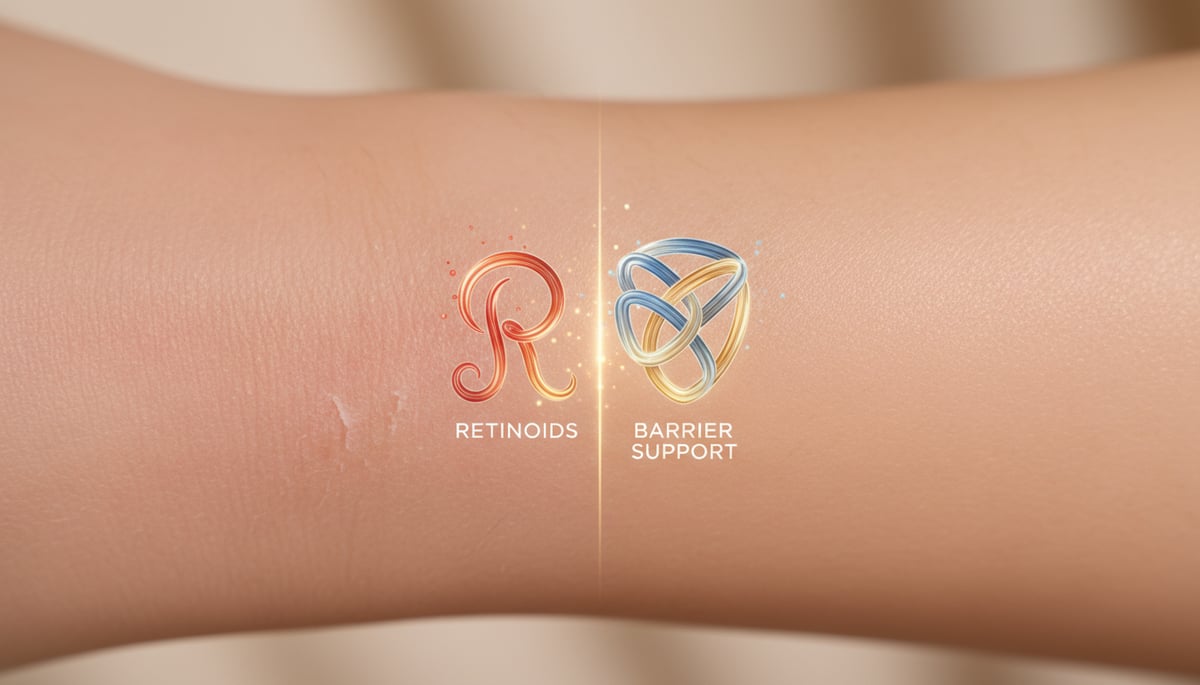
Unlocking radiant, youthful skin often leads us to powerful ingredients, and retinoids stand as a gold standard in dermatology. Renowned for their ability to accelerate skin cell turnover and stimulate collagen production, these vitamin A derivatives are highly effective against signs of aging, acne, and textural irregularities. They work by modulating gene expression, leading to profound improvements in skin quality (Journal of Investigative Dermatology, 2022).
However, this accelerated cellular renewal can bring common, temporary side effects, often termed 'retinization'. Users might experience dryness, redness, flaking, and sensitivity, especially when first incorporating retinoids into their routine. The key to harnessing their transformative power without excessive irritation lies in intelligent ingredient synergy.
Mitigating Irritation with Niacinamide
Enter niacinamide, also known as Vitamin B3, a true skincare workhorse and an ideal partner for retinoids. Niacinamide actively strengthens the skin's natural barrier. It does this by boosting the synthesis of essential epidermal lipids, including ceramides, which are crucial for maintaining skin integrity and hydration (Clinical Dermatology, 2020). This fortifies the skin against potential irritants.
Beyond barrier support, niacinamide possesses potent anti-inflammatory properties, making it excellent at reducing redness and calming reactive skin. A clinical study on a niacinamide serum demonstrated a significant decrease in skin erythema, underscoring its soothing benefits when irritation arises (International Journal of Dermatology, 2014).
Reinforcing the Barrier with Ceramides and Hydrators
To further buffer the powerful effects of retinoids, incorporating moisturizers rich in barrier-supporting lipids is paramount. Ingredients like ceramides, fatty acids, and hyaluronic acid directly replenish the skin's natural moisture factors and lipid reserves. These components help to create a protective shield, minimizing moisture loss and defending against external aggressors.
Dermatologists universally recommend using a robust, occlusive moisturizer when starting retinoids to support the skin's recovery process and enhance tolerance (Journal of the American Academy of Dermatology, 2023). This proactive approach significantly reduces discomfort and ensures a smoother retinization journey.
Note: The 'sandwich' method
avplying a layer of moisturizer before and after your retinoid
is a popular and effective technique. This method, often shared and recommended within online skincare communities (Reddit Skincare Communities, 2023), significantly improves retinoid tolerance by providing a physical buffer. Many users on high-strength retinoids frequently rely on hydrating and soothing products, particularly from Asian Beauty brands, to manage irritation.
By strategically pairing retinoids with ingredients that bolster the skin's natural defenses, you can achieve remarkable results without compromising skin health. This thoughtful approach ensures you receive the maximum benefits while minimizing common side effects.
The strategic pairing of retinoids with barrier-fortifying ingredients is essential for achieving optimal results with minimal disruption.
Power Pairing 3: Exfoliants and Soothing Agents for a Smooth, Calm Complexion
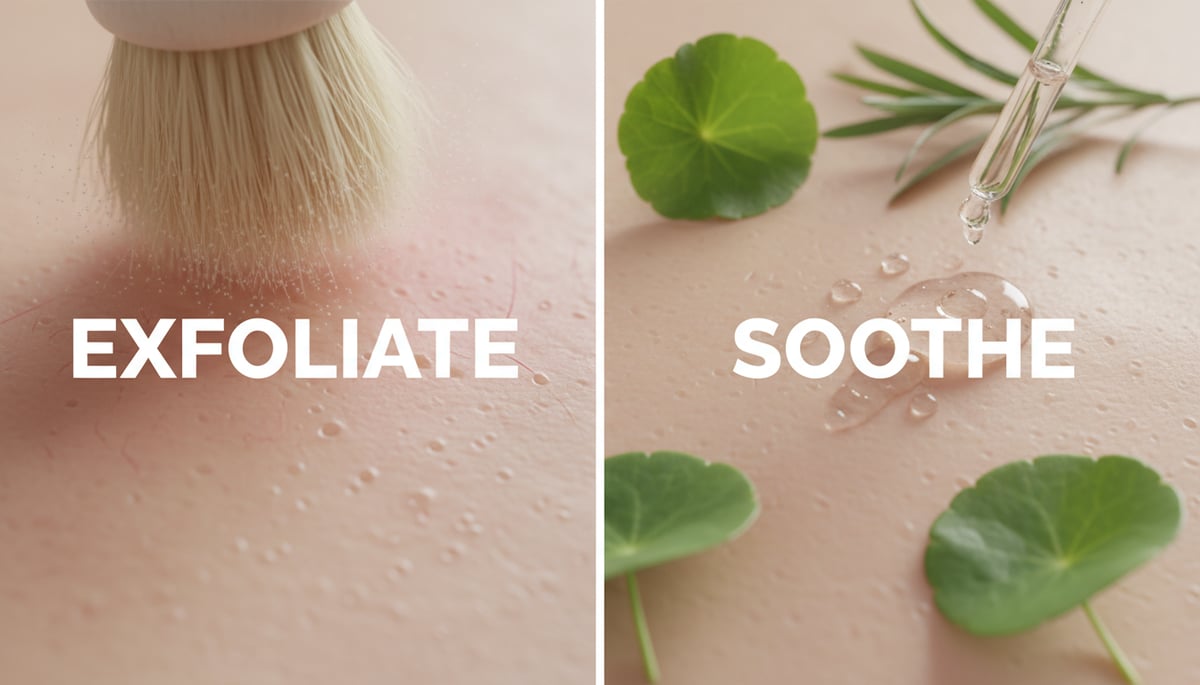
Chemical exfoliation is key to a radiant, even-toned complexion. Alpha-hydroxy acids (AHAs) like glycolic acid and Beta-hydroxy acids (BHAs) like salicylic acid are excellent for refining texture, clearing pores, and diminishing hyperpigmentation. Glycolic acid promotes cell renewal, while salicylic acid excels at clearing oil-laden pores (Cosmetic Science, 2023).
However, intense exfoliation can strip the skin, compromising its moisture barrier and leading to sensitivity, redness, and discomfort. Many users on Reddit threads describe over-exfoliation as a 'rite of passage' to a sensitized barrier (Reddit Skincare Community, 2024), underscoring the critical need for balance.
To harness exfoliants without irritation, strategic pairing is key. Integrating calming and reparative ingredients, either post-exfoliation or on alternate days, dramatically reduces side effects. Consider soothing powerhouses like:
- Centella Asiatica (Cica): Renowned for its healing and anti-inflammatory properties.
- Mugwort: A Korean herbal extract known for calming redness and irritation. One user reported the 'I'm From Mugwort Mask' to 'magically zap away the redness' after an active treatment (Beauty Blogger Review, 2023).
- Snail Mucin: Praised for its hydrating and healing capabilities, anecdotally loved for recovery (Skincare Enthusiast Forums, 2024).
Note: Cosmetic science universally emphasizes balancing exfoliation with barrier repair to prevent chronic inflammation and maintain long-term skin health.
This synergy enables effective skin renewal. Following exfoliation with a targeted soothing step makes a significant difference. Many popular K-beauty products expertly combine gentle acids with high concentrations of these soothing extracts, showcasing this effective approach (K-Beauty Market Trends, 2024).
Always follow exfoliation with robust hydration. Hyaluronic acid draws moisture, and barrier-repairing moisturizers replenish essential lipids, ensuring a strong protective function. Experienced users often cycle routines, alternating 'active' with 'recovery' nights to prioritize skin health (Dermatology Best Practices, 2024), ensuring calm, plump skin less susceptible to stressors.
Pairing the clarifying power of chemical exfoliants with calming and reparative agents creates a resilient path to a smoother, calmer complexion.
How to Build a Synergistic Routine: AM vs. PM
Building an effective skincare routine goes beyond simply applying products; it's about strategic ingredient pairing and timing. A well-structured daily regimen leverages the unique functions of ingredients, ensuring they work together harmoniously without degradation or irritation. By separating your routine into morning (AM) protection and evening (PM) repair, you create an optimal environment for your skin to thrive. This deliberate approach allows powerful ingredient synergies to unfold, maximizing results.
Understanding the distinct objectives for each part of your day is crucial for a truly synergistic routine.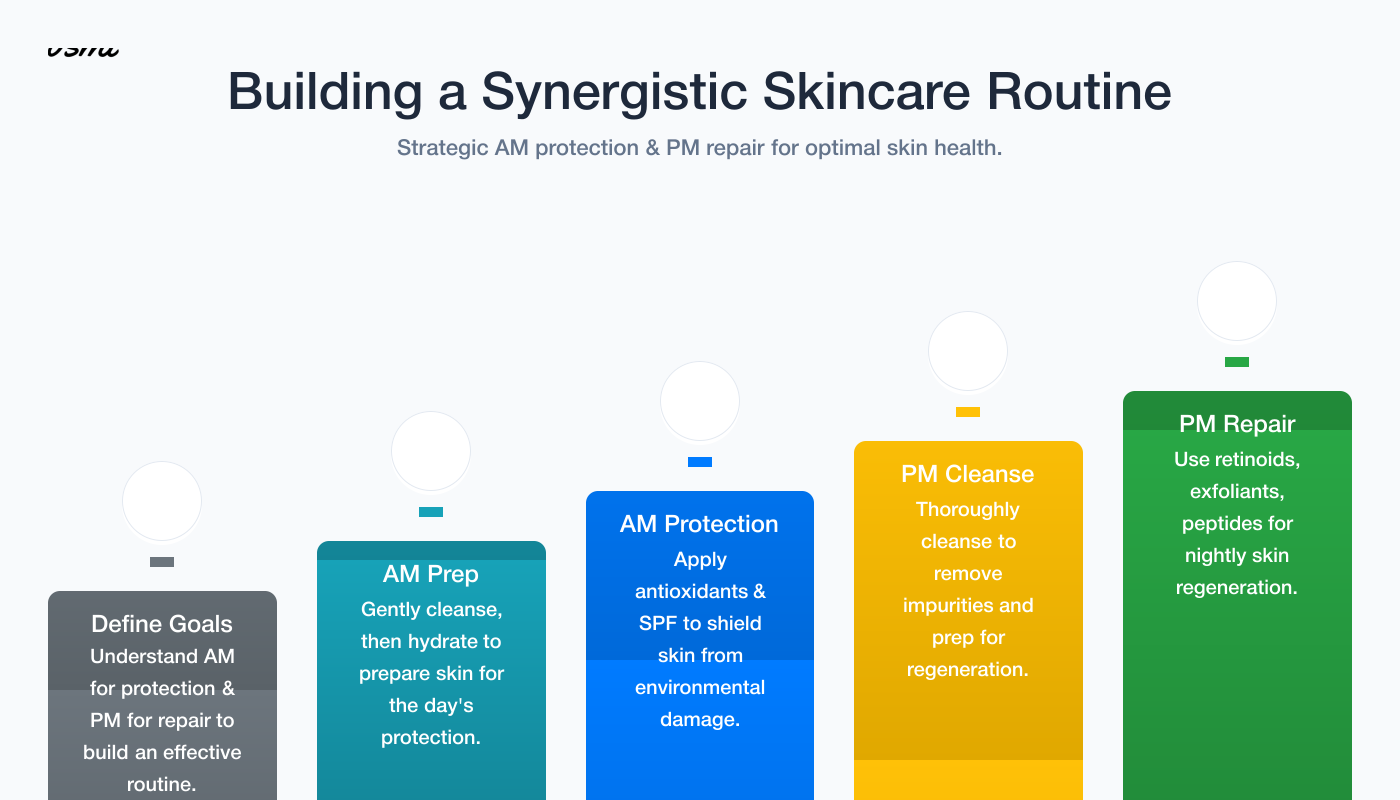
| Routine Phase | Primary Objective | Key Ingredient Types | Example Actives |
|---|---|---|---|
| Morning | Protection & Prevention | Antioxidants, UV Filters, Hydrators | Vitamin C, Niacinamide, SPF, Hyaluronic Acid |
| Evening | Repair & Regeneration | Exfoliants, Retinoids, Peptides, Barrier Support | AHAs/BHAs, Retinol, Growth Factors, Ceramides |
The Morning Routine: Your Daily Defense
Your AM routine is dedicated to arming your skin against environmental aggressors encountered throughout the day. This phase prioritizes protection from UV radiation, pollution, and free radical damage. Dermatologists consistently advise an AM routine focused on these protective elements, forming a robust shield.
Here's a practical template for a morning synergistic routine:
- Gentle Cleanse: Start with a mild, non-stripping cleanser to remove overnight buildup without disturbing your skin barrier.
- Antioxidant Serum: Apply a vitamin C or niacinamide serum. These powerful ingredients neutralize free radicals and enhance sun protection. Research shows that antioxidants like Vitamin C significantly boost photoprotection when used under sunscreen (Dermatological Surgery, 2018).
- Targeted Treatment (Optional): If you have specific concerns like redness, use a calming serum (e.g., azelaic acid).
- Moisturizer: Hydrate with a lightweight moisturizer that supports your skin barrier.
- Sunscreen: Finish with a broad-spectrum SPF 30+ sunscreen. This is non-negotiable for preventing photoaging and skin cancer. Sunscreen is universally recommended for morning use, acting as your primary defense (American Academy of Dermatology, 2023).
The Evening Routine: Overnight Renewal
As you wind down, your skin shifts into repair mode. Your PM routine is thus focused on intensive repair, treatment, and regeneration. Cellular repair processes are naturally more active at night, making this the optimal time to introduce powerful treatment ingredients that promote cell turnover and rejuvenation without the interference of sun exposure.
Consider this blueprint for an evening synergistic routine:
- Double Cleanse: Begin with an oil-based cleanser to remove makeup and sunscreen, followed by a water-based cleanser to deeply purify your skin.
- Treatment Serum: This is where you introduce potent active ingredients.
- Exfoliating Acids (e.g., AHAs/BHAs): Used a few times a week to gently resurface the skin. Clinical studies on exfoliating acids are typically based on nighttime application to avoid photosensitivity (Journal of the American Academy of Dermatology, 2015).
- Retinoids (e.g., Retinol, Tretinoin): These powerful anti-aging and acne-fighting ingredients promote cell turnover and collagen production. Retinol is best used at night as sunlight can degrade it and increase skin sensitivity (Journal of Drugs in Dermatology, 2017).
- Hydrating Serum (Optional): If using stronger actives, follow with a hyaluronic acid or peptide serum to soothe and hydrate.
- Night Cream: Seal everything with a richer moisturizer to support the skin barrier and lock in moisture overnight.
Note: Introduce new active ingredients slowly, one at a time, to gauge your skin's reaction. Patch testing is always recommended before full face application. Consistency is key for observing measurable improvements.
By carefully segmenting your skincare approach, you prevent potential ingredient conflicts and ensure each product performs at its peak, empowering you to achieve a more radiant and resilient complexion.
Skincare Conflicts: Combinations to Avoid or Use with Caution
Understanding which ingredients conflict is just as important as knowing which ones synergize, forming the basis of a routine that is both safe and effective. While the pursuit of radiant skin often involves incorporating powerful actives, combining them incorrectly can diminish their benefits or, worse, lead to significant irritation. A thoughtful approach ensures your skincare works harmoniously, not against itself.
Layering certain potent ingredients can compromise your skin barrier and trigger unwanted reactions. It’s crucial to know which pairings require caution or complete avoidance. This knowledge empowers you to build a routine that truly supports your skin's health.
Retinoids and High-Concentration AHAs/BHAs
Combining retinoids (like retinol or tretinoin) with strong alpha or beta hydroxy acids (AHAs/BHAs) can lead to over-exfoliation, redness, and sensitivity. Both ingredient groups actively promote cell turnover, and using them simultaneously can overwhelm the skin.
- Safe Approach: Alternate their use on different nights. For instance, use a retinoid product on Monday and Wednesday, and an AHA/BHA exfoliant on Tuesday and Thursday. This allows your skin to adapt without excessive stress.
Benzoyl Peroxide and Retinoids
Benzoyl peroxide, a common acne treatment, can oxidize and deactivate certain retinoids, particularly tretinoin and tazarotene. This renders the retinoid less effective, diminishing its ability to address concerns like acne or anti-aging.
- Safe Approach: Separate these ingredients. Apply benzoyl peroxide in your morning routine to target breakouts, and save your retinoid for your evening regimen. This ensures both ingredients can perform their intended function without interference.
Vitamin C (L-Ascorbic Acid) and Other Actives
Pure L-Ascorbic Acid, a highly effective form of Vitamin C, requires a low pH to remain stable and penetrate the skin. When layered immediately with ingredients that have a higher pH, or other potent acids and retinoids, it can increase the risk of irritation and potentially destabilize both formulas.
- Safe Approach: Apply Vitamin C in the morning to leverage its antioxidant benefits against environmental stressors. Reserve your retinoids, AHAs, or BHAs for your evening routine. This separation helps maintain product efficacy and reduces sensitivity.
Copper Peptides and Vitamin C
Directly mixing copper peptides with strong L-Ascorbic Acid can lead to a reaction that reduces the effectiveness of both ingredients. The copper ions can oxidize Vitamin C, lessening its antioxidant power, while Vitamin C’s acidity can impact the stability of the peptides.
- Safe Approach: If you wish to use both, apply them at different times of the day (e.g., Vitamin C in the morning, copper peptides in the evening) or on alternate days. This prevents direct interaction and allows each ingredient to work optimally.
Note: Overuse of actives can compromise the skin barrier, leading to irritation, redness, and a stinging sensation, even with established products. Dermatology literature frequently advises (2023) caution when combining multiple exfoliating or irritating compounds. Cosmetic formulators consistently confirm (2024) the importance of pH balance for ingredient stability, while online skincare communities widely share (2023) cautionary tales of damaged moisture barriers. For instance, research highlights that glycolic acid at 7% was reported to sting a user’s skin regardless of sensitization, emphasizing individual skin reactions to strong actives.
Prioritizing safe ingredient pairings is paramount for achieving genuinely healthy and resilient skin.
The Takeaway: Build Your Routine Around Synergy

You've explored the powerful science of ingredient synergy, understanding how specific combinations elevate your skincare results. The key isn't more products, but smarter ones. A well-designed, synergistic routine makes your chosen ingredients work harder, leading to genuinely healthier skin.
Prioritize quality and compatibility; a focused approach maximizes efficacy and simplifies your routine. This ensures every step is purposeful, moving beyond generic advice towards targeted care.
Here’s your roadmap to a synergistic skincare routine:
Lay a Strong Foundation: Start with the basics: a gentle cleanser, suitable moisturizer, and daily broad-spectrum sunscreen. Dermatologist consensus emphasizes simple, consistent routines are often most effective for long-term skin health.
Introduce Actives Gradually: Integrate new active ingredients one at a time to assess individual tolerance. Patch testing new products and pairings is a scientifically sound practice, preventing adverse reactions.
Harness Key Synergistic Pairings: Focus on proven combinations. In the morning, boost UV protection by pairing antioxidants like Vitamin C with your sunscreen. For evening, if using retinoids or exfoliants, always support your skin barrier with ceramides or hyaluronic acid.
Listen to Your Skin's Signals: Pay attention to how your skin responds. If redness or irritation occurs, scale back immediately. Revert to a basic, barrier-supporting routine and reintroduce products slowly. Long-term skin health thrives on consistency and gentle care.
By implementing these principles, you transform your skincare from a collection of products into a highly effective, harmonized system, ensuring your skin will not only look better but truly feel healthier.
The journey to truly transformative skincare moves beyond the allure of standalone ingredients. As we've explored, the science of ingredient synergy reveals that combining the right compounds unlocks a new level of efficacy, delivering results that isolated products simply cannot achieve. This strategic approach is what fundamentally elevates a routine from good to exceptional.
In essence, remember these foundational principles for maximizing your skincare outcomes:
- Enhanced Efficacy: Ingredient synergy leverages biochemical interactions to amplify benefits, like antioxidants doubling their protective power.
- Targeted Transformation: Specific pairings, from retinoids with barrier support to exfoliants with soothing agents, address complex concerns holistically.
- Strategic Routine Design: Building a thoughtful AM/PM routine based on synergistic principles ensures optimal delivery and impact of active ingredients.
Skincare is less about a single "magic bullet" and more about orchestrating a symphony of ingredients to work harmoniously for your skin's unique needs. Understanding these interactions empowers you to make truly informed choices.
To begin integrating these synergistic principles into your daily regimen, consider analyzing your current products for potential complementary pairings. For those seeking personalized, data-driven guidance on building an optimized, synergistic routine, tools like Cosmi's AI Cosmetologist can offer expert recommendations tailored precisely to your skin's specific requirements, ensuring you achieve truly radiant and healthy results.