The Microbiome Revolution: AI Nurtures Your Skin's Ecosystem
Read about The Microbiome Revolution: AI Nurtures Your Skin's Ecosystem on Cosmi Skin
For decades, the conventional approach to skincare prioritized cleanliness, often through harsh cleansers and antibacterial agents, with the goal of eliminating "germs" from the skin's surface. This wisdom, however, overlooked a fundamental truth: our skin is not a sterile canvas to be purified, but a complex, vibrant ecosystem. What if the key to radiant, balanced skin lies not in fighting its inhabitants, but in understanding and nurturing them?
This article will explore how the emerging science of the skin microbiome, combined with the power of artificial intelligence, is ushering in an era of hyper-personalized skincare. We will delve into the world of your skin's microbial community, its vital role in maintaining health, and why traditional one-size-fits-all solutions fall short. You will discover how AI is uniquely positioned to decipher the complex data of your personal microbial signature, paving the way for tailored product formulations. Finally, we will examine the frontier of bio-intelligent skincare, exploring how advanced bioengineering is creating solutions that work in harmony with your skin's natural balance. The future of skin health lies not in fighting the skin's inhabitants, but in understanding and nurturing its complex microbial ecosystem with the help of artificial intelligence.
TL;DR
The days of battling bacteria on your skin are over. A new paradigm focuses on cultivating your skin's unique ecosystem for lasting health.
Skincare is undergoing a revolution, shifting from a "one-size-fits-all" model to nurturing the skin microbiome. This complex community of microorganisms is vital for skin balance and health. Artificial Intelligence is the key, deciphering vast microbial data to create hyper-personalized treatments for conditions like acne and eczema, while bioengineering can program microbes for specific benefits. This shift is a key trend identified in industry analyses, such as reports from FutureBridge (2025).
- Microbiome Shift: Focus moves from eliminating germs to nurturing beneficial microbes.
- AI Analysis: AI decodes individual microbial data to identify root causes of skin issues.
- Hyper-Personalization: Companies develop custom formulas based on a person's unique microbial signature.
- Future Challenges: Hurdles include data quality, regulatory approval, and ensuring consumer trust.
By leveraging AI to understand and bioengineering to influence the skin's microbial environment, we are entering a new era of truly personalized and effective skincare.
What is the Skin Microbiome and Why Does It Matter?
Your skin is not merely a surface but a complex ecosystem, home to a microscopic community that serves as your first line of defense. This community of trillions of bacteria, fungi, and viruses is known as the skin microbiome. It functions as a dynamic, living shield that protects against pathogens, regulates inflammation, and assists in wound healing. When this ecosystem is in harmony, your skin is calm and resilient. An imbalance, or dysbiosis, can compromise this protective barrier, leading to concerns like sensitivity, breakouts, and chronic dryness.

Research continues to uncover the depth of this connection. Studies confirm that the composition of a person's microbiome is unique, and disruptions are directly linked to conditions like acne and eczema, as detailed in reviews by MDPI Cosmetics (2025). Understanding the state of your skin
s ecosystem is the first step toward effectively addressing its needs. The difference between a thriving and a struggling microbiome impacts everything from your skin
s appearance to its fundamental health.
| Characteristic | Balanced Microbiome (Eubiosis) | Imbalanced Microbiome (Dysbiosis) |
|---|---|---|
| Microbial Diversity | High and varied, with a rich population of beneficial and commensal species that coexist peacefully. | Low diversity, often characterized by the overgrowth of a single or a few opportunistic or pathogenic microbes. |
| Barrier Function | Strong and intact. The microbiome helps produce lipids and maintain an acidic pH, reinforcing the skin's physical shield. | Weakened and compromised. Pathogen overgrowth can degrade the skin barrier, leading to moisture loss and increased sensitivity. |
| Immune Response | Calm and regulated. The microbiome communicates with the immune system to prevent unnecessary inflammation. | Overactive and inflammatory. An imbalance can trigger immune responses, resulting in redness, irritation, and swelling. |
| Associated Conditions | Skin appears healthy, hydrated, and even-toned. It is resilient against environmental stressors. | Linked to conditions like acne (e.g., Cutibacterium acnes overgrowth) and eczema (Staphylococcus aureus proliferation). |
Nurturing your skin's microbial diversity is the foundational step toward achieving lasting skin health and resilience.
The Data Dilemma: Why the Microbiome Needs AI
Understanding the skin microbiome presents a significant data challenge, comparable to mapping a complex city by tracking every interaction simultaneously. This ecosystem contains trillions of organisms whose interactions dictate skin health. Unlocking its secrets requires analyzing data from multiple advanced sources, including metagenomics (what microbes are present), metatranscriptomics (what they are doing), and metabolomics (what substances they are producing). Together, these technologies generate petabytes of data so vast that it overwhelms traditional statistical methods.
Older analytical approaches often search for simple, linear relationships, but the skin microbiome is a dynamic network where thousands of variables interact. This is where artificial intelligence becomes indispensable. AI and machine learning algorithms are designed to process immense datasets and uncover the subtle, non-linear patterns hidden within. Research discussed in ScienceDirect (2025) highlights this analytical gap, explaining how the complexity of microbial data has spurred the creation of specialized deep learning frameworks. Models like the neural network MetaNN can identify intricate microbial signatures linked to conditions like acne or eczema
correlations invisible to standard analysis. Industry leaders like Sequential.bio are already applying these AI-driven techniques to translate raw genetic data into tangible skin health diagnostics.
| Feature | Traditional Statistical Analysis | AI & Machine Learning |
|---|---|---|
| Data Scale | Best for smaller, structured datasets. | Excels with massive, high-dimensional data. |
| Complexity | Struggles with non-linear, multi-variable interactions. | Designed to model complex, dynamic ecosystem relationships. |
| Pattern Recognition | Identifies pre-defined, linear correlations. | Discovers novel, subtle, and predictive patterns autonomously. |
| Data Gaps | Often fails or requires imputation for missing data. | More robust in handling sparse or incomplete datasets. |
AI does more than just manage big data; it provides the cognitive power to interpret it. It can distinguish between microbial "noise" and the specific community structures that influence skin barrier function, inflammation, and resilience. This capability moves us beyond general observations toward precise, predictive insights about what an individual
s skin truly needs. Artificial intelligence is the essential key to unlocking the secrets of the skin microbiome, transforming massive, unreadable datasets into precise, actionable insights for skin health.
How AI Decodes Your Unique Skin Signature
The community of microorganisms on your skin is a unique biological signature, similar to a fingerprint. Understanding this complex world is the key to unlocking personalized skincare and moving far beyond generalized advice. Artificial intelligence serves as the essential translator in this process, converting vast, raw genetic data from your skin's microbiome into an actionable blueprint for its health. By analyzing this unique signature, AI can identify underlying causes of skin concerns, pinpoint specific needs, and forecast how your skin will respond to different ingredients.

This data-driven approach allows for interventions precisely tailored to your biology, a principle central to data-driven skincare solutions. Research confirms the power of this methodology, such as a study in MDPI's Cosmetics journal (2025) detailing how machine learning can accurately distinguish between the microbial communities on healthy skin versus those associated with specific conditions. This capability forms the foundation for developing targeted, effective treatments. The process of decoding your skin's signature involves several sophisticated AI-driven steps:
Comprehensive Microbiome Profiling
AI analyzes raw metagenomic sequencing data from a skin sample to meticulously map your personal microbial landscape. It identifies which species are present and in what proportions, creating a high-resolution "census" of your skin
s ecosystem that forms the baseline for all subsequent analysis.Intelligent Biomarker Discovery
With the profile established, machine learning models sift through the complexity to find meaningful patterns. The AI identifies specific microbial signatures
or the absence of certain species
that act as biomarkers for conditions like acne, dryness, or accelerated aging. Advanced neural networks make this discovery process both rapid and reliable.
Host-Microbe Interaction Analysis
Your microbiome constantly communicates with your skin cells. AI models can simulate these intricate interactions, revealing how microbial byproducts might trigger inflammation, support the skin barrier, or influence hydration levels. This provides crucial context, explaining why certain microbial profiles lead to specific skin outcomes.Predictive Health Modeling
Perhaps most powerfully, AI can project the future of your skin's health. Deep learning frameworks are capable of analyzing longitudinal data
information collected over time
to predict how your microbiome and skin condition might evolve. Studies using specialized neural networks have demonstrated the ability to forecast disease progression with significant accuracy, enabling proactive rather than reactive skincare.
By translating raw microbial data into a dynamic health profile, AI provides the predictive insights required for truly personalized skincare.
The Rise of Bio-Intelligent Skincare
The next evolution in skincare involves formulations that actively collaborate with the skin's ecosystem, a concept known as bio-intelligent formulation. This advanced approach moves beyond simply analyzing the microbiome. Companies are now leveraging AI-driven insights to engineer tangible solutions, creating a new class of "living" skincare. These formulations utilize engineered probiotics and synthetic biology to actively rebalance and support the skin's natural functions, marking a fundamental shift from passively applying topical ingredients to actively cultivating a thriving skin ecosystem.
This transition from theory to product is well-documented. A 2025 report from FutureBridge, for instance, highlights the significant innovation in engineered probiotics for cosmetic applications, signaling a major market evolution. The focus is now on creating intelligent, responsive treatments that work in harmony with your body.
| Ingredient | Traditional Source | Bio-Engineered Method | Key Benefit |
|---|---|---|---|
| Hyaluronic Acid | Animal tissue or standard bacterial fermentation | CRISPR-optimized microbial fermentation | Higher purity, sustainable production, and enhanced efficacy |
| Antimicrobial Peptides | Synthetic chemical production | Engineered probiotics secrete specific AMPs on the skin | Targeted action against pathogens without harming beneficial flora |
| UV Protectants | Mined minerals or synthetic chemicals | Engineered microbes produce mycosporine-like amino acids | Natural, biodegradable UV absorption with antioxidant properties |
| Anti-aging Peptides | Chemical synthesis | Yeast or E. coli engineered to produce precise peptide sequences | Precision targeting of cellular pathways; sustainable and ethical sourcing |
At the forefront of this revolution are Live Biotherapeutic Products (LBPs). These are formulations containing live, beneficial microorganisms, often engineered to perform specific tasks. For someone with acne, an LBP could introduce a bacterial strain designed to outcompete the problematic C. acnes, restoring microbial harmony. This level of precision is made possible by synthetic biology tools like CRISPR, which allows scientists to edit a microbe
s genetic code. As research in an upcoming MDPI Cosmetics (2025) paper explores, this technology can optimize microbes to produce high-value cosmetic ingredients directly on the skin. Instead of just applying hyaluronic acid, we can now nurture an on-skin ecosystem that enhances its own hydration capabilities.
The future of skincare lies not in a bottle of inert ingredients, but in a dynamic, living formulation that works symbiotically with your skin's natural biology.
Navigating the Hurdles: Challenges and Ethical Questions
The fusion of AI and skin microbiome analysis holds immense promise, but for this new frontier to become a trusted reality, the industry must navigate significant technical and ethical hurdles. The success of this revolution requires a foundational commitment to overcoming challenges in data integrity, AI transparency, and regulatory clarity. AI models are only as reliable as their training data; incomplete or biased datasets can lead to flawed recommendations. Similarly, when an AI operates as a black box, its inability to explain its reasoning can undermine user confidence.
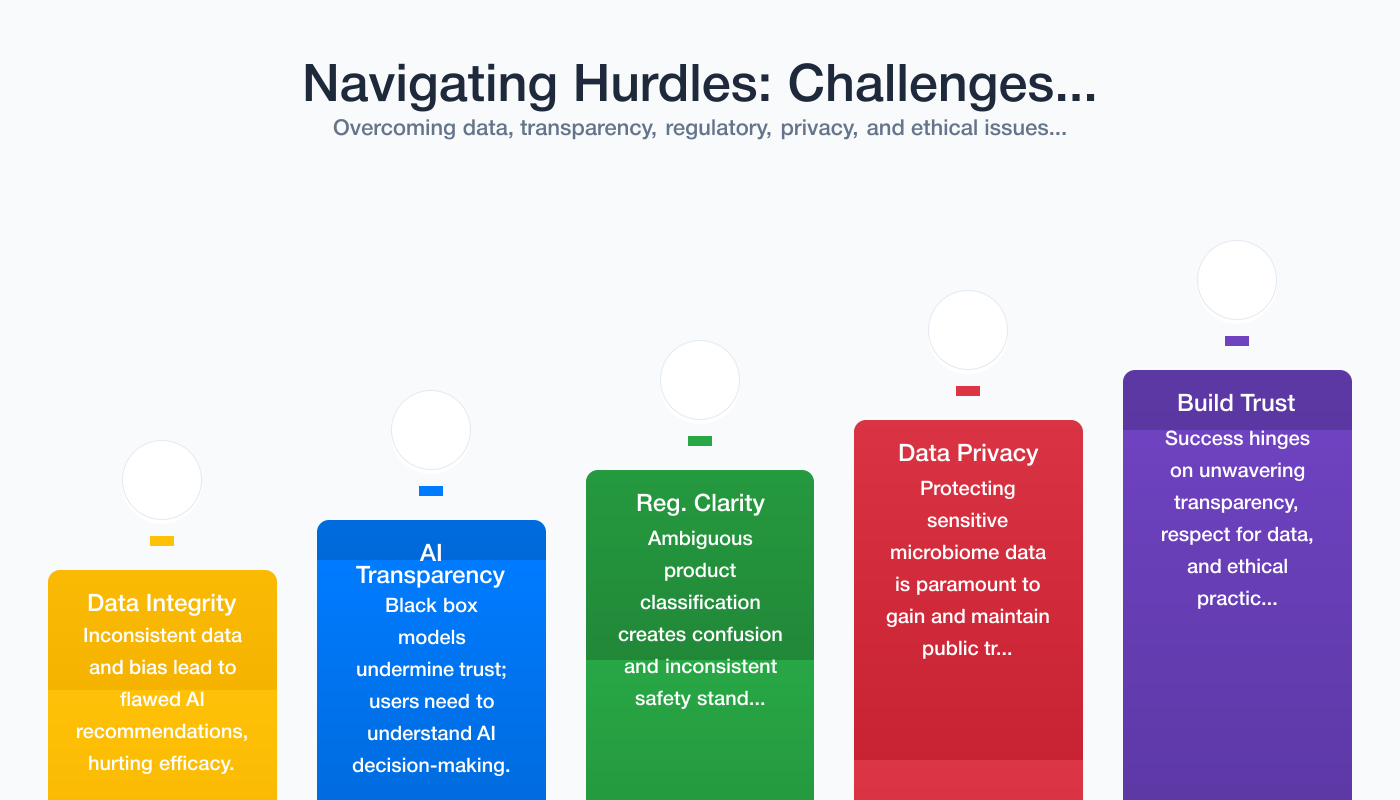
The regulatory environment adds another layer of complexity. As noted in a recent analysis in the MDPI journal Cosmetics (2025), microbiome-based products often exist in a gray area, not fitting neatly into existing cosmetic or pharmaceutical categories. This ambiguity creates uncertainty for developers and leaves consumers questioning safety and efficacy standards. Addressing these obstacles is paramount for building a sustainable and ethical ecosystem.
| Challenge | Core Issue | Implication for Consumers |
|---|---|---|
| Data Integrity & Bias | Inconsistent collection methods and a lack of diverse microbiome datasets. | AI recommendations may be inaccurate or less effective for underrepresented skin types and ethnicities. |
| AI Interpretability | The "black box" nature of complex models makes their decision-making process opaque. | It becomes difficult to trust or clinically verify an AI's suggestions, a crucial factor for health applications. |
| Regulatory Ambiguity | Products with live bacteria fall between cosmetic, drug, and medical device classifications. | Inconsistent safety standards, unsubstantiated claims, and potential confusion about a product's purpose. |
| Consumer Privacy | The collection and analysis of highly personal and sensitive microbiome data. | Significant risk of data misuse or security breaches, which can erode public trust in sharing personal health information. |
Addressing consumer privacy is particularly critical. Your skin microbiome data is a unique biological signature, and ensuring its security and ethical use is non-negotiable for gaining public acceptance. For this technology to empower users, it must first earn their trust through unwavering transparency and respect for their data. The long-term success of the microbiome skincare revolution depends on building consumer trust through ethical data practices, transparency, and clear regulatory oversight.
The Future is Living: What's Next for Your Skin?
The convergence of AI and microbiome science is just beginning to reveal its full potential, fundamentally redefining our relationship with our skin. We are moving towards a future of proactive, personalized, and living care, where skincare adapts and evolves with us through biological insights and artificial intelligence. The promise of engineered microbiome-based products is considerable (FutureBridge, 2025), a vision supported by MDPI Cosmetics (2025), which anticipates deep integration of genetic engineering and AI for personalized treatments.
Anticipate these key developments shaping the future of skin health:
- Accelerated Integration: A seamless blend of AI, bioengineering, and microbiome science will create solutions that interact with your skin's unique biology.
- Proactive Care Models: AI will shift skincare to a preventative paradigm, predicting imbalances within your skin's ecosystem before they visibly manifest.
- Accessible Diagnostics: Expect more refined and widely available at-home microbiome analysis kits, empowering consumers with precise skin health data.
- Collaborative Innovation: Key partnerships across science, biotech, skincare brands (e.g., [L
Or
al](https://en.wikipedia.org/wiki/L%27Or%C3%A9al)), and regulators will accelerate discoveries and ensure safe development.
The trajectory of this field is toward an era of adaptive skincare that is as dynamic and unique as an individual's biology.
The microbiome revolution, powered by artificial intelligence, is fundamentally transforming our approach to skin health. We are moving beyond generic solutions towards an era where skincare is as unique as you are.
Here are the key takeaways from this journey into your skin's microscopic world:
- The Shift to Ecosystem Nurturing: Skincare is evolving from eliminating germs to understanding and nurturing the skin's complex microbiome
a diverse community of microorganisms essential for its health.
- AI as the Deciphering Engine: Artificial Intelligence is the critical intelligence that decodes the vast data from microbiome analysis, identifying unique patterns to pave the way for effective, data-driven skincare.
- The Dawn of Bio-Intelligent Solutions: We are entering an age of bio-intelligent skincare, where AI-driven insights empower the creation of hyper-personalized formulations and programmed microbes designed to benefit your skin.
This profound paradigm shift promises a future where radiant, balanced skin is achieved through individual understanding rather than one-size-fits-all guesswork. The pragmatic next step is to explore how these advancements can benefit your own skin. Seek out solutions from pioneers in the field that prioritize a data-driven approach to support your unique skin ecosystem. Staying informed about developments in personalized skincare will empower you to make choices that nurture your skin's long-term health. The convergence of microbiome science and AI marks a fundamental shift toward proactive, data-driven skin health.
Tags
Related Articles

AI-Powered Customization: The Essential Future of Skincare
Demystifying AI in Skincare: Your Guide to Intelligent Algorithms