Latest AI Skincare Trends: What's Next for Personalized Beauty
Read about Latest AI Skincare Trends: What's Next for Personalized Beauty on Cosmi Skin
In an era where prestige skincare sales saw a modest 1% growth in early 2025, a quiet revolution is simultaneously sweeping through the beauty industry. The demand for hyper-personalized, AI-driven solutions, however, is soaring, signaling a definitive end to the "one-size-fits-all" approach.
Consumers are no longer content with generic creams and routines that offer inconsistent results. Instead, a new era of data-backed, individualized care is emerging, promising unprecedented effectiveness and precision. Artificial intelligence is rapidly transforming from a futuristic concept into a foundational tool, creating more effective, efficient, and truly personalized beauty experiences for everyone.
This article will decode the cutting-edge AI technologies shaping this future, from on-demand formulations and real-time routine adjustments to the innovative frontier of predictive and regenerative skincare. We’ll explore the tangible benefits these advancements offer, alongside the critical challenges brands must thoughtfully navigate, ensuring a future where your skincare isn't just smart—it's uniquely yours.
The End of Guesswork: Why Traditional Skincare Falls Short
For years, the journey to radiant skin has felt like a perpetual guessing game—a cycle of hopeful purchases and often disappointing results. This isn't due to a lack of effort, but rather the fundamental mismatch between generic product offerings and the inherent variability of human skin. Our complexions are unique ecosystems, influenced by an intricate dance of genetics, age, lifestyle, and fluctuating environmental factors like pollution and climate. Trying to fit this individuality into a 'one-size-fits-all' skincare regimen is akin to using a single key for countless different locks.
The traditional approach often traps consumers in a costly and frustrating cycle of trial and error. People invest significant time and money into products that might not suit their specific concerns, leading to irritation, suboptimal results, and ultimately, dissatisfaction. Many skincare routines become complex, multi-step endeavors that are difficult to maintain and understand, with Reddit discussions frequently revealing user fatigue and a desire for simpler, more effective solutions.
This consumer frustration extends to the overwhelming market landscape. The constant churn of new product launches—each promising revolutionary results—only adds to the confusion, making it nearly impossible to discern what genuinely works for one's unique skin. Industry experts in Beauty Independent note the decline of multi-step regimens, signaling a shift away from complexity towards efficacy. Furthermore, research from the NCBI consistently emphasizes the critical interplay of both intrinsic (genetics, hormones) and extrinsic (environment, diet) factors on skin health, underscoring why generalized products fall short.
The market itself reflects this stagnation: prestige skincare sales inched up a mere 1% in the first nine months of 2025, according to industry reports. This sluggish growth highlights a clear need for disruptive innovation. Consumers are no longer content with broad categories or an endless stream of products; they crave solutions that speak directly to their individual needs, moving beyond the era of generic recommendations.
Note: The era of the 10-step routine is officially departing, driven by a consumer demand for precision over proliferation.
The future of skincare lies in truly personalized solutions that understand and adapt to individual skin's dynamic complexity.
How AI Becomes Your Personal Skin Analyst

The frustration with generic skincare gives way to a powerful solution: artificial intelligence. AI is transforming the beauty landscape by acting as your personal skin analyst, translating vast, complex datasets into actionable, data-driven recommendations that truly understand your unique complexion. It begins by meticulously gathering information from multiple sources.
AI platforms first take in user-submitted data, often through detailed questionnaires and high-resolution facial photographs. This internal data is then cross-referenced with crucial external factors. Algorithms constantly analyze real-time environmental data, including local UV index, humidity levels, and pollution data, which all significantly impact skin health. L'Oréal's SkinConsult AI, for example, leverages deep learning on facial images, demonstrating how this multi-faceted data input creates a comprehensive user profile.
At the core of this analysis are advanced computer vision and deep learning algorithms. When you upload a facial image, these sophisticated systems meticulously scan for various skin indicators. They can accurately assess concerns like fine lines, wrinkles, hyperpigmentation, pore size, and skin texture. An NCBI study reinforces the reliability of deep learning models for detailed skin morphology analysis, confirming their ability to identify subtle nuances often missed by the human eye. This level of precision provides an objective baseline for understanding your skin's current state.
Once your unique skin profile is established, machine learning models take over as an 'ingredient matchmaker.' These algorithms cross-reference your specific concerns with vast databases containing information on thousands of active ingredients and their proven efficacies. Proven Skincare's 'Skin Genome Project,' for instance, evaluates over 20,000 ingredients against individual profiles. This process allows the AI to predict which ingredients will be most beneficial and, crucially, to flag potential irritants or counterproductive compounds based on your unique sensitivities.
For example, if the AI detects uneven skin tone or hyperpigmentation, it might recommend products featuring actives like niacinamide or Vitamin C, known for their brightening properties. Conversely, if your skin profile indicates sensitivity, the AI can parse ingredient lists for harsh compounds such as sulfates or potentially irritating concentrations of benzoyl peroxide, steering you towards gentler alternatives. This intelligent matching moves beyond guesswork, offering tailored recommendations that are both effective and safe, similar to how platforms like Cosmi Skin leverage data to create personalized routines.
Note: L’Oré’al's acquisition of Modiface highlights the strategic importance of integrating AR/AI for precise, real-time skin analysis, paving the way for hyper-personalized product development.
AI’s strength lies in its ability to synthesize diverse information, providing unparalleled precision in skincare guidance.
Trend 1: On-Demand Formulations and Hyper-Customization
Imagine a world where your daily moisturizer is blended moments before you apply it, perfectly matched to today's humidity, your sleep quality, and even your stress levels. This isn't a distant dream; AI is rapidly bringing it to life, fundamentally transforming how we interact with skincare. We're moving beyond mere product recommendations to hyper-customization—the real-time creation of bespoke formulations right in your home.
This paradigm shift is spearheaded by intelligent devices that leverage sophisticated AI to analyze a vast array of data points. They move far past static skin assessments, incorporating dynamic factors like your local weather, UV index, pollution levels, and even personal biometric data such as sleep patterns (L'Oréal Perso, 2020). The device then dispenses a single, customized dose of product, blending different formulas on the fly. This means your morning serum might be richer in antioxidants on a high-pollution day and include a higher SPF boost if UV levels are extreme.
Leading the charge in this innovative space are pioneering systems like the L'Oréal Perso, a smart device that formulates personalized lipstick, foundation, and skincare. Similarly, Shiseido's Optune system utilizes an app to collect data, recommending and dispensing custom serums and moisturizers daily (Shiseido, 2019). These devices work by:
- Collecting Data: User input, selfies, environmental data, and sometimes even genetic information.
- AI Analysis: Processing this data to understand immediate skin needs and external influences.
- Formulation: Blending concentrated base formulas in precise ratios to create a fresh product.
- Dispensing: Delivering the perfect, single-use dose directly to the user.
This approach offers compelling benefits that resonate deeply with modern consumer demands. It minimizes product waste, aligning with the growing trend of skinimalism and sustainability by reducing the need for multiple products and excessive packaging. Moreover, the ability to create multifunctional products on demand caters to busy individuals seeking efficiency without compromising results. Consumers are increasingly seeking products that serve multiple purposes, a trend widely noted in market research on hybrid beauty products (Mintel, 2023). This fusion of data, AI, and biotechnology represents the ultimate in personalized, responsive beauty.
Note: These systems are designed to evolve with your skin, adapting to its changing needs rather than offering a one-size-fits-all solution, making every application optimally effective.
AI is shifting the skincare paradigm from purchasing pre-made products to creating bespoke formulations at home, tailored to the specific needs of the day.
Trend 2: The Longevity Leap: Predictive and Regenerative Skincare
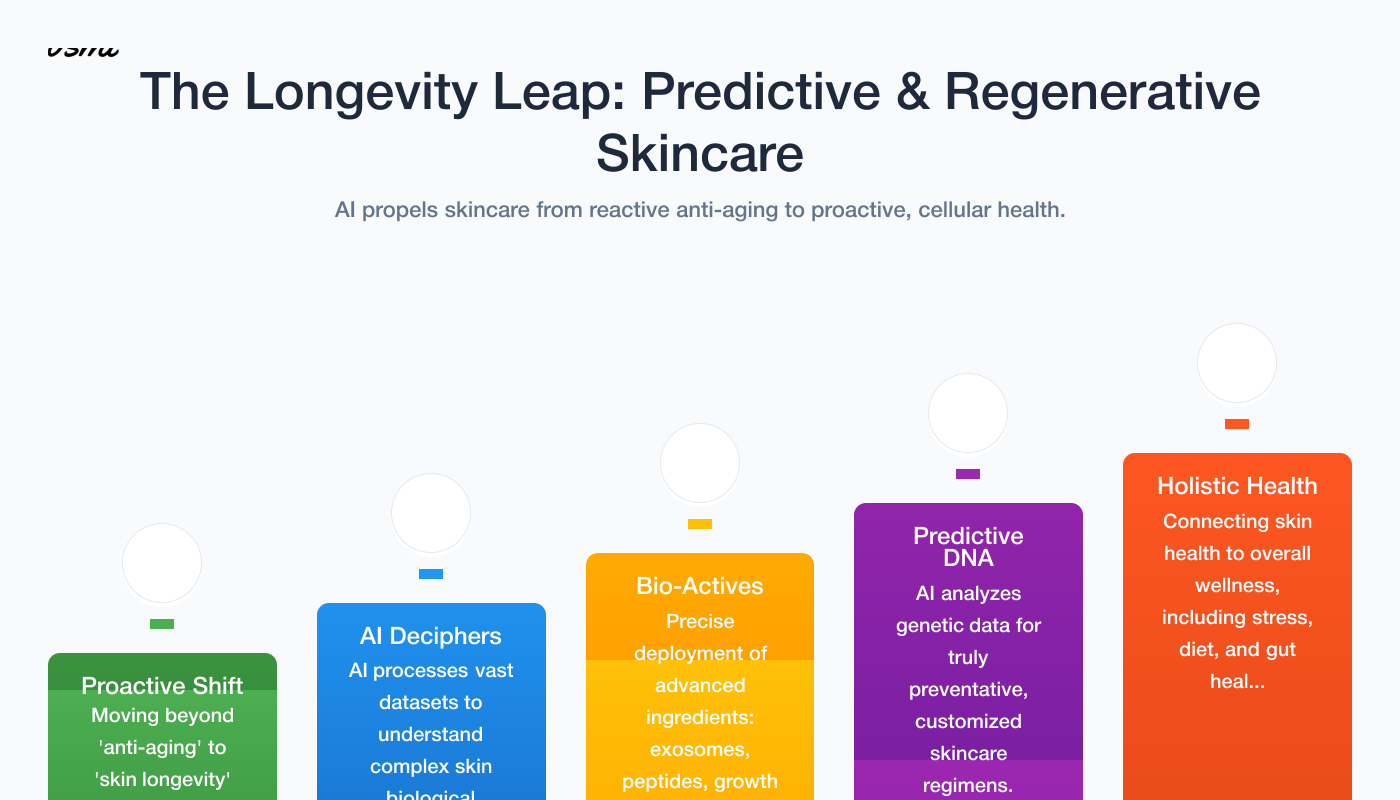
The discourse around skincare is evolving, moving beyond the superficial battle against aging. We're witnessing a significant shift from reactive 'anti-aging' rhetoric to a proactive, health-focused approach: 'skin longevity.' This new frontier emphasizes long-term cellular health, resilience, and optimizing skin function from within, rather than just masking external signs. AI is the powerful accelerator propelling us into this era of regenerative skincare.
AI's ability to process and identify patterns in vast datasets is proving invaluable in deciphering the complex biological mechanisms of skin health. This allows for the precise recommendation and deployment of advanced bio-engineered actives. These aren't your grandmother's retinols; we're talking about sophisticated ingredients like:
- Exosomes: Tiny vesicles that carry critical information between cells, promoting repair and rejuvenation. Industry experts widely agree on exosomes gaining momentum for their regenerative potential (Beauty Independent, 2023).
- Peptides: Short chains of amino acids that signal skin cells to produce more collagen, elastin, or other vital proteins.
- Growth Factors: Proteins that stimulate cell growth, proliferation, and differentiation, essential for tissue repair and regeneration.
These bio-engineered actives work at a cellular level, supporting the skin's natural repair processes and enhancing its intrinsic ability to maintain health and vitality over time.
Beyond targeting existing concerns, emerging AI systems are beginning to integrate genetic data, ushering in a truly preventative era. By analyzing an individual's unique genetic predispositions, AI can forecast potential issues like collagen degradation, susceptibility to inflammation, or specific oxidative stress pathways. This allows for the proactive formulation of skincare regimens designed to mitigate these future challenges before they manifest. The rise of DNA-based formulation is indeed a key trend anticipated for 2025 (WGSN, 2024).
This scientific, data-driven methodology aligns perfectly with a holistic view of beauty, intrinsically connecting skin health to overall wellness. The burgeoning understanding of the brain-skin connection further reinforces this, recognizing that internal factors like stress, diet, and gut health profoundly impact skin's longevity and appearance. Statements from multiple brand founders in Beauty Independent consistently highlight the growing reliance on bioengineered actives and a focus on cellular repair technologies, underscoring this industry-wide commitment to deeper, more sustainable skin health.
AI is accelerating the move towards regenerative skincare by identifying and deploying advanced biotech ingredients that optimize skin function for long-term health, not just superficial fixes.
The Reality Check: Data Privacy, Algorithmic Bias, and the Human Touch
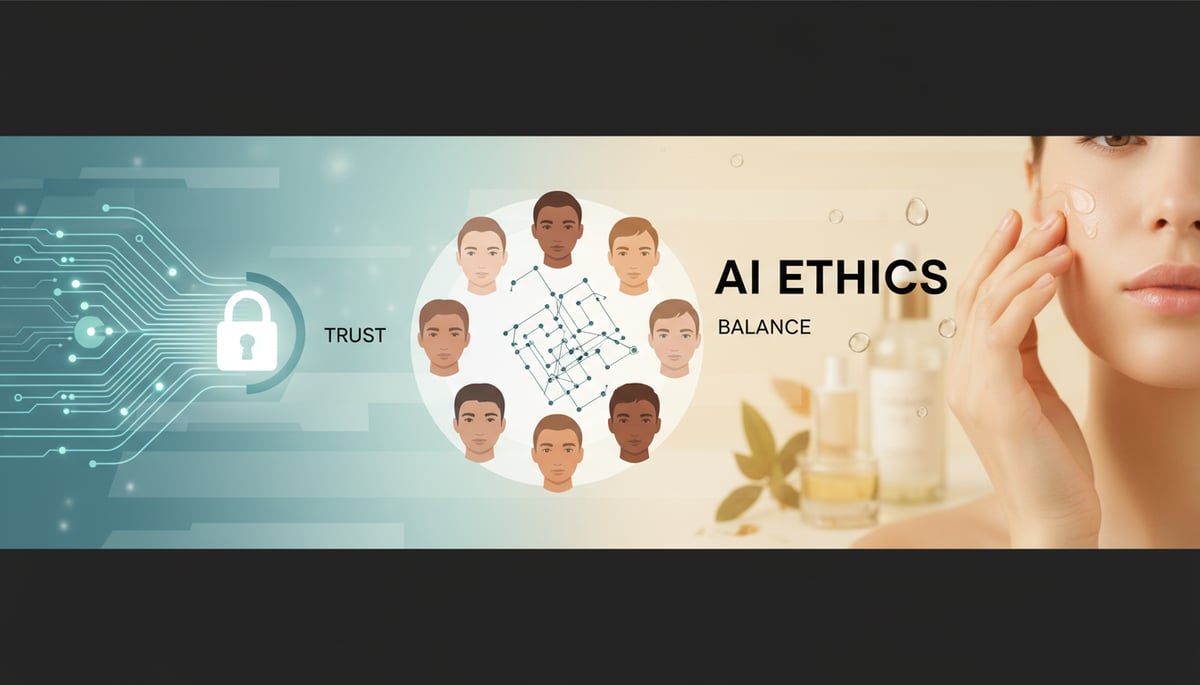
While AI promises a revolutionary future for personalized beauty, it's crucial to ground our enthusiasm in a thoughtful assessment of the associated challenges. For AI to be truly beneficial and widely adopted in skincare, the industry must proactively address critical issues of data security, algorithmic fairness, and the irreplaceable value of human expertise. These aren't minor footnotes; they are fundamental pillars that will determine the ethical and effective integration of AI into our beauty routines.
One of the most pressing concerns revolves around data privacy. AI skincare tools, by their very nature, require access to sensitive personal data. This includes high-resolution facial scans, detailed health questionnaires, lifestyle habits, and even genetic information in some advanced systems. The question of how this data is stored, processed, used, and protected becomes paramount. Consumers rightly demand robust security protocols and transparent policies to prevent misuse or breaches, a concern frequently highlighted in research on digital health tools (NCBI, 2020). Without trust in data handling, widespread adoption will remain elusive.
Another critical ethical hurdle is algorithmic bias. AI models learn from the data they are fed. If these datasets are not diverse—if they are predominantly trained on lighter skin tones or specific demographic groups—the AI will inherently perform poorly or inaccurately for others. This can lead to misidentification of concerns, inappropriate product recommendations, and ultimately, a perpetuation of inequities in product effectiveness, particularly for darker skin tones (Upcircle Beauty, 2023). Ensuring inclusivity in dataset development and continuous auditing of AI outputs are non-negotiable steps towards fairness.
Finally, we must consider the loss of intuition and the invaluable human touch. While AI provides data-driven precision, over-reliance on it may discourage users from learning about their own skin's subtle cues and needs. Technology should be an empowering tool, not a replacement for self-knowledge or the nuanced insights gained from a professional dermatologist. Moreover, AI cannot replicate subjective preferences for texture, scent, or the ritualistic, often comforting, aspect of a skincare routine. These sensory and experiential elements are deeply personal and integral to the overall user experience, something multiple brand founders emphasize when discussing consumer trust and engagement (Beauty Independent, 2022). The human factor, in its many forms, remains indispensable.
As we conclude our exploration, it's clear the skincare industry stands at a pivotal juncture. The era of generic, one-size-fits-all solutions is rapidly giving way to a new paradigm where personalized beauty is driven by the power of artificial intelligence. This isn't merely a futuristic concept but a present reality, reshaping how we understand, care for, and enhance our skin. The integration of AI promises not just efficiency, but a fundamentally more effective and inclusive approach to skin health for every individual.
Here are the key takeaways from this transformative shift:
- Beyond guesswork: AI acts as a sophisticated personal skin analyst, leveraging data to move beyond traditional trial-and-error, delivering precise, evidence-backed insights for truly effective routines.
- Cutting-edge applications: From on-demand, hyper-customized formulations to the emerging frontier of predictive and regenerative skincare, AI is at the forefront of innovative solutions for long-term skin vitality.
- Responsible innovation: While the transformative potential is immense, brands and consumers alike must navigate critical considerations such as data privacy, algorithmic bias, and ensuring the continued importance of the human touch in care.
The landscape of skincare is undeniably evolving into an intelligent ecosystem, offering unprecedented levels of precision and personalization previously unimagined.
For those ready to move beyond generalized advice and embark on a truly data-driven approach to their skin, exploring platforms like Cosmi Skin that leverage advanced AI for tailored routines and smart product recommendations is a logical and empowering next step. It represents an opportunity to unlock your skin's full potential, guided by insights as unique as you are.
Tags
Related Articles
AI-Powered Customization: The Essential Future of Skincare
Demystifying AI in Skincare: Your Guide to Intelligent Algorithms