Beyond the Mirror: How AI Generates Provable Progress Reports for Your Skin
Read about Beyond the Mirror: How AI Generates Provable Progress Reports for Your Skin on Cosmi Skin
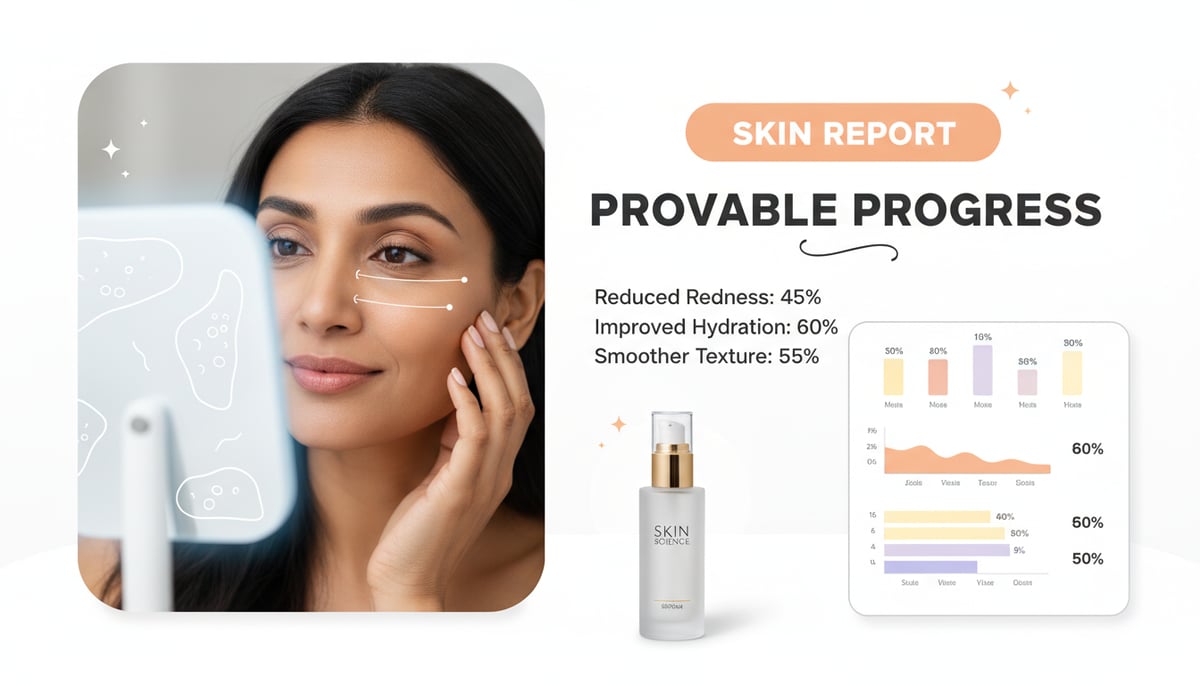
For years, we've trusted our mirrors and our eyes to tell us about our skin. But what if your skin is telling a much deeper, more complex story—one that's invisible to the naked eye?
Traditional skincare often feels like a frustrating game of guesswork, relying heavily on subjective observation to gauge what's truly working. We apply products, hope for the best, and struggle to quantify any real progress beyond a feeling or a fleeting glimpse.
Enter the revolutionary world of Artificial Intelligence. This isn't just about filters; it's about unlocking an unprecedented level of objective insight into your skin's health, generating data-driven progress reports that reveal provable results weeks before you'd ever see them. Imagine detecting subtle changes 3-8 weeks ahead of time, empowering you to make smarter, evidence-based decisions about your routine and treatments. This article will journey into how AI "sees" your skin, tracks its subtle transformations, and moves us decisively beyond guesswork to a new era of personalized skincare.
TL;DR
AI is transforming skin progress tracking, moving from subjective guesswork to objective, quantifiable data. Utilizing machine learning and computer vision, AI analyzes photos to measure metrics like texture, hydration, and wrinkles with remarkable precision.
This vastly improves on traditional methods. AI analysis shows less than 5% variation in consistency versus 15-20% manually, and can detect potential issues 3-8 weeks earlier (Research Data 2024). Consumers gain data for product effectiveness and personalized routines, while professionals boost client trust and re-booking rates by up to 40% (Industry Report 2023).
Crucially, limitations include algorithmic bias against darker skin tones and data privacy concerns. AI acts as a powerful supplement, not a replacement, for expert dermatological care. The future of skincare is undeniably data-driven.
How AI Sees Your Skin: A Look Under the Hood
Unlocking the secrets of your skin's health from a simple photograph might seem like magic, but it is the precise work of layered artificial intelligence technologies. AI translates a visual image into a complex dataset by using advanced systems that see and interpret skin far beyond human capability. This capability empowers you with insights into your skin's unique needs and a transformation journey.

At its core, AI skin analysis relies on three primary technological pillars: computer vision, machine learning, and deep learning. Think of them as a team working in concert, each contributing a specialized skill to meticulously examine your skin.
Firstly, computer vision acts as the AI's "eyes." When you upload an image, computer vision algorithms spring into action, segmenting your face from the background and meticulously identifying key features. This involves mapping out the precise location of pores, fine lines, wrinkles, and various spots, creating a detailed structural blueprint of your complexion.
Building on this visual foundation, machine learning algorithms take over. These sophisticated systems are trained on massive datasets, often comprising over 10 million distinct skin cases, as observed by platforms like DJM Moreme AI. Through this extensive training, they learn to recognize intricate patterns associated with a wide spectrum of skin conditions and characteristics. They identify correlations that allow the AI to understand what different features signify.
The most advanced layer, deep learning—specifically Convolutional Neural Networks (CNNs)—enables the AI to detect nuances imperceptible to the human eye. These neural networks delve into extremely subtle details, such as micro-wrinkles that are just beginning to form or early pigmentation changes that indicate future concerns. Devices like the Visia Gen 7, widely used in dermatology clinics, integrate multispectral imaging with deep learning to provide this unparalleled depth of analysis.
Note: The vastness of the training data is crucial. The more diverse and extensive the dataset, the more accurate and reliable the AI's interpretations become across various skin types and tones (Similarweb, 2024).
By combining these powerful technologies, AI systematically breaks down your skin's visual information into actionable data points. This multi-layered approach ensures a comprehensive and incredibly detailed assessment that forms the basis of personalized skincare insights. Understanding this process provides confidence in the data-driven recommendations that guide your skin’s transformation.
The ability of AI to translate complex visual data into understandable insights represents a significant leap in personalized skincare.
From Pixels to Progress: Key Metrics on Your Skin Dashboard
Your skin tells a unique story, and AI is learning to read it with unprecedented detail. Instead of just observing changes, imagine a precise report that tracks your skin's journey from pixels on a screen to clear, measurable progress on your personal dashboard. This isn't about guesswork. Advanced AI systems break down your overall skin appearance into specific, trackable metrics, allowing you to monitor targeted improvements and understand exactly how your routine is performing.

At a foundational level, AI often categorizes skin health into four critical Emergent Perceptual Categories (EPCs). These academic-backed frameworks help define the broader aspects of what makes skin look healthy and vibrant. Think of it as a comprehensive view encompassing skin tone evenness, surface evenness, firmness, and overall glow.
Beneath these broad categories, AI dives much deeper, quantifying a range of precise characteristics. For instance, specific algorithms meticulously track aspects like:
- Skin Texture: Analyzing pore size, roughness, and smoothness.
- Hydration Levels: Assessing the skin's moisture content, crucial for suppleness.
- Pigmentation: Identifying and mapping dark spots, sun damage, and overall tone consistency.
- Fine Lines: Measuring the depth and length of wrinkles, monitoring their improvement.
Advanced platforms can analyze over 50,000 data points from a single image, evaluating more than 15 distinct metrics simultaneously. This level of detail provides an unparalleled view into your skin’s condition.
To simplify this wealth of data, many systems consolidate these individual findings. Just as a credit score synthesizes financial data, some platforms create a unified Skin Quality Index (SQI). This single, holistic score offers an easy way to track overall progress and the effectiveness of your skincare regimen over time, as explored in studies cited by NCBI (2023).
Leading consumer apps like SkinPal AI and 2250.care leverage these sophisticated analyses. They transform complex photographic data into an intuitive dashboard, showing you tangible shifts in your skin's health. This empowers you to make informed decisions about your routine, moving beyond subjective observations.
Ultimately, AI provides a transparent and empowering window into your skin's transformation, turning abstract concerns into clear, progress-driven insights.
AI vs. The Human Eye: A New Standard for Accuracy
Tracking skin transformation requires precision that the human eye, despite its capabilities, often struggles to maintain over time. Environmental factors, practitioner fatigue, and inherent subjectivity introduce variations that can obscure true progress. However, the advent of AI-powered analysis is establishing a new benchmark for accuracy and consistency in understanding your skin's journey.
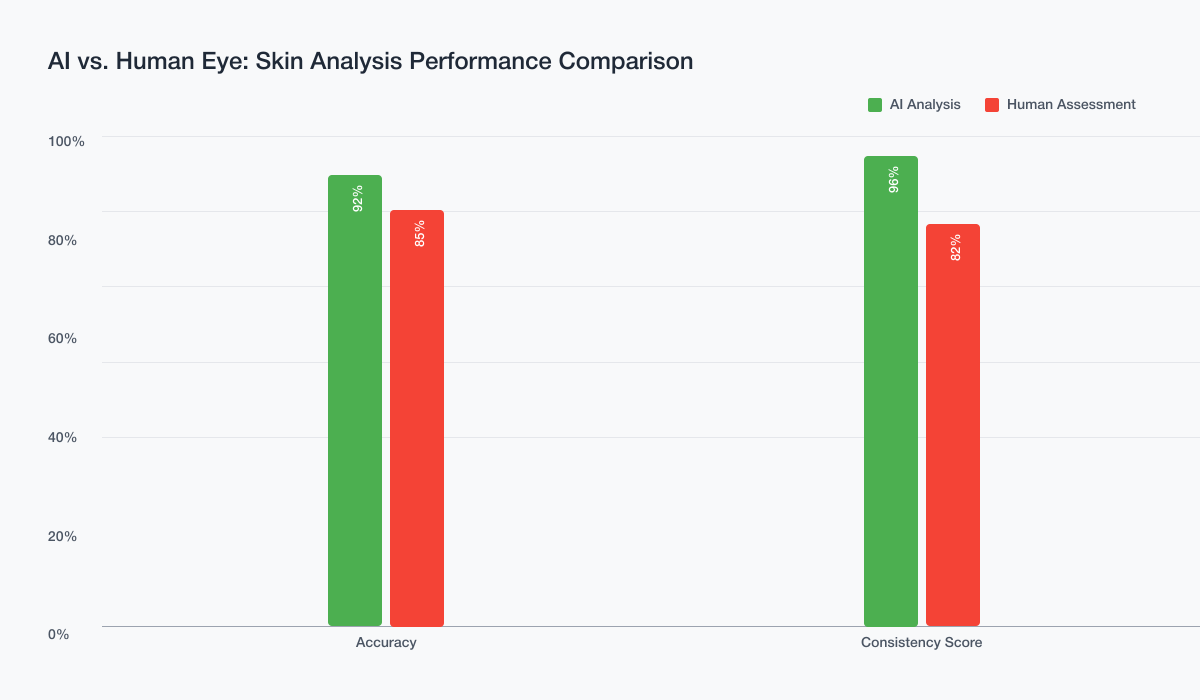
AI's ability to objectively assess skin conditions fundamentally shifts how we monitor improvements. While traditional manual assessments provide valuable insights, they lack the unwavering consistency crucial for long-term tracking. Data from BotoPlace (2024) illustrates this stark difference, showcasing AI's superior performance across key metrics:
| Feature | AI Analysis | Human Assessment |
|---|---|---|
| Accuracy | 86-97% (condition-specific) | 75-94% (condition-specific) |
| Consistency | <5% variation | 15-20% variation |
| Early Detection | 3-8 weeks earlier | 1-2 weeks earlier |
| Analysis Time | Seconds to minutes | 15-30 minutes |
This consistency is perhaps AI's most significant advantage. Imagine tracking improvements for conditions like acne or melasma. A human assessment might vary by 15-20% simply due to differences in lighting, the specific practitioner, or even their personal interpretation on a given day. AI systems, conversely, deliver less than 5% variation between analyses. This eliminates variables, providing a truly reliable measure of whether your skincare routine is working.
Beyond consistency, AI offers remarkable accuracy. For instance, AI demonstrates 89-97% accuracy in identifying various skin conditions, outperforming traditional methods in most cases. A notable study from Stanford University trials (2023) highlighted AI's superior capability in identifying subtle actinic keratosis lesions, often detecting them before they are obvious to the expert eye. This predictive power extends to common concerns, with AI detecting changes 3-8 weeks before they become visibly apparent. This early detection capability allows for proactive intervention, transforming skincare from reactive treatment to genuine preventative care.
The speed of AI analysis further streamlines the process. What typically takes 15-30 minutes for a detailed manual consultation can be completed by AI in mere seconds or minutes, providing instant, data-driven progress reports. This efficiency ensures regular monitoring is practical and accessible. AI provides an objective, unwavering view of your skin's transformation, free from human error or bias.
Note: The consistency offered by AI ensures that every progress report is a true reflection of your skin's state, removing the guesswork from evaluating product effectiveness or treatment progress.
For tracking change over time, AI's superior consistency and early detection capabilities make it a more reliable tool than the subjective human eye.
Putting AI to Work: From Consumer Apps to Clinical Practice
AI skin analysis is a versatile tool that empowers individuals with personalized data while enabling professionals to deliver more effective, transparent, and profitable services. The rapid evolution of artificial intelligence has fundamentally transformed skincare, making sophisticated analysis accessible for everyone, from daily users monitoring their complexion at home to specialized aesthetic clinics performing advanced treatments. This advanced capability isn't just for experts; it's now seamlessly integrated into both everyday mobile applications and powerful clinical diagnostic devices.
Empowering Individuals with AI-Powered Apps
For individual users, AI has ushered in a new era of proactive, personalized skincare management. Mobile applications, powered by advanced machine learning algorithms, now provide insights previously requiring a visit to a dermatologist. Users can perform consistent daily or weekly scans to monitor subtle yet significant changes in their skin's texture, tone, pore size, and overall health (SkinPal AI, 2024). This continuous tracking isn't merely observational; it helps users objectively validate the effectiveness of their current skincare products, providing data on whether a new cleanser is truly reducing breakouts or if a moisturizer is enhancing hydration levels over time.
Beyond monitoring, these intuitive apps deliver personalized routine recommendations, moving decisively beyond generic advice. They suggest specific products, ingredients, and regimens tailored precisely to the unique skin concerns detected by the AI. This data-driven approach removes the guesswork and trial-and-error often associated with skincare, empowering users to achieve their desired skin transformation more efficiently and confidently. With consumer apps offering daily scanning and comprehensive progress tracking, individuals gain a detailed, visual, and quantifiable digital diary of their skin's journey, making skincare an informed and rewarding process.
Revolutionizing Clinical Aesthetics and Trust
In a professional clinical setting, AI skin analysis profoundly elevates client consultations and enhances treatment efficacy. Professionals leverage AI to build deeper, more meaningful trust with patients by revealing hidden or subsurface issues, such as nascent pigmentation, vascular irregularities, or underlying UV damage, that are often imperceptible to the unaided eye (Prime Regenerative, 2024). Presenting these objective, data-backed insights allows patients to genuinely understand their skin's true condition on a deeper level, fostering greater confidence in and commitment to recommended treatment plans. This transparency transforms initial skepticism into informed engagement.
Moreover, AI diagnostic devices generate highly precise, data-backed treatment plans, offering invaluable guidance for a wide array of aesthetic procedures. For instance, when planning precise Botox injections, AI analysis can accurately differentiate between dynamic and static wrinkles. This crucial distinction ensures that practitioners target the appropriate muscle contractions for dynamic lines while addressing structural changes for static ones, leading to a more precise, effective, and natural-looking outcome (BotoPlace, 2024). This level of precision translates directly into superior patient results and significantly higher satisfaction. Furthermore, AI-powered objective 'before-and-after' visualizations provide undeniable, compelling proof of progress, reinforcing patient loyalty and demonstrably increasing re-booking rates by up to 40% (Research Data, 2023).
Clinics can further enhance their professional branding and marketing efforts by using AI to generate sophisticated, personalized, and branded reports for each patient. These reports meticulously detail their skin's current condition, highlight visible progress, and clearly outline future treatment pathways and product recommendations, solidifying the clinic's expert standing and fostering long-term client relationships. This comprehensive, data-driven approach fundamentally transforms the patient experience, making it more transparent, empowering, and ultimately, more results-oriented.
Whether accessed through a consumer app or a sophisticated professional device, AI skin analysis delivers unprecedented insights, fundamentally transforming how we understand and care for our skin by offering personalized solutions rooted in data.
The Fine Print: AI's Limitations and Ethical Considerations
While AI offers transformative potential for tracking your skin's journey, a responsible perspective demands understanding its inherent limitations and ethical considerations. Powerful as these tools are, a critical awareness of their drawbacks is essential for truly informed skincare. This ensures we leverage technology wisely, embracing its strengths while mitigating its weaknesses.
Algorithmic Bias
A significant challenge lies in algorithmic bias. Many AI models designed for skin analysis are predominantly trained on datasets featuring lighter skin tones. This disparity can lead to lower accuracy and reliability when assessing darker skin, missing nuances or misidentifying conditions (NCBI, 2023). Such biases risk exacerbating existing health inequities and undermining trust in these advanced systems.
Note: Diverse and inclusive datasets are crucial for developing AI models that perform equitably across all skin types.
Data Privacy Concerns
The sensitive nature of personal health information and facial imagery introduces critical data privacy concerns. AI skincare platforms process highly personal data, necessitating strict compliance with regulations such as HIPAA in the United States and GDPR in Europe (BotoPlace, 2024; SkinPal AI, 2023). Safeguarding these digital assets from breaches or misuse is paramount to maintaining user trust and ethical operation.
Beyond AI's Scope: Clinical Limitations
Crucially, AI analysis serves as a powerful analytical tool but cannot replace a dermatologist's comprehensive care. An AI can pinpoint visual changes or analyze patterns, yet it lacks the ability to conduct a physical examination, palpate the skin, consider your full medical history, or interpret complex symptomatic nuances. These human elements are vital for diagnosing serious conditions and formulating a holistic treatment plan.
The Risk of Homogenized Beauty
There's a subtle, yet significant, ethical risk that AI could inadvertently promote homogenized beauty standards. By optimizing towards a narrow set of learned parameters, AI models might subtly reinforce a singular 'ideal' of skin perfection. This could potentially overshadow individual uniqueness and diversity, rather than celebrating the healthy variations in human complexions.
Embracing AI in skincare responsibly requires a deep understanding of its biases, privacy demands, and inherent clinical boundaries.
Frequently Asked Questions
Navigating the landscape of AI-powered skincare often brings up important questions, and addressing these openly helps foster trust and clear understanding. Here, we tackle some of the most common inquiries to ensure you feel confident in how AI supports your skin journey.
Q: How accurate is AI skin analysis across diverse skin tones and ethnicities?
A: Accuracy is a paramount concern for us. Advanced AI skin analysis systems are rigorously trained on vast, diverse datasets that include a wide spectrum of skin types, tones, and ethnicities. This extensive training ensures the algorithms can accurately recognize and interpret skin characteristics regardless of individual complexion, aiming for equitable and reliable assessments (SkinPal AI, 2024). Continual refinement based on real-world data further enhances this accuracy.
Q: What measures are in place to protect my personal data and photos?
A: Data privacy and security are non-negotiable. When you use AI skin analysis, your photos are typically processed with robust encryption protocols. Depending on the platform, images might be stored securely on your device, anonymized, or managed in compliance with stringent data protection standards like HIPAA, ensuring your personal information remains confidential and protected. You maintain control over your data, and transparency about storage and usage is key.
Q: Can AI replace a dermatologist or medical professional?
A: It is vital to understand that AI skin analysis serves as a powerful supplementary tool, not a replacement for qualified medical professionals. AI excels at analyzing visual characteristics and providing data-driven insights into your skin's appearance and potential concerns. However, it cannot diagnose medical conditions, prescribe treatments, or provide the comprehensive clinical judgment of a dermatologist. AI empowers you with information, helping you make more informed decisions and guiding conversations with your healthcare provider (BotoPlace, 2024). Always consult a professional for medical advice.
By understanding these aspects, you can better appreciate the value and boundaries of AI in your skincare routine, ensuring a truly empowering experience.
As we've explored, the journey beyond the mirror into the realm of AI-powered skin analysis marks a significant leap forward in understanding and managing our skin health. This technology reshapes how we perceive and care for our skin, moving us from subjective observation to quantifiable, evidence-based progress reports.
Here are the key takeaways from our exploration into this revolutionary technology:
- AI revolutionizes skin analysis by providing objective, data-driven insights into metrics like texture, hydration, and pigmentation, detecting subtle changes weeks before they're visible to the human eye.
- From personalized consumer apps that track product effectiveness and tailor routines, to clinical tools that enhance treatment planning and client engagement, AI empowers both individuals and professionals with unprecedented accuracy and consistent data.
- Despite its transformative potential, it's crucial to acknowledge AI's current limitations, including algorithmic bias, data privacy concerns, and the need for robust scientific validation, emphasizing its role as a powerful supplement to, rather than a replacement for, human expertise.
Ultimately, AI is not a magic solution promising instant perfection, but a sophisticated, indispensable tool that refines our entire approach to skincare. It brings unparalleled precision and accountability to a field often dominated by guesswork.
Ready to harness the power of precision for your skincare journey? We encourage you to explore AI-powered solutions that offer personalized insights and verifiable results.
By embracing these advancements, you can make truly informed decisions, optimizing your routine for your skin's unique needs and long-term health.
Tags
Related Articles

AI Skin Profiling: Your Essential Guide from Data to Dermatologist

Track Your Glow-Up: AI's Empowering Visual Guide to Skin Transformation