The Future of Skincare: AI-Powered Home Devices Explored
Read about The Future of Skincare: AI-Powered Home Devices Explored on Cosmi Skin
For years, skincare has been a cycle of guesswork, product hoarding, and mixed results. We have navigated endless shelves, trying to decipher ingredients and marketing claims, often with outcomes that fell short of expectations. The future of skincare, however, is not about trial and error, but rather precise, data-driven insights delivered directly to your home.
This shift is unfolding through the power of artificial intelligence. The integration of AI into home skincare devices is fundamentally reshaping how we approach beauty, moving from broad recommendations to hyper-personalized routines that understand your unique skin. Imagine a daily regimen crafted not by general guidelines, but by an intelligent system that analyzes your skin in real-time, adapting to your environment, lifestyle, and evolving needs.
This guide explores the world of AI-powered home skincare. You will discover how AI becomes your personal skin analyst, using advanced sensors and algorithms to identify concerns like hydration levels, wrinkles, and texture with unprecedented accuracy. We will explore the arsenal of today's AI skincare tech, from intelligent mirrors to handheld diagnostic tools. We will also weigh the evidence, distinguishing between genuine efficacy and marketing hype, while considering crucial aspects like data privacy. Prepare to unlock a future where your skincare is as smart and unique as you are.
TL;DR
The era of one-size-fits-all skincare is ending. AI-powered home devices are introducing a new, data-driven paradigm for personal beauty, moving care from the clinic to the countertop. These smart tools use sensors and algorithms to analyze your skin's unique condition, from hydration to fine lines. Their goal is to eliminate guesswork by providing hyper-personalization through treatment recommendations and routines that adapt to your specific needs. This technological shift is fueling rapid market expansion, with the beauty tech sector projected to reach nearly $80 billion by the end of 2025 (GroundForce Capital, 2025).
- How It Works: Smart mirrors and handheld analyzers assess skin metrics to create custom plans.
- Key Benefit: Moves beyond generic advice to routines tailored to your specific skin, environment, and lifestyle.
- Considerations: Efficacy depends on device quality and consistent use, while data privacy is a notable concern.
- The Future: Look for wearable skin sensors and at-home custom formula printers.
Ultimately, AI-powered home devices are transforming skincare into a deeply personal, data-driven experience, but consumers must carefully weigh the efficacy claims and privacy implications.
The Dawn of a New Skincare Era: Beyond the Counter
For decades, skincare routines have relied on generic advice and mass-produced items, leading to inconsistent results. Today, a profound transformation is underway, moving beyond the counter to highly personalized solutions empowered by technology. Consumers are increasingly seeking proven, tailored results that address their unique skin concerns, challenging the traditional one-size-fits-all model.
This demand is driving innovation, as advanced technologies previously exclusive to dermatology clinics are now being miniaturized for effective at-home use. This shift empowers individuals to take control of their skin health with unprecedented precision. This evolution is not a fleeting trend but a significant market shift, as consumers invest in solutions that replicate professional treatments. The beauty tech sector, valued at $68.9 billion in 2024, is projected to reach nearly $80 billion by the end of 2025 (ecomundo.eu, 2025), underscoring a lasting change in consumer behavior towards technology-driven beauty, such as those being developed by innovators like CosmiSkin.
This new era of AI-powered skincare brings distinct advantages:
- Precision: Devices analyze individual skin conditions to recommend exact, data-driven treatments.
- Convenience: Professional-grade analysis and tailored routines are accessible from the comfort of home.
- Efficiency: Routines are optimized for maximum impact, reducing guesswork and wasted effort.
- Accessibility: High-end, personalized skincare becomes more attainable for a broader audience.
The convergence of artificial intelligence and consumer electronics is fundamentally reshaping personal skincare, moving it from a reactive guessing game to a proactive, data-driven science.
How AI Becomes Your Personal Skin Analyst
Imagine having a dermatologist's analytical equipment on your vanity, ready to deliver a detailed skin report at any moment. This is the reality that AI-powered skincare devices are bringing into our homes. These smart devices function as sophisticated diagnostic tools, using a combination of high-resolution cameras, specialized sensors, and varying light wavelengths to capture a multi-layered snapshot of your skin's health. The system can quantify key metrics such as hydration, texture, wrinkle depth, and pigmentation with a high degree of precision. As noted by The Beauty Method (2024), AI-powered tools can analyze these common skin concerns with impressive accuracy, forming the basis for truly personalized care.

The process of turning raw data into actionable insights follows a clear, multi-stage path:
- Data Capture: The device initiates a scan using its onboard hardware. High-resolution cameras capture surface-level details like pore size and fine lines, while different light spectra penetrate the skin to assess subsurface conditions like hidden sun damage or moisture distribution.
- Algorithmic Analysis: Sophisticated computer vision algorithms process the captured images and sensor data. This software compares your data points against a vast dermatological database, identifying patterns and quantifying concerns far more objectively than the human eye.
- Insight Generation: The analysis is translated into a user-friendly report. Instead of generic advice, you receive specific data points—for example, identifying that your forehead’s hydration is 20% lower than your cheeks.
- Adaptive Learning: The system’s intelligence evolves. As it gathers more data from your skin over time and tracks your response to products, its machine learning models become more refined. This dynamic feedback loop, which Avinichi (2025) describes as a key feature, ensures recommendations become progressively more accurate.
By transforming a handheld device into a sophisticated diagnostic tool, AI provides a level of personalized skin analysis that was previously inaccessible outside a professional clinic.
The Smart Arsenal: A Tour of Today's AI Skincare Tech
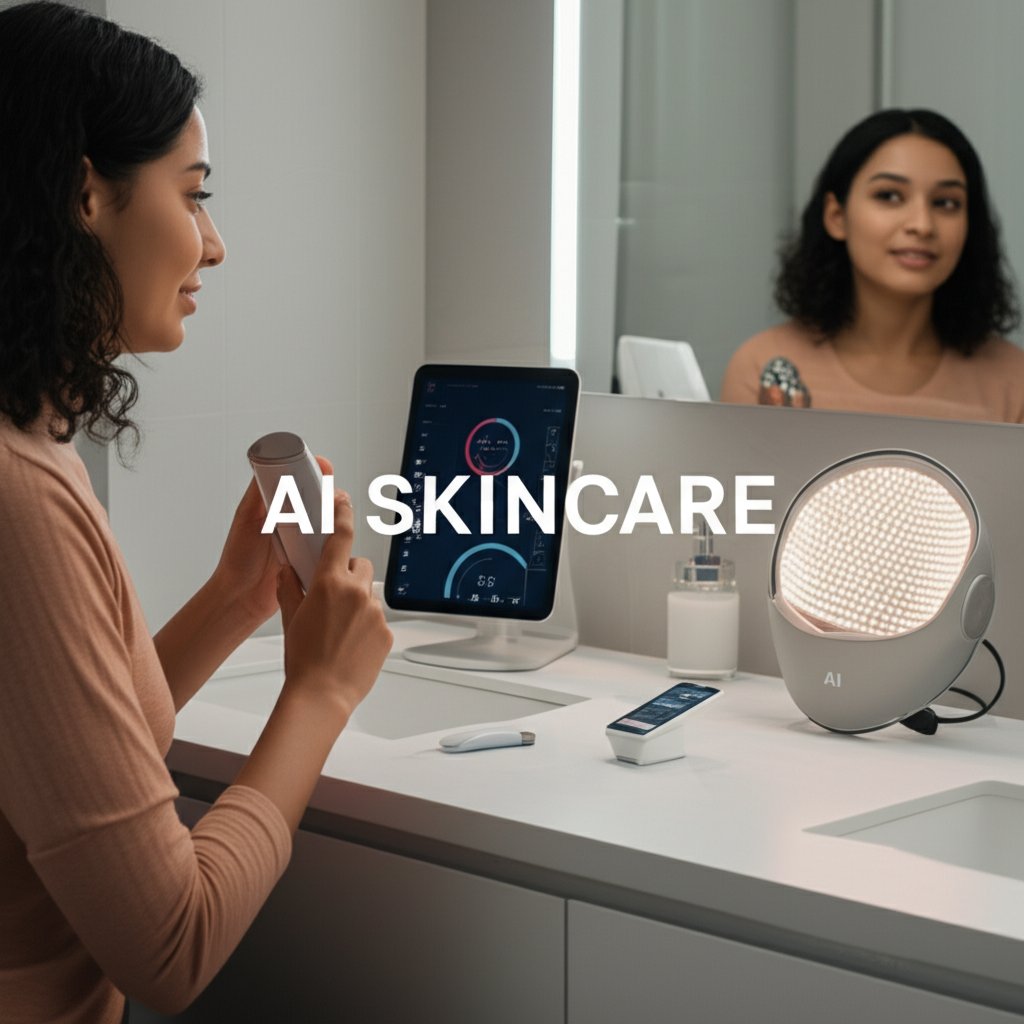
The modern bathroom counter is evolving from a simple shelf into a sophisticated diagnostic and treatment hub. This transformation is driven by a new class of intelligent devices that bring the power of data into our daily routines. AI-powered skincare devices are tangible tools designed to analyze, treat, and customize skincare with precision. This surge in at-home tech is not just a trend; market analyses, such as a report from GroundForce Technologies (2025), project significant growth in the beauty tech sector as consumers seek more effective, data-driven solutions.
At the forefront are smart mirrors, which act as daily skin health dashboards. Devices like the HiMirror use advanced camera technology and AI algorithms to scan your face, detecting and tracking concerns such as fine lines and dark spots over time. For more targeted insights, handheld analyzers offer spot-specific diagnostics. These compact wands are pressed against different areas of the face to measure key metrics like moisture levels and oil production.
Bridging the gap between analysis and action are AI-guided treatment devices. This category includes advanced LED therapy masks and microcurrent tools that use AI to automate or recommend treatment protocols. Perhaps the most futuristic tools available are Custom Formulation Systems. Devices like L'Oréal's Perso use AI to synthesize real-time data—including a user’s skin condition and local air quality—to dispense a perfectly blended, personalized dose of foundation or serum.
| Device Category | Primary Function | Key Benefit | Example Product |
|---|---|---|---|
| Smart Mirror | Full-face skin analysis & progress tracking | Provides a holistic, long-term view of skin health to validate routine effectiveness. | HiMirror |
| Handheld Analyzer | Targeted, spot-specific skin measurement | Delivers precise, localized data on hydration, oiliness, and other metrics. | Wayskin Skin Analyzer |
| AI-Guided Treatment | Automated or recommended therapy protocols | Adapts treatments like LED or microcurrent to the skin’s current condition. | ZIIP Halo |
| Custom Formulation | On-demand, personalized product blending | Creates a fresh, single-dose formula based on real-time skin and environmental data. | L'Oréal Perso |
By integrating diagnostics, personalized treatments, and on-demand formulation, these AI-powered devices empower users to take a proactive, evidence-based approach to their skin health.
Hyper-Personalization: The End of Trial-and-Error Routines
The cabinet filled with half-used serums and moisturizers represents a costly and frustrating journey of trial-and-error. AI-powered home devices are designed to end this cycle of guesswork. They move beyond simplistic categories like "oily" or "dry" skin by creating a personalized regimen based on a comprehensive, real-time analysis of your needs. This process synthesizes multiple data streams: biometric information from a skin scan, local environmental factors like UV index, and user-provided lifestyle data. The result is not a static set of instructions but dynamic routines that adapt to your skin’s changing condition.
This shift meets a clear consumer demand. According to a 2025 report from GroundForce Capital, the growing expectation for tailored beauty experiences is a primary driver of market innovation. Your device might suggest a formula with more potent antioxidants on a day with high air pollution or recommend a calming ingredient after a long flight. This level of hyper-personalization is also changing how products are created. Some brands, like Proven Skincare, use AI to formulate unique products for each customer by analyzing dozens of distinct factors. This "segment of one" approach represents a fundamental departure from traditional mass-market skincare.
| Feature | Traditional Skincare | AI-Powered Personalization |
|---|---|---|
| Data Input | Simple quiz (e.g., oily, dry, combo) | Multi-source: skin scan, environment, lifestyle |
| Routine | Static, based on a fixed skin "type" | Adaptive, adjusts daily or weekly to changes |
| Product Selection | Recommends from existing product lines | Can custom-formulate or precisely recommend |
| Outcome | Trial-and-error, inconsistent results | Data-driven, aims for targeted improvement |
Ultimately, AI-driven hyper-personalization replaces broad assumptions about skin types with a precise, adaptive, and data-backed approach to achieving your specific skincare goals.
Weighing the Evidence: Efficacy vs. Marketing Hype
The promise of professional-grade skin treatments at home is compelling, but it is important to distinguish genuine innovation from sophisticated marketing. While the underlying technologies in many AI devices are scientifically sound, their real-world effectiveness depends on build quality, power specifications, and user consistency. The difference between a clinical-grade tool and an expensive gadget often lies in technical details that marketers may obscure.
This critical perspective is echoed in consumer-driven forums. Discussions within communities like Reddit’s 30PlusSkincare (2024) frequently highlight a disconnect between polished influencer campaigns and actual user outcomes. Users often share that achieving results requires a commitment of several months, a reality sometimes lost in promotions promising rapid transformations. The most discerning consumers look past testimonials to find brands that transparently publish the specifications and clinical data backing their claims.
| Marketing Claim | What to Look For (Technical Spec) | Why It Matters |
|---|---|---|
| "Visibly Reduces Wrinkles" | Wavelength: 630–660nm (Red) & 810–850nm (Near-Infrared) | These specific wavelengths are clinically studied for their ability to penetrate the skin and stimulate collagen production. |
| "Powerful & Fast Results" | Irradiance: ~30–35 mW/cm² | This measures energy density. An effective level ensures sufficient power reaches the cells without being too low (ineffective) or too high (potentially harmful). |
| "Clinically Proven" | Access to full, independent clinical study data | Vague claims should be backed by verifiable research, not just brand-funded surveys or a handful of before-and-after photos. |
A device’s intelligence is only as good as its hardware and the user's diligence. An AI system may perfectly time a session, but if the core technology is underpowered, the results will be underwhelming. Lasting change is the result of a cumulative effect built over weeks and months of regular application. The most effective device is one whose technical specifications are transparently validated and which you will use with disciplined consistency.
Your Face, Their Data: The Privacy Conversation We Must Have
With each facial scan, you are sharing more than just your skin concerns—you are sharing your unique biometric identity. These smart devices capture and analyze high-resolution images of your face, creating a detailed digital profile. This biometric data is incredibly personal and, if mishandled, could be vulnerable to security breaches or misuse. Understanding a company's data handling practices is therefore a matter of fundamental personal security.
The regulatory landscape is constantly adapting to these advancements. As noted by ecomundo.eu (2025), evolving constraints on data collection require companies to be proactive in ensuring compliance. However, the pace of technological innovation often outstrips that of legislation, placing a significant responsibility on the consumer. It is essential to scrutinize the terms of service and privacy policies—documents that are often lengthy and overlooked. A transparent company will make this information clear and accessible, viewing data protection as a core feature, not an afterthought.
Note: Before integrating a smart skincare device into your routine, ask critical questions about its data policy. Where is your data stored—on the device, or in the cloud? Is it encrypted? Will your data be shared with or sold to third parties?
Choosing a device from a brand that demonstrates a clear and transparent commitment to data security is the most critical step in safely embracing the future of skincare.
The Horizon: What's Next for Smart Skincare?
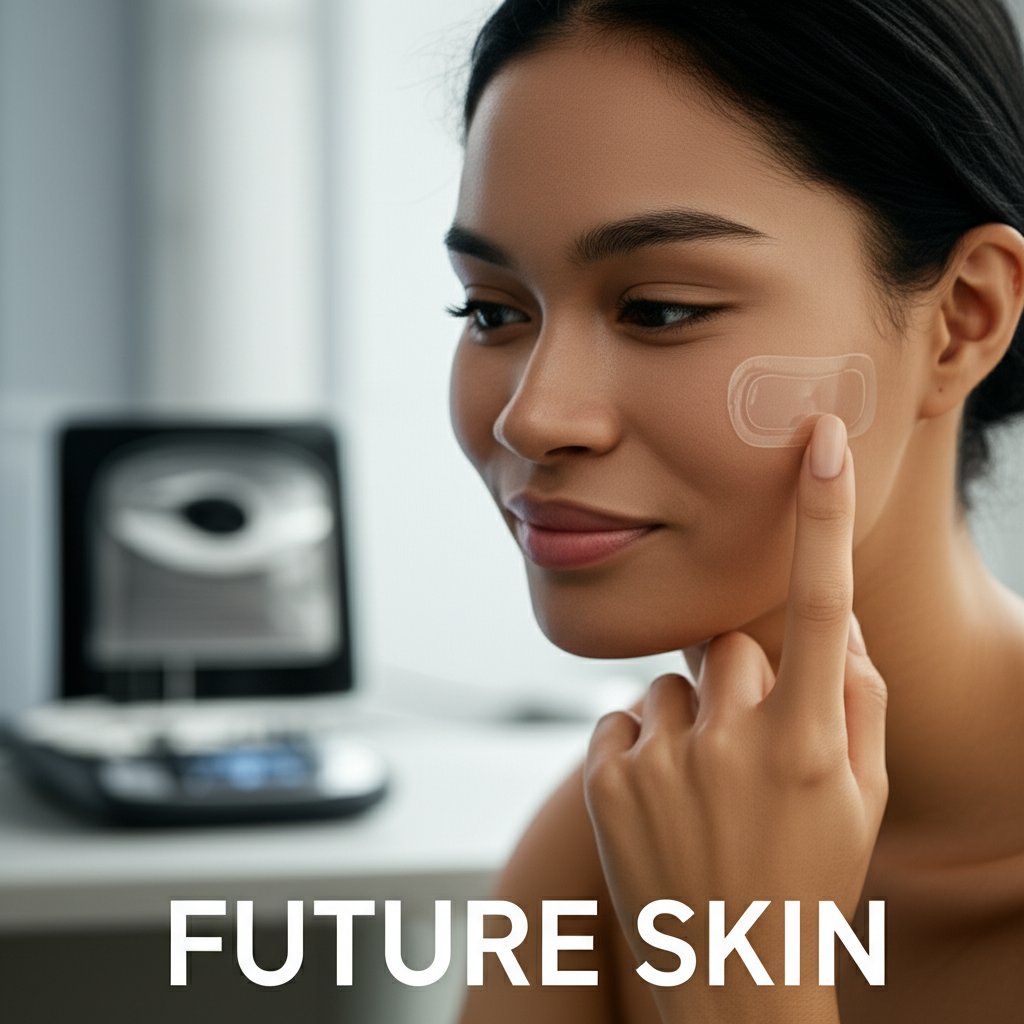
While current AI skincare devices are impressive, the horizon holds even more transformative possibilities. The next wave of innovation promises to integrate skincare more deeply into our daily lives, moving towards proactive and hyper-personalized wellness. This future emphasizes seamless automation, highly individualized solutions, and a truly adaptive approach to skin health.
Experts anticipate that several groundbreaking technologies will redefine personal care. Wearable skincare patches that continuously monitor skin condition and release active ingredients are a likely development (Avinichi, 2025), signaling a shift towards constant, adaptive care.
Envision these advancements shaping your future skincare journey:
- Smart Patches: Miniaturized wearables that monitor skin health in real-time and dispense targeted ingredients as needed.
- Wellness Sync: Deep integration with personal health trackers to adapt routines based on sleep quality, stress levels, or hormonal shifts.
- At-Home Formulation: AI combined with 3D printing technology, enabling you to create custom-blended skincare products on demand.
- Preventative Diagnostics: Advanced AI analysis capable of detecting early signs of skin conditions, prompting timely professional consultation.
The future of AI skincare points toward seamless integration into our daily lives through automated wearables and on-demand creation, effectively merging beauty routines with preventative health and wellness.
The future of skincare is evolving rapidly, driven by the integration of artificial intelligence into our daily routines. We have journeyed through how AI-powered home devices are transforming the industry from guesswork to precision.
Here are the key takeaways from our exploration:
- AI is fundamentally reshaping skincare, moving beyond generic advice to offer deeply personalized, data-driven solutions directly in your home.
- These advanced devices act as your personal skin analyst, utilizing sensors and algorithms to provide hyper-personalized routines tailored to your unique skin metrics and environmental factors.
- While the promise of ending trial-and-error skincare is compelling, it is crucial to critically evaluate device efficacy and remain mindful of data privacy for a beneficial experience.
As this technology continues to advance, the future of beauty lies in a thoughtful partnership between intelligent devices and informed consumers, with platforms like CosmiSkin leading the charge towards a more data-driven approach.
Tags
Related Articles
AI-Powered Customization: The Essential Future of Skincare
Demystifying AI in Skincare: Your Guide to Intelligent Algorithms