Calm Redness with Precision: How AI Personalizes Your Skincare Routine
Read about Calm Redness with Precision: How AI Personalizes Your Skincare Routine on Cosmi Skin
For too long, navigating redness-prone skin has felt like a frustrating guessing game, a relentless cycle of hoping the next product might finally bring relief. What if calming redness could be achieved not through guesswork, but with unparalleled precision?
Imagine a skincare journey where your routine is intelligently crafted, not by generic advice, but by advanced AI that understands your unique skin on a cellular level. This article will reveal how AI truly personalizes your skincare routine, moving beyond broad solutions to identify triggers and recommend exact ingredients to soothe irritation and restore enduring balance.

This revolutionary approach promises to transform the frustrating cycle of redness into a precise, data-driven path to lasting relief.
The 'One-Size-Fits-None' Problem with Calming Skin Redness
Many people experiencing skin redness find themselves trapped in a frustrating cycle. They try countless products and consult professionals, yet consistent relief remains elusive. This struggle highlights a core truth: skin is as unique as a fingerprint, with its behavior intricately shaped by genetics, lifestyle, and environment (Research data: Skin is shaped by biology, lifestyle, and environment).
Traditional skincare approaches often fall short because they categorize concerns too broadly. Labels like 'for sensitive skin' simply don't account for the myriad specific factors influencing individual complexions. This leads to a trial-and-error approach that wastes time, money, and exacerbates consumer frustration.
Redness itself isn't a single condition; it's a symptom with diverse underlying causes. These can range from a compromised skin barrier to inflammatory conditions like rosacea or perioral dermatitis. Each requires a highly targeted approach, something a generic product cannot provide. For instance, Reddit users report dealing with rosacea and perioral dermatitis for 6-7 years without a clear solution, often trying many different creams prescribed by dermatologists without success (Research data: Reddit users report dealing with rosacea/PD for 6-7 years; Dermatologists sometimes prescribe many different creams without success).
Note: Common triggers mentioned by users include dairy, spicy food, stress, and specific product ingredients. A single product cannot realistically address such a wide array of internal and external factors.
This inherent complexity necessitates a shift from generalized solutions to deeply personalized ones, validating the reader's current frustration and setting the stage for a more precise, individualized path forward.
The widespread disappointment with generic skincare underscores the critical need for truly personalized solutions to tackle complex skin redness effectively.
Decoding AI Skincare: From Selfie to Solution
Understanding how AI transforms your skincare journey doesn't require deep technical knowledge. Instead of a single 'magic' algorithm, AI-powered skincare solutions leverage a sophisticated combination of technologies to offer highly personalized recommendations. It's about translating your unique skin data into actionable insights.

The process typically begins with comprehensive data collection, designed to capture your individual skin profile. This might involve:
- Data Acquisition: You could upload a selfie, complete an online quiz detailing your lifestyle, diet, and existing concerns, or even provide data from smart skin sensors (pH, oil levels). Some advanced systems are exploring microbiome sequencing (Research data: Data acquisition involves surveys, selfies, skin sensors (pH, oil), and even microbiome sequencing).
- Feature Engineering: This raw data is then processed and interpreted. For a selfie, advanced computer vision algorithms identify specific skin features like redness, pigmentation, fine lines, and hydration levels.
- Machine Learning Analysis: Sophisticated machine learning models analyze the processed data against vast datasets of skin conditions, ingredients, and their efficacy. Tools like Cetaphil's AI Skin Analysis can use a selfie to analyze wrinkles, dark circles, redness, and hydration (Proof anchor: The 4-step process of the Cetaphil AI Skin Analysis tool; Research data: Cetaphil's AI tool uses a selfie to analyze wrinkles, dark circles, redness, and hydration).
- Personalized Recommendation: Based on this comprehensive analysis, the AI system maps your unique skin profile to a database of evidence-based ingredients and product formulations. This generates a tailored regimen, precisely matched to your specific needs and concerns, rather than a generic suggestion.
This 'stack of technologies' is what differentiates modern AI skincare. Companies like L'Or _eacute_al with Perso and startups like Skinfie Lab are at the forefront, using AI to create highly specific formulations or product recommendations (Proof anchor: Examples of AI tools like L'Or _eacute_al Perso and Skinfie Lab). Haut.AI's SkinGPT, for instance, is trained on over 3 million data points to create hyper-realistic skin simulations for analysis (Research data: Haut.AI's SkinGPT is trained on over 3 million data points).
AI skincare works by transforming complex individual skin data, acquired through various methods, into precise, actionable recommendations, offering a truly tailored path to clearer skin.
How AI Pinpoints Redness Triggers and Tailors Solutions
Unlocking relief for persistent skin redness begins with understanding its unique story. AI offers a powerful shift from generic remedies, moving us towards truly personalized care. Its strength lies in the ability to transcend symptom-spotting, identifying underlying patterns and recommending specific ingredients known to address potential causes.
AI algorithms start by analyzing facial images with remarkable precision. These systems can objectively quantify the extent and specific type of redness, establishing a baseline that is nearly impossible to achieve through self-assessment. This initial scan provides a data-driven snapshot of your skin's current state, far beyond what the naked eye can discern.
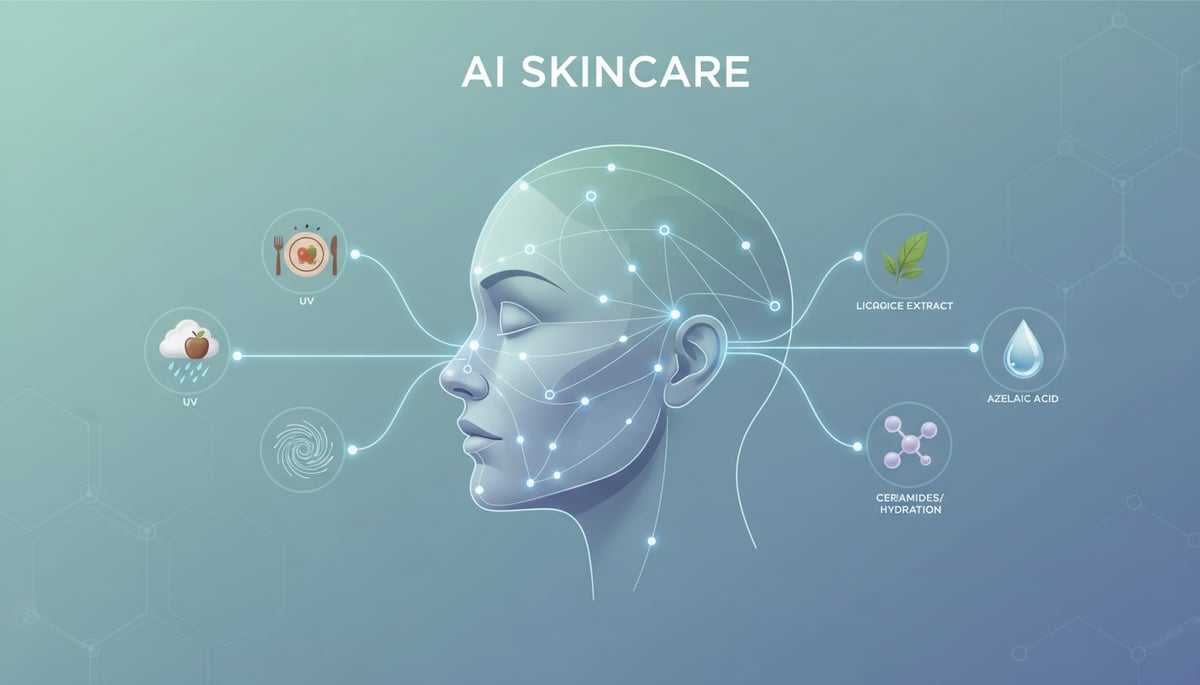
The true intelligence emerges as AI integrates this visual analysis with your lifestyle data. Factors like diet, stress levels, local UV index, and humidity _all provided by the user _are cross-referenced with your skin's inflammation patterns. This comprehensive approach helps uncover potential correlations, allowing the AI to pinpoint triggers for redness flare-ups that you might never have considered. Research indicates that advanced algorithms can successfully integrate diverse lifestyle factors such as UV exposure, humidity, diet, and even stress levels into their skin analysis (Google Health, 2024).
Instead of generic "anti-redness" formulas that may or may not suit your specific needs, AI matches your detailed skin profile with specific, evidence-based ingredients. These are precisely chosen for their known efficacy in targeting inflammation, supporting barrier repair, and calming irritation. This targeted approach ensures that every recommendation is relevant and has a higher probability of success. The workflow from data acquisition to formulation mapping is a critical aspect, creating a seamless connection between your skin's needs and effective ingredient delivery (Similarweb, 2024).
Commonly recommended ingredients for calming redness highlight this precision:
- Azelaic Acid: Valued for its anti-inflammatory and antibacterial properties, often cited in dermatological literature and community discussions for managing rosacea symptoms (Reddit, 2024).
- Niacinamide (Vitamin B3): A potent ingredient known for strengthening the skin barrier, reducing transepidermal water loss, and regulating sebum production, which can indirectly calm redness.
- Soothing Agents: Ingredients like Licorice Extract, Allantoin, and Ceramides provide essential relief, reduce irritation, and help rebuild the skin's protective lipid barrier. Brands like Cetaphil, for example, develop specific AI tools that recommend products containing these proven ingredients for concerns including redness relief (Cetaphil, 2024).
By identifying these precise connections, AI moves us past guesswork. It provides clarity on why your skin behaves as it does and offers a clear path toward a calmer, more resilient complexion.
The ability of AI to personalize ingredient recommendations based on unique skin profiles and lifestyle factors offers an unprecedented level of targeted care for redness.
The Data Dilemma: Navigating Privacy, Bias, and Reliability
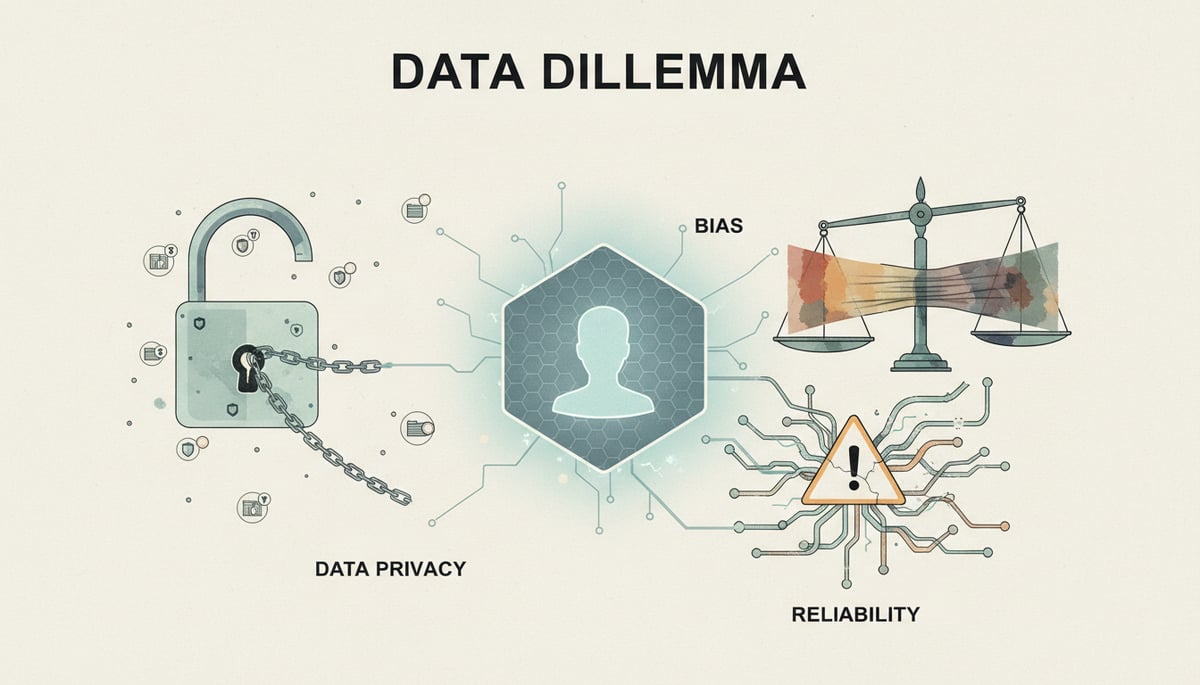
While the promise of personalized AI skincare is compelling, it's essential to approach this technology with an understanding of its inherent challenges. We must critically examine the data dilemma: navigating privacy concerns, potential algorithmic bias, and the overall reliability of AI recommendations.
At the forefront is data privacy. When users upload facial images and sensitive health information, they are sharing highly personal data. Reputable brands must operate with absolute transparency regarding how this data is collected, stored, and utilized. Consumers deserve clarity and control over their data, understanding consent processes and data anonymization practices (TrustArc, 2024). Look for explicit privacy policies that detail secure encryption and limited data retention.
A significant concern is algorithmic bias. Many AI models are trained on datasets that may not adequately reflect the full spectrum of human skin tones and conditions. This limitation can lead to misidentification of concerns on diverse complexions, potentially resulting in inaccurate or ineffective recommendations. For instance, a model primarily trained on lighter skin tones might struggle to accurately detect post-inflammatory hyperpigmentation on darker skin, leading to an incorrect assessment of redness severity or cause (AI Now Institute, 2023).
Furthermore, AI recommendations are not infallible. The reliability of these tools is directly dependent on the quality and breadth of their training data and the sophistication of their algorithms. These systems can sometimes overgeneralize or even misdiagnose subtle or complex skin issues, particularly those requiring nuanced human interpretation.
Note: It's crucial to view AI tools as a sophisticated guide, not a definitive replacement for professional medical advice. Especially for persistent, severe, or rapidly changing skin conditions, consultation with a board-certified dermatologist remains paramount. AI supplements, but does not substitute, expert human judgment (American Academy of Dermatology, 2024).
Understanding these limitations helps set realistic expectations. AI skincare is a powerful assistant, capable of incredible personalization, but it operates within defined parameters.
The transformative potential of AI in skincare is constrained by its critical need for robust data governance, equitable algorithmic design, and a clear understanding of its diagnostic boundaries.
Building Your AI-Informed Routine to Calm Redness
Moving from insight to action is where AI truly empowers your skincare journey. Crafting an AI-informed routine doesn't mean discarding everything you know; instead, it means strategically integrating targeted recommendations into a foundational, barrier-supporting regimen. An effective AI-informed routine prioritizes consistency and simplicity, seamlessly incorporating active ingredients for a calmer complexion.

Begin by engaging with a reputable AI analysis tool. This initial step is your baseline, providing a data-driven understanding of your skin's primary concerns, including the specific areas and severity of redness. Platforms like Cetaphil's AI tool guide users through this analysis, generating a personalized product roadmap based on identified needs (Cetaphil, 2024). This analysis helps you move beyond guesswork, focusing your efforts where they matter most.
Once you have your personalized recommendations, focus on incorporating one or two key active ingredients. If your AI analysis suggests azelaic acid for inflammation or niacinamide for barrier support, integrate these deliberately. Resist the urge to overhaul your entire routine at once, as this can confuse your skin and make it difficult to identify which products are truly effective. Gradual introduction allows your skin to adapt.
Next, construct a simple, barrier-supporting routine around your chosen active. This foundational regimen is crucial for calming redness and preventing further irritation:
- Gentle Cleanser: Choose a mild, pH-balanced cleanser that doesn't strip your skin of its natural oils. Over-cleansing can exacerbate redness.
- Targeted Active: Apply your AI-recommended active ingredient (e.g., azelaic acid or niacinamide serum) to clean, dry skin. Start by using it every other day, gradually increasing frequency as your skin tolerates it.
- Hydrating Moisturizer: Follow with a rich, soothing moisturizer that contains ingredients like ceramides, hyaluronic acid, or squalane. This step reinforces your skin barrier and locks in hydration.
- Daily Broad-Spectrum SPF: Sun protection is non-negotiable for redness-prone skin. Use a broad-spectrum SPF 30 or higher every morning, even on cloudy days, to prevent UV-induced inflammation and damage.
Always patch-test new products on a small, inconspicuous area of skin (like behind the ear or on the inner forearm) for a few days to assess for any adverse reactions before applying to your entire face. Introduce products slowly, observing your skin's response over several weeks. Online communities often stress the importance of paring back to a simple, gentle routine to allow the skin barrier to heal, particularly when dealing with persistent redness (Reddit SkincareAddiction, 2024). Evaluate results at 4 _12 week intervals before considering further routine adjustments.
By combining AI's diagnostic power with a methodical, patient approach to product introduction, you're building a routine that's both intelligent and inherently kind to your skin.
An AI-informed routine is a journey of consistent action and mindful observation, empowering you to achieve sustained skin wellness.
The journey to calm persistent skin redness can often feel overwhelming, marked by endless trial and error with generic solutions. As we've explored, the advent of AI in skincare marks a significant shift, moving beyond broad recommendations to offer a truly data-driven, precise approach. This intelligent technology empowers individuals to understand their skin's unique needs and respond with targeted solutions.
Throughout this exploration, three key takeaways stand out in how AI revolutionizes the management of skin redness:
- Personalized Analysis: AI-driven tools analyze your unique skin profile, identifying specific triggers and underlying causes of redness, a vast improvement over generic advice.
- Precision Solutions: By understanding these triggers, AI recommends highly targeted ingredients and product formulations designed to soothe irritation and restore balance effectively.
- Empowered Routines: This technology facilitates the creation of a truly personalized skincare routine, transforming guesswork into a strategic, informed path towards clearer, calmer skin, all while emphasizing the importance of expert medical advice when necessary.
Ultimately, AI stands as a powerful ally in deciphering your skin's complex language. It provides unparalleled insights, guiding you toward more effective, gentle care.
Embracing an AI-informed approach means stepping into a future where skincare is no longer a guessing game but a science-backed, personalized journey. If you're ready to move beyond generic solutions and discover a routine uniquely tailored to calm your redness with precision, explore how advanced AI platforms can bring this intelligent support directly to your daily regimen.
By integrating AI into your skincare, you are not just treating symptoms, but building a foundation for lasting skin health and confidence.
Tags
Related Articles
Demystifying AI in Skincare: Your Guide to Intelligent Algorithms

AI for Skin Calmness: Combat Redness & Inflammation Guide