
Beyond 'Clean': Spotting Greenwashing in Skincare Brands
Read about Beyond 'Clean': Spotting Greenwashing in Skincare Brands on Cosmi Skin
You're committed to conscious consumption, seeking skincare that truly aligns with your values. In the booming market of 'clean' and 'green' beauty, however, a concerning reality often hides in plain sight. Many of the virtuous claims you encounter are, in fact, carefully constructed mirages. This pervasive tactic, known as greenwashing, leverages our desire for sustainability by transforming unregulated buzzwords and deceptive visuals into powerful marketing tools, creating confusion and undermining genuine eco-efforts. It
time to move beyond 'clean' and equip yourself with the critical tools needed to discern true sustainability from superficial claims. This comprehensive guide will empower both consumers and industry professionals to confidently navigate the complex landscape of skincare marketing, dissecting common misleading tactics from the language of deception to visual trickery. Prepare to gain an actionable framework to identify genuinely responsible brands and transform your approach to making truly informed, impactful choices for your well-being and the environment.
Brief and TL;DR
The beauty industry presents a paradoxical challenge: while consumers increasingly seek ethical products, it paradoxically contributes significantly to environmental harm. Astonishingly, it's responsible for one-third of all waste in US landfills, a stark reality underscoring the critical need for conscious consumerism and informed choices. Greenwashing, a deceptive marketing practice coined in the 1980s, exploits this growing demand for sustainability by making brands appear more eco-friendly than they genuinely are. This article empowers you to navigate the complexities of beauty marketing, seeing past vague claims like 'natural' and 'clean'. We
ll equip you with tools to analyze ingredient lists, verify certifications, and scrutinize packaging. Key takeaways include understanding the pitfalls of unregulated buzzwords, the importance of genuine third-party certifications, and the crucial distinction that 'natural' does not inherently equate to 'sustainable'. By the end, you will have actionable advice to support genuinely transparent and ethical brands. To combat the widespread issue of greenwashing, consumers must learn to look beyond marketing claims and develop a critical eye for ingredients, certifications, and corporate transparency.
What is Greenwashing and Why is it Rampant in Beauty?
Greenwashing is the deceptive practice of presenting a brand or product as more natural, eco-friendly, or non-toxic than it genuinely is. It's a strategic marketing ploy designed to capitalize on consumer desire for sustainable products without the significant investment in actual environmentally sound practices. This strategy thrives due to a clear economic incentive: appeal to an ethical market segment without the associated costs of true sustainability. The beauty industry, in particular, offers fertile ground for greenwashing, largely due to a glaring regulatory gap. In the U.S., cosmetic regulations are notably lax; for example, the European Union has banned or restricted over 1,600 cosmetic ingredients, a stark contrast to the U.S. Food and Drug Administration's (FDA) mere 11. This significant disparity creates a landscape where companies can operate with minimal oversight regarding product claims. Compounding this issue is the absence of formal legal definitions for popular marketing terms like 'clean', 'natural', 'pure', or 'sustainable'. Without legal standards, brands can use these words freely, imbuing their products with an unearned aura of eco-friendliness or safety. Despite decades of attempts by the Federal Trade Commission (FTC) to address it, greenwashing remains pervasive, with brands leveraging this regulatory ambiguity to create an illusion of ethical practice.
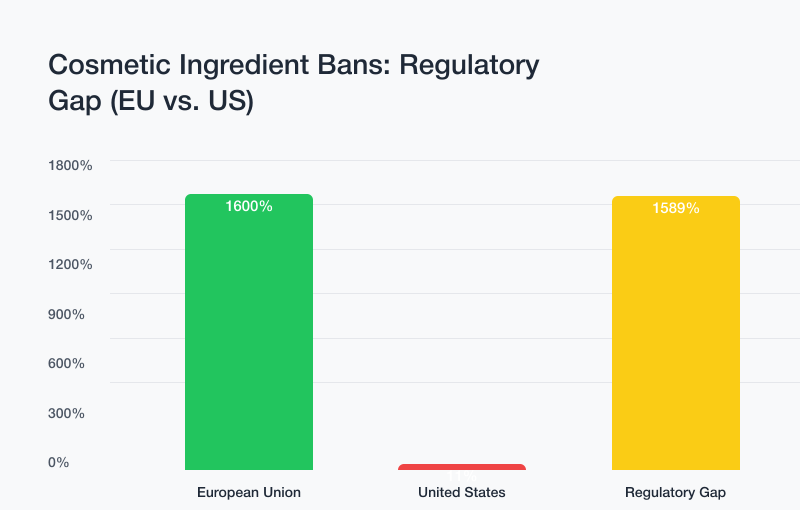
This table highlights the stark regulatory difference:
| Region | Cosmetic Ingredients Banned/Restricted | Impact on Greenwashing |
|---|---|---|
| European Union | Over 1,600 | Stricter compliance, less room for false claims. |
| United States | Only 11 | Significant loopholes, rampant use of unregulated buzzwords. |
Sustainability, as a concept in marketing, is still largely unregulated. This absence of clear guidelines allows companies to appeal to a growing market segment without making the substantial investments required for genuine environmental stewardship. The combination of high consumer demand for sustainable products and a weak regulatory landscape has created a perfect storm for greenwashing to become a dominant marketing strategy in the beauty industry.
The Language of Deception: Unregulated Buzzwords to Watch For
Greenwashing often thrives on a cleverly crafted lexicon that sounds appealing but lacks substantive meaning. Understanding these linguistic traps is your first step to becoming a more discerning beauty consumer.

'Natural'
This term is arguably one of the most misused in beauty marketing. 'Natural' is not legally defined in the cosmetics industry, meaning a product can bear a 'natural' label even if it contains only a trace amount of a naturally derived ingredient while the bulk of its formula consists of synthetic chemicals. This allows brands to mislead consumers into believing they are purchasing a wholesome product; for instance, a lotion with a tiny percentage of aloe vera but a petroleum-derived base can still be marketed as 'natural'.
'Chemical-Free'
Scientifically, this claim is impossible and illogical. Everything around us, including water, air, and our own bodies, is made up of chemicals. This buzzword exploits a common fear of synthetic substances, implying superiority without any factual basis. When a brand claims a product is 'chemical-free', it reveals a fundamental misunderstanding or intentional misrepresentation of basic chemistry, making it a meaningless marketing term designed purely for appeal.
'Hypoallergenic'
Much like 'natural', 'hypoallergenic' is an unregulated term. It simply means a brand claims its product is less likely to cause allergic reactions compared to others, but it does not guarantee the absence of common allergens or irritants, nor does it mean the product has been scientifically proven safe for all sensitive skin types. Many products labeled 'dermatologist-tested' often just refer to a simple patch test for irritation, not an endorsement of the ingredients or formula by a medical professional. Always check the full ingredient list, even for 'hypoallergenic' items.
'Non-Toxic'
Similar to 'natural', 'non-toxic' lacks a legal definition within the beauty industry, allowing brands to use the term freely even if their formulas contain preservatives or potential irritants. Without a standardized definition, a product claiming to be 'non-toxic' offers no real assurance regarding its safety profile or ingredient integrity.
'Organic'
While 'organic' is one of the few regulated terms, its application in beauty can still be misleading. The FDA does regulate 'organic' for food, but for cosmetics, a product only needs to contain a certain percentage of organic ingredients to use the seal, which varies depending on the certifying body and state regulations. This means a product displaying an 'organic' seal is not necessarily 100% organic; it may still contain synthetic ingredients or non-organic components in significant amounts. Always look for the specific type of organic certification and the percentage of organic ingredients stated. The most common form of greenwashing relies on emotionally appealing but legally undefined buzzwords that create an illusion of safety and eco-friendliness.
Beyond the Label: Visual and Packaging Greenwashing Tactics
Navigating the skincare aisle can feel like deciphering a cryptic puzzle, especially when brands use clever tactics to appear 'green.' Beyond the buzzwords, greenwashing often hides in plain sight, embedded within a product's visual presentation and packaging claims. These subtle cues manipulate consumer perception without a single word of text being misleading.
Consider the prevalence of earthy aesthetics: green labels, leaf motifs, and minimalist designs are widely used to evoke a sense of natural purity and sustainability. Yet, these visual elements alone offer no guarantee of a product's environmental integrity. Such design choices, while appealing, can create an illusion rather than reflect genuine practices (Research data: Green packaging with flowers can create the illusion of an eco-friendly product).
A more concerning tactic involves the creation of fake certification seals. Brands sometimes design their own badges that mimic the appearance of legitimate third-party certifications, such as USDA Organic or Leaping Bunny. These self-proclaimed 'seals' can trick consumers into believing a product has undergone rigorous independent verification, when in reality, they are merely marketing ploys (Research data: Brands create their own 'seals' that look like third-party certifications). It is crucial to learn and recognize the logos of truly credible organizations.
Packaging claims themselves frequently mask partial truths. Phrases like '100% recycled plastic bottle' sound impressive, but often overlook other components. For instance, [L'Or
al's Elvive bottle](https://cosmeticsbusiness.com/loreal-unilever-green-goals-packaging) was flagged by the Changing Markets Foundation for its misleading claim, as the cap, pump, or label were not made from recycled content (Proof anchor: Changing Markets Foundation flagged L'Or
al's Elvive bottle for its misleading '100% recycled' claim). The UK
Competition & Markets Authority reinforces this, advising against claiming a product is 'recyclable' if only parts of it are (Proof anchor: The UK
Competition & Markets Authority advises against claiming a product is 'recyclable' if only parts of it are). P&G
refill pouches for Head & Shoulders, while seemingly eco-friendly, were not widely recyclable, unlike the bottles they were intended to replace (Research data: P&G's refill pouches for Head & Shoulders were not widely recyclable, unlike the bottles they replaced).
Refill systems, too, can be a form of greenwashing if they do not genuinely reduce waste. A system using an unrecyclable pouch to refill a recyclable bottle, for example, might increase net waste. [Kim Kardashian
SKKN line](https://www.instagram.com/reel/CerlXHyh5T-/) faced significant online criticism for its refill design, with many pointing out that the bulky, often non-recyclable plastic refills seemed to generate more waste than single-use products (Proof anchor: Kim Kardashian's SKKN refill system was met with online criticism for failing to reduce overall packaging; Research data: SKKN's refill system was criticized for not reducing packaging waste). The intent behind such systems needs clear verification to avoid falling for superficial eco-friendliness.
Note: Always look beyond the initial aesthetic appeal and scrutinize specific claims, checking if they apply to the entire product and its components.
Greenwashing extends beyond words to visual cues and packaging claims that manipulate consumer perception of a product's environmental impact.
The Ingredient List Doesn't Lie: How to Analyze a Formula
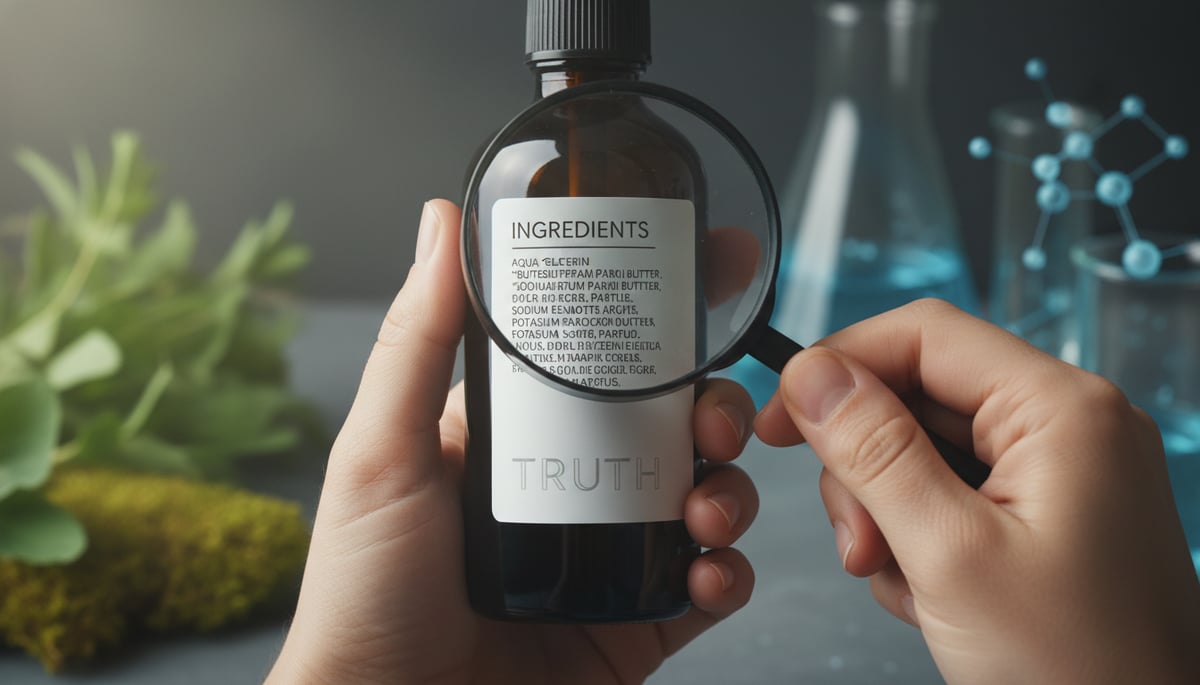
Steering clear of greenwashing demands a critical eye, especially when it comes to the ingredient list. Many consumers operate under the assumption that 'natural is always better,' a myth that brands readily exploit; however, a deeper dive reveals this isn't always the case, either for your skin or the planet.
Firstly, 'natural' does not automatically equate to sustainable. Palm oil is a prime example: it is a natural ingredient, yet its widespread production has been linked to massive deforestation and habitat loss for endangered species (Research data: Palm oil production has devastated the environment). While shea butter is often presented as a more sustainable alternative due to different cultivation practices, the general idea that a natural origin guarantees ecological soundness is flawed (Proof anchor: Shea butter is presented as a more sustainable alternative to palm oil). Sustainable sourcing is a more critical factor than mere natural origin.
Secondly, natural ingredients aren't inherently superior for your skin or the environment. Lab-created ingredients often offer remarkable efficacy, stability, and a significantly smaller environmental footprint. For instance, hyaluronic acid, a powerful humectant, is typically produced through fermentation in a lab, requiring fewer natural resources than some plant-derived alternatives (Proof anchor: Effective lab-produced ingredients like hyaluronic acid are common in high-quality skincare; Research data: Synthetic ingredients are often kinder to the environment, using fewer natural resources). Even common 'natural' ingredients like citric acid are often mold-derived and can cause irritation for sensitive skin types (Research data: Citric acid, a common 'natural' ingredient, is often mold-derived and can cause irritation).
Brands frequently employ a tactic of 'hero' ingredient highlighting. They might prominently feature one desirable natural ingredient, like 'infused with rosehip oil,' on the front of the packaging. Yet, a glance at the full ingredient list often reveals that this 'hero' ingredient is present in minuscule amounts, while the bulk of the formula consists of synthetic fillers, silicones, or less beneficial preservatives (Proof anchor: The practice of 'ingredient highlighting' distracts from the less desirable components that make up the bulk of the product; Research data: A product may boast one key natural ingredient while the rest is fillers or silicones).
To truly understand a product, focus on the International Nomenclature Cosmetic Ingredient (INCI) list. Ingredients are legally required to be listed in descending order of concentration, meaning the first few ingredients make up the majority of the product. If that cherished rosehip oil appears near the end of a long list, its impact is likely negligible. Scrutinizing the INCI list empowers you to see past marketing claims and understand the true formulation.
Note: A truly effective and sustainable formula balances performance with environmental responsibility, often incorporating both responsibly sourced natural extracts and intelligently designed synthetic compounds, a philosophy that underpins a data-driven approach to skincare.
The ingredient list is the most reliable source of truth, revealing whether a product's 'green' marketing is supported by its actual formulation.
A Consumer's Toolkit: How to Find Genuinely Sustainable Brands
As an informed consumer, you possess the power to drive change by supporting brands genuinely committed to sustainability. Moving beyond clever marketing requires a strategic approach, and building a reliable toolkit can empower you to make truly informed purchasing decisions rooted in proactive verification, not just passive acceptance.

Here
a clear, actionable checklist to guide your journey:
Seek Legitimate Third-Party Certifications: Authentic certifications are your first line of defense against greenwashing, signifying independent verification of a brand's claims. Look for well-recognized labels such as USDA Organic, ECOCERT, Leaping Bunny, and Protect Land & Sea (Research data: Trusted third-party certifications: USDA Organic, ECOCERT, Leaping Bunny), which are far more reliable than self-created badges.
Investigate Brand Transparency: Truly ethical brands embrace radical transparency, openly sharing details about their supply chain, ingredient sourcing, manufacturing processes, and sustainability initiatives on their website. Look for specific information on how they minimize waste, conserve water, reduce carbon emissions, and treat their workers, as vague statements are not enough (Research data: A truly clean brand will disclose ingredient sourcing and sustainability practices).
Beware of Vague Claims Without Concrete Proof: Phrases like 'eco-friendly' or 'sustainable' are common greenwashing flags if not backed by verifiable data. Demand proof, such as B-Corp status or evidence of carbon-neutral shipping programs. Without such specifics, generic claims are often meaningless. Bondi Sands, for example, faced a lawsuit over its self-defined 'reef friendly' claim, underscoring the necessity for third-party verification of such declarations (Proof anchor: Bondi Sands was sued for its self-defined 'reef friendly' claim, highlighting the need for third-party verification).
Leverage Technology to Help: Modern apps can significantly simplify your research. Tools like Buycott or Switch.Natural allow you to scan product barcodes and immediately access information on a brand's ethical standing, ingredient safety, and sustainability practices (Research data: Apps like 'Switch. Natural' can help analyze products), providing a quick, informed overview.
Consider the Parent Company: This crucial, often overlooked step involves investigating if seemingly 'cruelty-free' or 'sustainable' brands are owned by larger corporations that do not uphold the same ethical standards across their entire portfolio. For instance, some brands might be PETA-certified cruelty-free, yet their parent company may still conduct animal testing or engage in questionable political affiliations. The Reddit thread on brand ethics shows a sophisticated consumer base that investigates parent companies and their political affiliations; Research data: Reddit users highlight parent companies like LVMH and Estee Lauder for their political donations and corporate ties). Always dig a layer deeper to ensure your values align with the entire corporate entity.
Note: True sustainability is a holistic endeavor, encompassing everything from ingredient sourcing and production ethics to packaging and corporate governance.
By employing a strategy of verification through third-party seals, demanding corporate transparency, and using modern tools, consumers can confidently navigate the market and find genuinely ethical brands.
Navigating the intricate world of skincare demands a discerning eye for authenticity. Greenwashing, as we've explored, is a pervasive tactic that can undermine genuine sustainability efforts and mislead consumers. Empowering yourself with comprehensive knowledge is the first essential step towards making choices that truly align with your values and skin health.
Here are the key takeaways from our guide to spotting greenwashing:
- Understand Greenwashing's Tactics: Recognize that misleading claims and imagery are prevalent, often leveraging unregulated terms to create a false perception of environmental responsibility.
- Scrutinize Beyond Surface Claims: Always look past attractive packaging and vague marketing language. Terms like 'natural,' 'eco-friendly,' and 'clean' often lack standardized definitions.
- Prioritize Ingredient Transparency: The true story of a product lies in its ingredient list. Learn to identify questionable ingredients and research brand certifications thoroughly.
The journey to truly informed choices in skincare is continuous, demanding vigilance and a commitment to deeper understanding. It's about recognizing that genuine sustainability is built on verifiable actions, not just appealing aesthetics or ambiguous promises. As you embark on your own path to more conscious consumption, remember that making truly personalized and effective skincare decisions relies on data, transparency, and a critical approach. Tools and platforms designed to provide clear, data-driven insights can become invaluable allies in cutting through the noise, helping you identify what genuinely works for your skin and the planet, offering a path to truly personalized and effective skincare decisions.
