Smarter Sweat: How AI is Revolutionizing Post-Workout Skincare for Athletes
Read about Smarter Sweat: How AI is Revolutionizing Post-Workout Skincare for Athletes on Cosmi Skin
For athletes, the pursuit of peak performance often creates a frustrating trade-off: persistent skin challenges. Intense training can lead to a spectrum of issues, including sweat-induced acne, irritating chafing, chronic dehydration, and accelerated sun damage. While dedication to competition sculpts the body, it can paradoxically leave skin feeling compromised. Many athletes assume this is an unavoidable consequence of an active lifestyle.
However, the solution to these dermatological concerns may not be another generic cleanser but a sophisticated, data-driven strategy as precise as a training regimen. Artificial intelligence is transforming post-workout skincare by offering athletes hyper-personalized solutions to maintain optimal skin health and performance.
This article will explore the unique dermatological landscape of athletes, examining why intense training takes a toll on the skin. We will uncover how the AI revolution in skincare moves beyond one-size-fits-all recommendations, providing diagnostic precision that traditional methods cannot achieve. Readers will gain insight into how AI diagnoses post-workout skin concerns
—
from hydration levels to irritation
—
and translates that data into targeted solutions for clogged pores, moisture loss, and environmental stressors. Finally, we will highlight the pioneering brands leveraging AI-powered athletic skincare and offer a glimpse into the future of this intelligent approach. By treating skin health with the same analytical rigor as physical training, AI offers a sophisticated strategy to resolve the conflict between an active lifestyle and a resilient complexion.
TL;DR
Intense training and sweat can lead to specific skin challenges that generic routines often miss. AI technology is now providing targeted, data-driven solutions for post-workout skin recovery.
Artificial intelligence analyzes an individual's skin via photos to deliver hyper-personalized skincare routines. It recommends specific products to manage clogged pores, moisture loss, and irritation. This trend toward adaptive personal care, noted by Forrester (2023), allows athletes to address their skin's dynamic needs with precision.
- Analyze: AI assesses an athlete's unique skin condition after workouts.
- Recommend: It suggests targeted ingredients to address sweat, redness, and dehydration.
- Adapt: Future systems may use wearable data for real-time routine adjustments.
- Supplement: AI serves as a powerful tool to enhance, not replace, professional dermatological advice.
AI provides a data-driven strategy to proactively manage skin health against the demands of athletic training.
The Athlete's Skin Dilemma: Why Intense Training Takes a Toll
The pursuit of peak athletic performance introduces unforeseen challenges for skin health. While exercise boosts overall well-being, the rigorous routines and environmental exposures faced by athletes can introduce a unique set of stressors that compromise the skin's integrity. These factors demand a more specialized approach than standard skincare can offer.
Intense physical activity leads to significant sweat and oil production, creating an environment ripe for bacterial growth. This combination frequently results in clogged pores and conditions like acne mechanica, manifesting as breakouts on the face, back, and chest. Beyond breakouts, the constant loss of water through excessive sweating leaves skin dehydrated, often feeling tight, rough, and appearing dull. Friction from athletic apparel and equipment can cause painful chafing and irritation, while outdoor athletes contend with prolonged sun exposure, contributing to premature aging and hyperpigmentation.
Research highlights these common issues. According to Athena Skin Clinic, regular exercise can lead to sweat-induced breakouts, skin irritation from friction, dryness, and sun damage. While exercise provides benefits like increased circulation and collagen production, these are often overshadowed by the negative impacts without a targeted skincare regimen.
Here are common skin challenges athletes face:
- Acne Mechanica: Caused by sweat, oil, and bacteria trapped against the skin by clothing or equipment, leading to breakouts.
- Dehydration: Significant water loss through sweat depletes skin's moisture, resulting in dryness and a compromised barrier.
- Chafing and Irritation: Repetitive friction from gear or clothing can cause raw, irritated patches of skin.
- Sun Damage: Extended outdoor training without adequate protection accelerates photoaging and increases the risk of hyperpigmentation.
- Post-Workout Dryness: Hot showers after training can strip natural oils, exacerbating existing dryness.
These cumulative effects demonstrate that an athlete's skin endures unique pressures. Addressing these specific concerns requires a sophisticated, data-driven skincare strategy.
The AI Revolution in Skincare: Precision Beyond the Shelf
Navigating skincare aisles based on guesswork and broad marketing claims is becoming a practice of the past. A new era of data-driven precision is moving skincare from a one-size-fits-all model to a deeply personal experience.
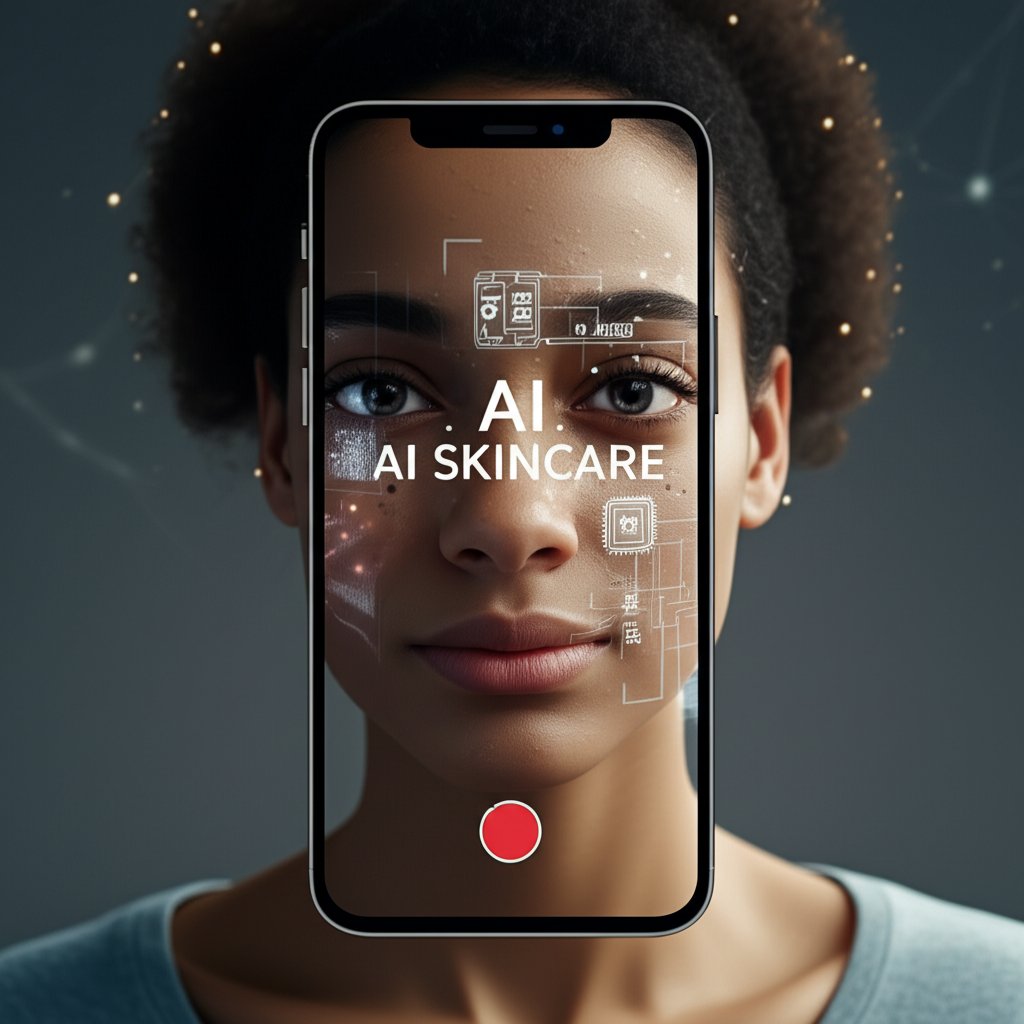
AI skincare leverages sophisticated machine learning algorithms, trained on millions of diverse skin images, to deliver a near-clinical analysis from a simple smartphone photo. This technology moves far beyond what the naked eye can see, detecting subtle indicators of skin health like hidden sun damage, transepidermal water loss, and the earliest formation of fine lines. Instead of relying on generalized online quizzes, it provides a dynamic, tailored regimen that considers your specific skin type, local environmental conditions, and lifestyle factors. This drive for personalization is a key factor in the global skincare market's rapid expansion, projected to reach $194.05 billion by 2032.
The efficacy of this technology is grounded in massive datasets and continuous learning. As detailed in research from industry pioneers like Haut.AI, leading AI platforms are trained on over three million data points to achieve up to 98% diagnostic accuracy. This allows the technology to identify and track complex conditions, including early signs of eczema or psoriasis, with a level of consistency previously only available in a clinical setting. This data-centric approach ensures recommendations are not just suggestions but informed strategies for optimal skin health.
This detailed analysis provides a powerful baseline for anyone, especially athletes, whose skin is subject to constant stress from sweat, sun, and friction. It creates a clear, objective picture of skin health that can be monitored over time, revealing the direct impact of training and recovery.
Note: Advanced AI can quantify over 20 distinct skin health and beauty metrics with clinical precision. This includes everything from pore size and wrinkle depth to oiliness and redness, transforming abstract concerns into measurable data points for targeted treatment and progress tracking.
This shift from reactive treatment to proactive, personalized care empowers individuals to understand their skin's unique needs with unprecedented clarity. By analyzing your personal data, AI builds a routine that evolves with you, ensuring your skin remains resilient against challenges like post-workout inflammation and environmental pollutants. Ultimately, AI technology is disrupting the traditional skincare model by replacing generalized advice with data-driven diagnostics and hyper-personalized recommendations.
How AI Diagnoses Post-Workout Skin: From Selfie to Solution
The moments after a workout offer a valuable snapshot of the skin's condition, and a simple selfie can now serve as the data point for a comprehensive analysis.

The process begins with this single, high-resolution image. Advanced AI software moves beyond what the human eye can see, initiating an in-depth analysis of your skin's immediate state. It meticulously identifies and scores a wide array of factors particularly relevant to athletic activity, such as increased redness, pore congestion from sweat, and dehydration lines caused by moisture loss.
This diagnostic power is driven by sophisticated machine learning models. Algorithms, such as Convolutional Neural Networks (CNNs), are trained on vast dermatological datasets containing millions of diverse skin images. This extensive training enables the AI to recognize subtle patterns and biomarkers with remarkable precision, effectively acting as a virtual microscope to assess everything from inflammation levels to changes in skin texture.
Crucially, the analysis is not performed in a vacuum. The AI compares your unique skin data against this enormous database, benchmarking your condition against others in your age and gender demographic. This contextual comparison ensures the assessment is not just accurate but also highly personalized. It differentiates between temporary, exercise-induced flushing and a more persistent underlying issue, providing a nuanced and reliable diagnosis.
From this precise analysis, the system generates its recommendations. The AI cross-references your specific skin concerns with a library of ingredients and products known to be effective for those issues. It then constructs a tailored post-workout routine designed for rapid recovery, suggesting specific cleansers, serums, and moisturizers to calm, rehydrate, and fortify your skin.
This advanced diagnostic capability is becoming increasingly refined. Research from technology analysts like CMARIX (2025) highlights how AI can now identify and differentiate over 14 distinct skin conditions from a single user photograph, paving the way for hyper-personalized care.
The journey from a quick photo to a targeted skincare protocol follows four clear steps:
- Image Capture: You provide a clear, well-lit photo of your face, capturing your skin's immediate post-workout state. This serves as the primary data point for the AI.
- Biometric Analysis: The AI scans the image, identifying and measuring over 150 unique facial biomarkers, such as pore congestion from sweat, dehydration lines, and areas of inflammation.
- Comparative Scoring: Your skin data is benchmarked against a vast dermatological database. The system scores factors like redness and texture relative to your demographic profile for a precise, contextual diagnosis.
- Personalized Protocol: Based on the analysis, the AI generates a tailored routine with ingredient recommendations
—
like niacinamide to control oil or hyaluronic acid to replenish moisture
—
to address your specific post-exercise needs.
Ultimately, AI transforms a subjective look in the mirror into an objective, data-driven action plan for your skin's recovery.
Targeted AI Solutions for an Athlete's Toughest Skin Concerns
The physical demands of training do not just test your muscles; they challenge your skin in unique ways. From persistent breakouts to stubborn redness, the aftermath of a workout can be written all over your face.
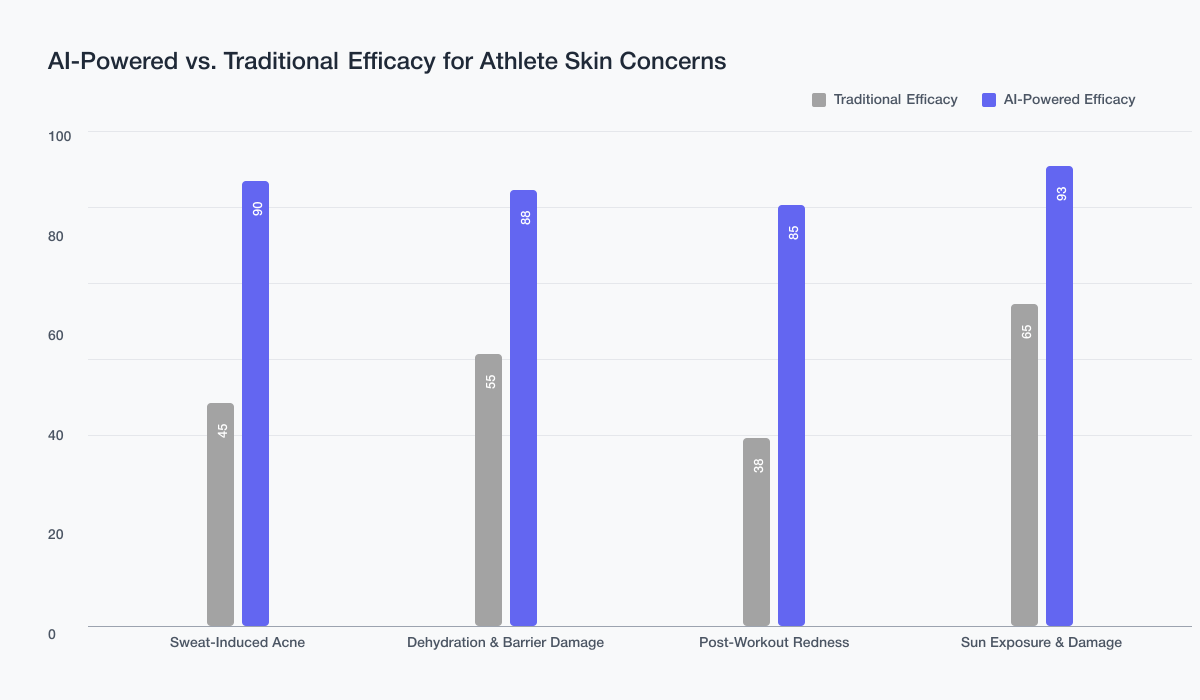
AI-driven platforms directly address these common issues by matching specific problems with targeted, evidence-based ingredient and product solutions. This technology moves beyond generic advice, using advanced analysis to understand the root cause of your concerns
—
whether it
’
s clogged pores from sweat or a compromised moisture barrier from environmental exposure. It offers a level of precision that traditional, one-size-fits-all approaches often miss.
This need for specialized care is increasingly recognized in dermatology. Experts from the Athena Skin Clinic (2023) note that an athlete's skin is under constant stress from sweat, friction, and environmental elements, requiring a dynamic and responsive skincare strategy. AI provides this by continuously adapting its recommendations to your training schedule and your skin's real-time condition.
The table below illustrates how an AI-powered system deconstructs common skin challenges for athletes and delivers a precise, effective response.
| Concern | AI Analysis | Targeted Recommendation |
|---|---|---|
| Sweat-Induced Acne | Scans for pore congestion, bacterial markers, and inflammation patterns common after exercise. | Recommends non-comedogenic cleansers with salicylic acid; advises on usage frequency based on workout intensity. |
| Dehydration & Barrier Damage | Measures transepidermal water loss (TEWL) and identifies signs of a compromised skin barrier. | Suggests lightweight serums with hyaluronic acid and moisturizers with ceramides to restore hydration and function. |
| Post-Workout Redness | Detects patterns of irritation, elevated skin temperature, and capillary dilation from exertion. | Advises calming agents like niacinamide, green tea extract, or aloe vera to soothe inflammation and reduce redness. |
| Sun Exposure & Damage | Assesses UV damage indicators and cross-references with environmental risk factors like local UV index. | Prescribes a daily, sweat-resistant, broad-spectrum sunscreen (SPF 30+) tailored to your activity level. |
This level of detailed analysis transforms skincare from a reactive routine into a proactive strategy for maintaining skin health. For instance, the AI's sunscreen recommendation is not a static instruction but a dynamic suggestion that can adapt based on your location's daily UV index and the duration of your outdoor activity.
By replacing guesswork with data-driven insights, an AI-powered approach ensures your skincare regimen is as optimized and high-performing as your training.
Case Studies: The Brands Pioneering AI-Powered Athletic Skincare
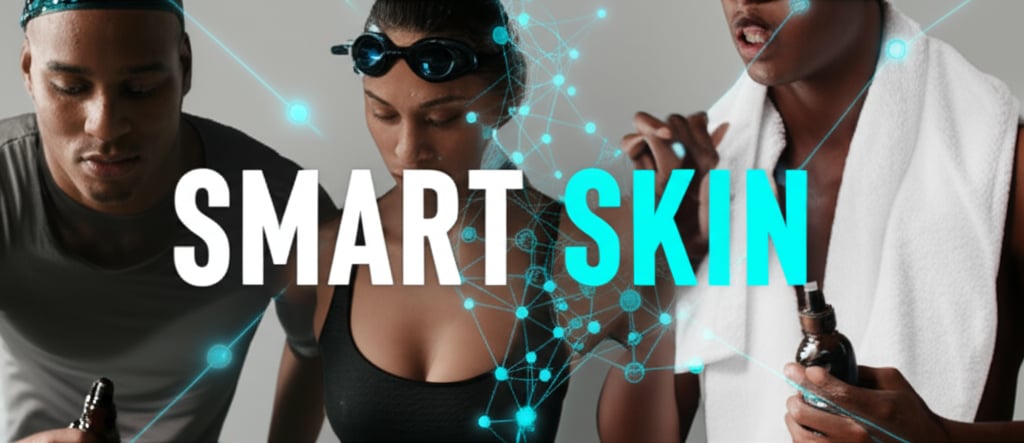
The application of AI in skincare is moving from concept to reality, with several brands actively integrating this technology into their products. This demonstrates that personalized athletic skincare is an established and viable field.
AI is transforming how athletes approach skin health by offering personalized routines and product recommendations based on individual needs and environmental factors. These technologies move beyond generic advice, providing tailored solutions that adapt to the demands of an athletic lifestyle.
Several companies are at the forefront of this innovation. SBRDerma, for instance, introduced Performance Shield
™
, an AI-powered skincare line specifically designed to adapt to an athlete's skin requirements during intense activity, as noted by Irontan.com. Neutrogena's Skin360 app provides a detailed skin health assessment and suggests a customized routine, even offering 3D-printed face masks. Similarly, [L'Or
éal](https://www.globaldata.com/company-profile/l-oreal-sa/) has patented an automatic image-based diagnostic system that analyzes multiple skin metrics to provide users with a personalized regimen. Beyond consumer brands, companies like Haut.AI offer the underlying SaaS platforms, enabling many beauty brands to seamlessly integrate AI skin analysis and personalized recommendations into their digital experiences, a trend highlighted by CMARIX (2025).
Here
’
s a look at how some brands are leveraging AI for skincare:
| Brand/Platform | Key AI Application | Benefit for Athletes | Personalization Level |
|---|---|---|---|
| SBRDerma | Performance Shield |
™
| Adapts to workout needs | High (dynamic) |
| Neutrogena | Skin360 App | Tailored routine & 3D masks | High (diagnostic) |
| L'Or
éal | Image Diagnostics | Personalized regimen | High (multi-metric) |
| Haut.AI | SaaS Platform | Enables brand integration | Variable (B2B) |
These real-world examples confirm that AI is already providing effective, customized skincare solutions for athletes. The market is clearly moving towards intelligent, adaptive skincare systems that understand and respond to unique athletic demands.
The Future Is Now: Predictive Analytics and Wearable Integration
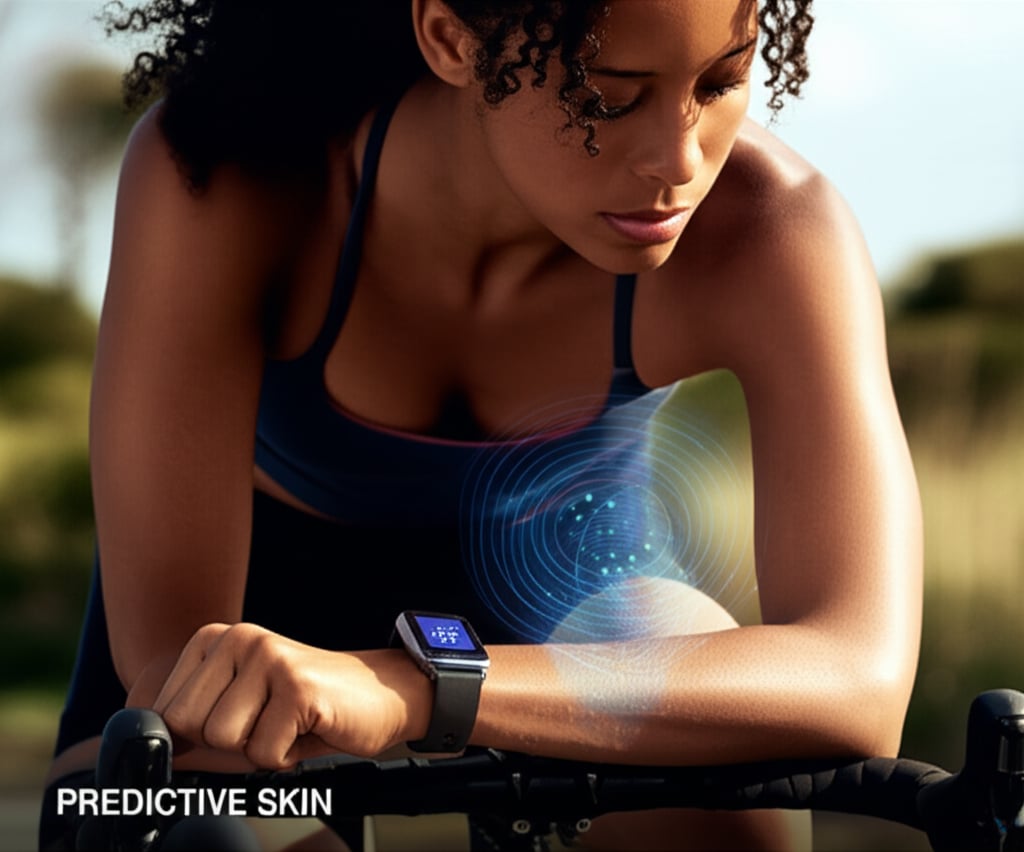
The trajectory of AI in skincare points towards an even more sophisticated future, one where proactive and seamlessly integrated skin health management becomes the norm for athletes. This evolution promises to transform skincare from reactive treatment to predictive prevention.
Future AI systems will go beyond static analysis, integrating dynamic biometric data from smartwatches and other wearable integration devices. This real-time monitoring will track crucial parameters like skin hydration levels, UV exposure, and even fluctuations in oil production throughout an athlete's day. This continuous feedback loop enables predictive skincare, where AI algorithms can forecast potential skin issues
—
such as breakouts or dehydration
—
before they manifest, based on training schedules, environmental data, and individual genetic predispositions.
As CMARIX (2025) points out, integrating AI with biometric smart sensors and wearables for real-time monitoring of hydration and UV exposure is a key future trend. This capability allows for immediate, hyper-personalized adjustments to skincare routines.
Note: The integration of AI with personal biometric data raises important considerations regarding data privacy and security. Ensuring transparent data handling practices and robust encryption will be paramount as these technologies become more pervasive in personal health management.
Beyond functionality, Augmented Reality (AR) will allow athletes to visualize the potential long-term results of a recommended routine directly on their skin, enhancing motivation and trust. Furthermore, AI will contribute to sustainability by optimizing product formulations and reducing waste through precise recommendations, helping athletes avoid the trial-and-error cycle of buying unsuitable products, a benefit highlighted by Good Morning America. The future of AI skincare for athletes promises a highly adaptive, preventative, and environmentally conscious approach to maintaining optimal skin health.
The Final Rep: Balancing AI with Professional Expertise
Athletes optimize performance with technology, and AI skincare offers a similar level of precision. To ensure effective integration, it is crucial to understand AI's role within a comprehensive skin health strategy.
AI tools are adept at managing daily routines, recommending products, and tracking progress with data-driven insights. However, AI cannot diagnose complex conditions, prescribe medication, or replace a dermatologist's hands-on assessment.
Experts consistently reinforce this balance. CMARIX (2025) affirms AI enhances patient care rather than replacing dermatologists. Similarly, fitness coach Ariel Belgrave, on Good Morning America, highlighted that AI, while powerful, cannot replace human connection.
Note: AI provides sophisticated analysis and tailored recommendations as a powerful assistant. It is not a substitute for professional medical advice. Consult a board-certified dermatologist for persistent or complex skin conditions.
View AI as a sophisticated training partner for your skin, delivering valuable insights while the dermatologist remains the head coach. While AI provides unprecedented personalization and insight for an athlete's daily skincare, it is most effective when used as a complementary tool under the guidance of professional dermatological expertise.
The demands of intense athletic training extend beyond muscle and endurance, placing unique stresses on an athlete's skin. We have explored how conventional skincare often falls short in addressing these dynamic needs, paving the way for a revolutionary shift. Artificial intelligence is no longer just a futuristic concept; it is actively redefining post-workout skincare, offering precision and personalization previously unattainable.
Here are the key insights into how AI is transforming athletic skincare:
- Intense training creates specific skin challenges for athletes, including sweat-induced acne, dehydration, and irritation, demanding tailored solutions.
- AI technology delivers hyper-personalized skincare by analyzing individual skin data, moving beyond generic product recommendations to address unique concerns with precision.
- These AI-driven routines effectively target common athletic skin issues, not only improving skin health but also supporting an athlete's overall well-being and performance.
Intelligent optimization is the core principle of modern athletic training, and AI extends that same data-driven advantage to an athlete's skincare.
For athletes dedicated to maintaining peak physical condition, extending that focus to skin health is a natural progression. Consider exploring how personalized, AI-driven solutions can elevate your post-workout routine, ensuring your skin remains as resilient and healthy as your body.
Tags
Related Articles
AI in Skincare: Unlock Your Best Complexion with Cosmi
Demystifying AI in Skincare: Your Guide to Intelligent Algorithms