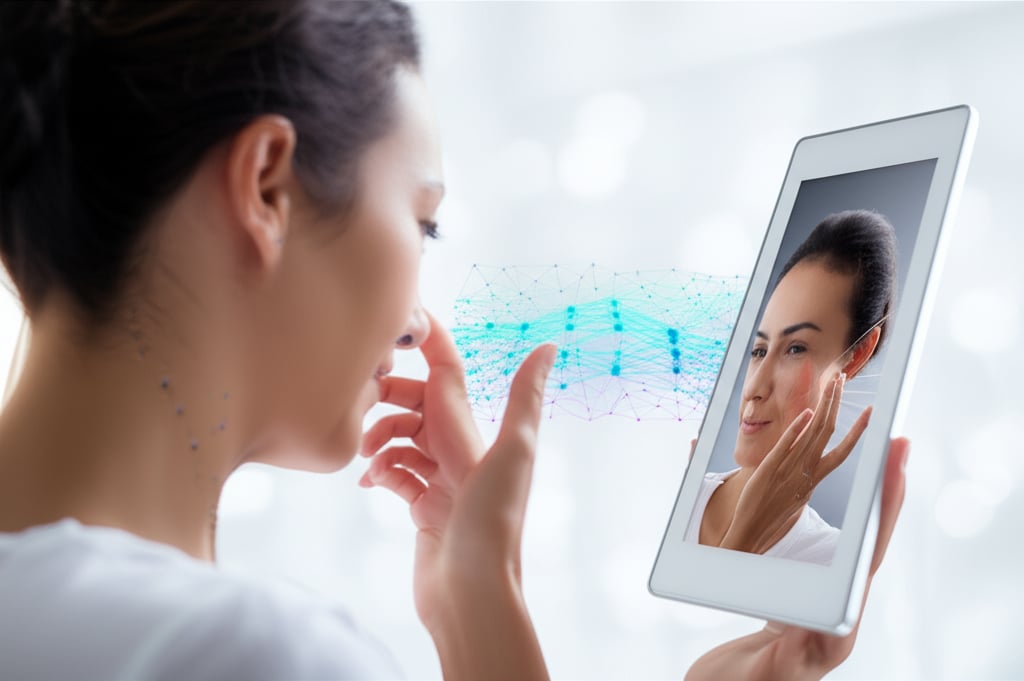
AI Skincare After 40: Renew Your Skin, Embrace Radiance
Read about AI Skincare After 40: Renew Your Skin, Embrace Radiance on Cosmi Skin
For a long time, skincare after 40 has been framed as a battle against aging. The market is saturated with generic promises, often leaving women feeling overwhelmed and searching for solutions that resonate with their unique skin. This narrative is shifting. Instead of merely reacting to the visible effects of time, we can now proactively renew and understand our skin on a deeper, data-driven level. The future of skincare is no longer just about ingredients; it's about intelligence.
Artificial intelligence is changing the landscape of mature skincare, offering an opportunity for women over 40 to use hyper-personalized routines that target specific concerns. This guide explores how AI is redefining beauty by moving beyond one-size-fits-all approaches. You will discover how AI decodes your skin’s needs—from analyzing a selfie to interpreting complex data—to craft targeted solutions. We will explore the tangible benefits AI brings to mature skin, from minimizing wrinkles to enhancing luminosity, and highlight the at-home devices it powers. We will also address the essential human element, understanding the limitations of this technology and where the expertise of a dermatologist remains irreplaceable.
TL;DR
Navigating skincare changes after 40 can be complex. Artificial intelligence now offers a modern, data-driven approach to support your skin's evolving needs.
AI-powered platforms analyze your skin through selfies and user data to create hyper-personalized routines. This technology identifies subtle changes and can help predict future concerns like fine lines or uneven tone, enabling a more proactive and effective strategy for mature skin. These systems analyze key metrics such as wrinkles, texture, and pigmentation to tailor recommendations. Research published in PMC NCBI (2025) notes the growing capability of AI to incorporate environmental data for more dynamic skincare adjustments.
- Hyper-Personalization: Routines are created based on a detailed analysis of your unique skin.
- Proactive Insights: AI can forecast potential skin issues, allowing you to address them early.
- Accessibility: Advanced analysis and treatment guidance become available from home.
- Key Considerations: Be aware of limitations like potential algorithmic bias and data privacy risks.
While AI offers remarkable tools for cosmetic guidance, it does not replace the expert diagnosis of a board-certified dermatologist.
The New Frontier of Skincare: What is AI-Powered Beauty?
Navigating skincare after 40 often feels like a puzzle. Products that once worked may no longer deliver the desired results as your skin’s biology undergoes significant shifts.
This is where AI-powered beauty marks a significant change. It is the application of artificial intelligence to analyze an individual’s unique skin data—from high-resolution photos to lifestyle and environmental inputs—to generate personalized skincare guidance. This data-driven method stands in contrast to the traditional, generalized approach that sorts consumers into broad categories. For mature skin, which experiences nuanced concerns like collagen degradation and uneven pigmentation, a one-size-fits-all model is often inadequate.
The power of AI lies in its ability to see the full picture, moving you from reactive treatments to proactive, data-informed skin management. This evolution is supported by emerging research, which indicates that AI-driven tools are set to transform dermatology by providing precise and adaptive solutions that can evolve with a user's changing needs (PMC NCBI 2025). Instead of relying on broad product categories, AI integrates intrinsic factors with extrinsic factors like your local UV index to build a routine that is uniquely yours. The frustration of trial-and-error gives way to a clear, intelligent path forward.
| Feature | Traditional Skincare | AI-Powered Skincare |
|---|---|---|
| Analysis Method | Relies on broad, static skin types (e.g., oily, dry) | Utilizes in-depth analysis of selfies and lifestyle data |
| Recommendations | Suggests generic, mass-market products | Delivers hyper-personalized product & ingredient suggestions |
| Adaptability | Static routine requiring manual trial-and-error | Dynamic guidance that evolves with skin and environment |
| Outcome | Often leads to inconsistent results and wasted products | Aims for targeted, efficient, and measurable improvement |
By leveraging data, AI-powered skincare empowers you to move from guesswork to a precise, proactive strategy for managing your skin's long-term health and radiance.
How AI Decodes Your Skin: From Selfies to Science
The smartphone selfie has evolved from a social snapshot into a sophisticated analysis tool. A picture can now become a detailed blueprint of your skin’s history and current needs, revealing insights previously hidden from view.

This transformation is powered by advanced artificial intelligence that analyzes your facial image with precision. The technology uses complex algorithms to identify and measure a wide range of skin health indicators, including fine lines, wrinkles, pore size, texture, and areas of hyperpigmentation. It moves beyond subjective assessment to provide an objective, data-driven understanding of your skin. This process makes highly personalized skincare insights, once confined to a dermatologist's office, accessible from anywhere.
The efficacy of this image-based analysis is well-documented, with a 2025 study in PMC NCBI highlighting the accuracy of deep learning algorithms in evaluating skin conditions from standard photographs. The journey from a photo to a personalized skincare strategy follows a clear, multi-stage process:
Image Acquisition and Standardization. The process begins when you upload a high-resolution photo. The AI first standardizes the image, algorithmically correcting for variables like lighting, shadows, and head tilt. This crucial step ensures that the subsequent analysis is based on the true state of your skin, creating a consistent baseline for evaluation.
Facial Landmark Mapping. Next, the system employs computer vision to map dozens of key points on your face, from the corners of your eyes to the contours of your jawline. This digital map allows the AI to segment the face into specific analytical zones—such as the forehead, cheeks, and under-eye area—to assess localized concerns with detail and accuracy.
Deep Algorithmic Analysis. With the face mapped, the core analysis begins. Powerful algorithms, trained on immense databases of anonymized facial images and dermatological studies, scan your skin’s surface. They cross-reference your features against this vast dataset to detect subtle patterns, quantify wrinkle depth, and identify pigmentation irregularities.
Profile Synthesis and Reporting. Finally, the AI consolidates these data points into a single, comprehensive skin profile. This report doesn't just list problems; it quantifies them, often providing scores for hydration, firmness, and overall texture. This detailed synthesis forms the foundation for generating personalized product and ingredient recommendations.
This intelligent analysis transforms a subjective look in the mirror into an objective, actionable plan for achieving healthier, more radiant skin.
Targeted Solutions: AI's Key Benefits for Mature Skin
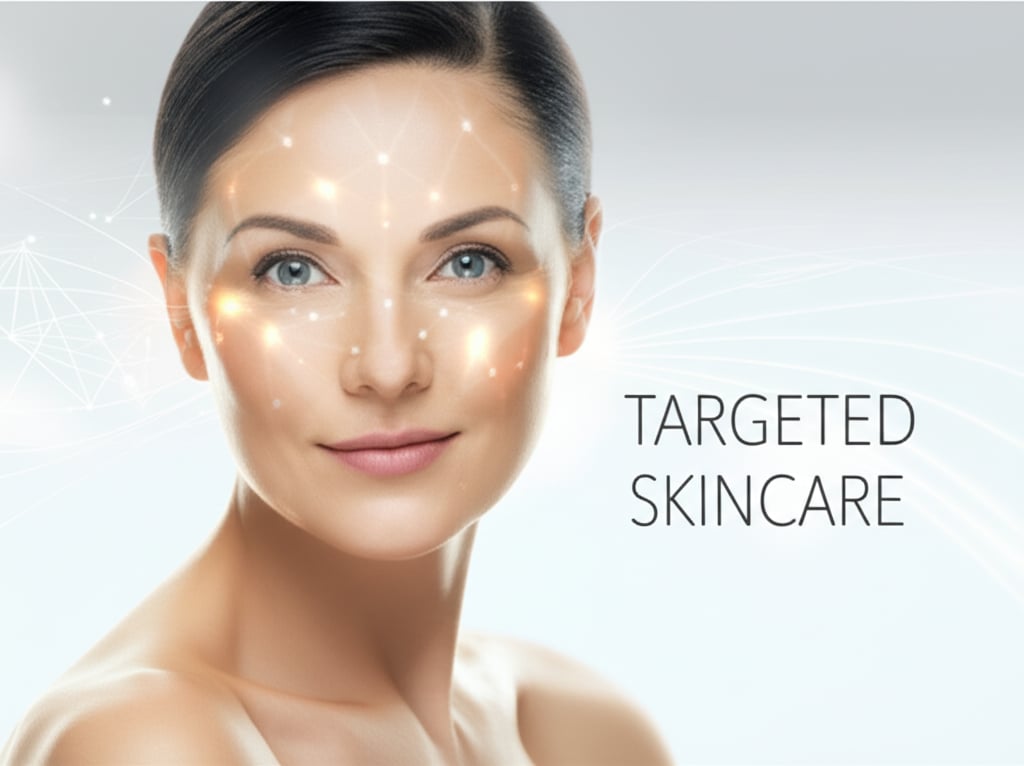
As your skin matures, its needs become more specific, demanding more than a one-size-fits-all approach. AI-driven personalization directly addresses the primary concerns of skin after 40 by recommending targeted ingredients and predicting future issues before they become visible.
Smarter Skincare: At-Home Devices and Dynamic Routines
Your skin's needs are not the same every day. The future of skincare after 40 acknowledges this reality, moving beyond static product application into an era of responsive, intelligent care.
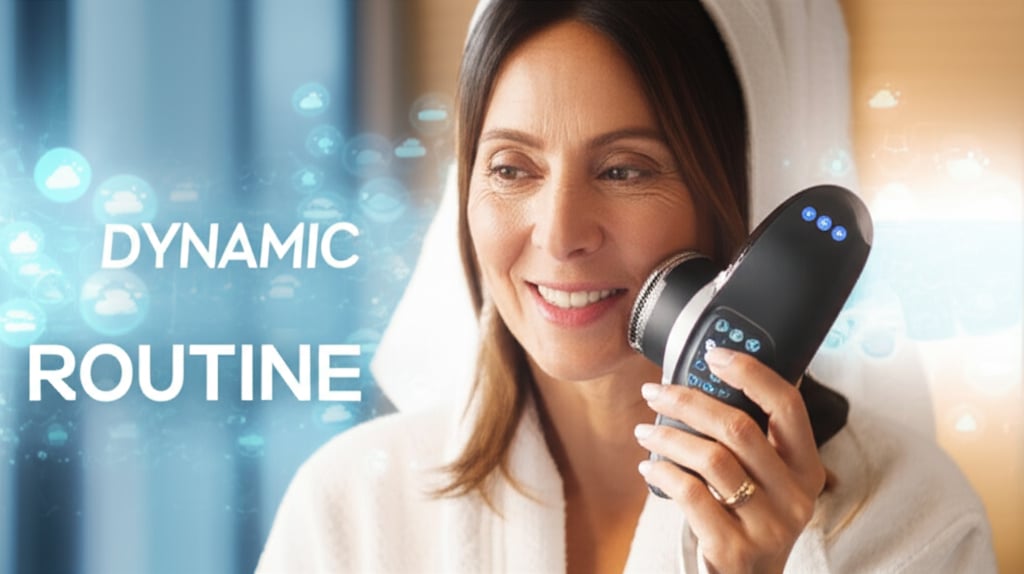
This evolution is driven by AI, which is making advanced, clinic-level treatments more accessible through sophisticated at-home devices. Treatments like LED light therapy and microcurrent stimulation are now available for consistent use in your own home. These smart devices offer targeted solutions for mature skin, helping to stimulate collagen production, improve facial contours, and enhance product absorption with a precision that manual application cannot match.
| Device Type | Primary Function | Key Benefit for Skin After 40 |
|---|---|---|
| LED Light Therapy Mask | Uses specific light wavelengths to stimulate cellular activity. | Reduces the appearance of fine lines and calms inflammation. |
| Microcurrent Device | Delivers low-level electrical currents to facial muscles. | Tones and lifts facial contours for a firmer appearance. |
| Smart Cleansing Brush | Analyzes skin and adjusts cleansing intensity in real-time. | Provides a deep yet gentle cleanse without stripping natural oils. |
This intelligence extends beyond hardware and into the logic of your daily regimen. An advanced skincare strategy uses AI to create a dynamic routine that adjusts recommendations based on a constant stream of data. This means your skincare is no longer a fixed set of steps but a fluid system tailored to your immediate needs. This approach ensures your skin receives exactly what it requires when it needs it.
The system analyzes real-time environmental factors that impact skin health. On a day with a high UV index, the platform might suggest a product with higher SPF. If humidity levels drop, it could recommend a richer moisturizer. This capability is supported by research into personalized beauty technology, which highlights the importance of adapting routines to external conditions (PMC NCBI 2025). Furthermore, these platforms can adapt to your body's internal fluctuations. By tracking data related to hormonal cycles, sleep quality, or stress levels, the AI can anticipate changes in your skin, providing a level of personalization that is both proactive and intuitive.
The true power of AI skincare lies in its ability to create a dynamic, responsive routine that adapts not just to your skin, but also to your environment and lifestyle.
The Human Element: Where AI Ends and a Dermatologist Begins
Artificial intelligence offers a remarkable new tool for personalizing daily skincare routines. Yet, it is crucial to understand its boundaries and recognize where the expertise of a medical professional remains irreplaceable.
AI is a powerful supportive tool designed to analyze cosmetic concerns, track progress, and recommend products for aesthetic improvement. It is not, however, a substitute for a medical doctor. An algorithm cannot perform a physical examination, understand your systemic health, or legally provide a medical diagnosis for conditions like eczema, rosacea, or skin cancer. As a report in PMC NCBI (2025) highlights, a significant concern is algorithmic bias, where AI models trained on limited datasets may be less accurate for individuals with deeper skin tones.
While these tools can identify surface-level issues like fine lines, they lack the comprehensive medical context that a dermatologist provides. A professional considers your entire health history, current medications, and genetic predispositions—factors an app cannot fully integrate. This holistic view is essential for safe and effective long-term skin health.
| Capability | AI Skincare Tool | Board-Certified Dermatologist |
|---|---|---|
| Primary Function | Cosmetic routine personalization and product suggestions. | Medical diagnosis, treatment, and management of skin diseases. |
| Analysis Method | Analyzes user-submitted photos for surface concerns. | Conducts physical exams, uses tools like dermatoscopes, and orders tests. |
| Scope | Addresses aesthetic goals like texture, tone, and hydration. | Manages complex conditions like acne, psoriasis, and skin cancer. |
| Context | Limited to the visual data and user input provided. | Considers full medical history, lifestyle, and systemic health. |
Finally, engaging with any AI platform requires an awareness of data privacy. Sharing facial imagery and personal health details is inherent to the process, and users should be mindful of how their information is stored and protected.
Note: Always consult a board-certified dermatologist for any new or changing spots, persistent rashes, or skin concerns that do not resolve. AI tools are not equipped to screen for melanoma or other serious health conditions.
While AI provides powerful personalization for cosmetic concerns, it cannot replace the diagnostic expertise, medical context, and nuanced judgment of a board-certified dermatologist.
How to Start Your AI Skincare Journey After 40
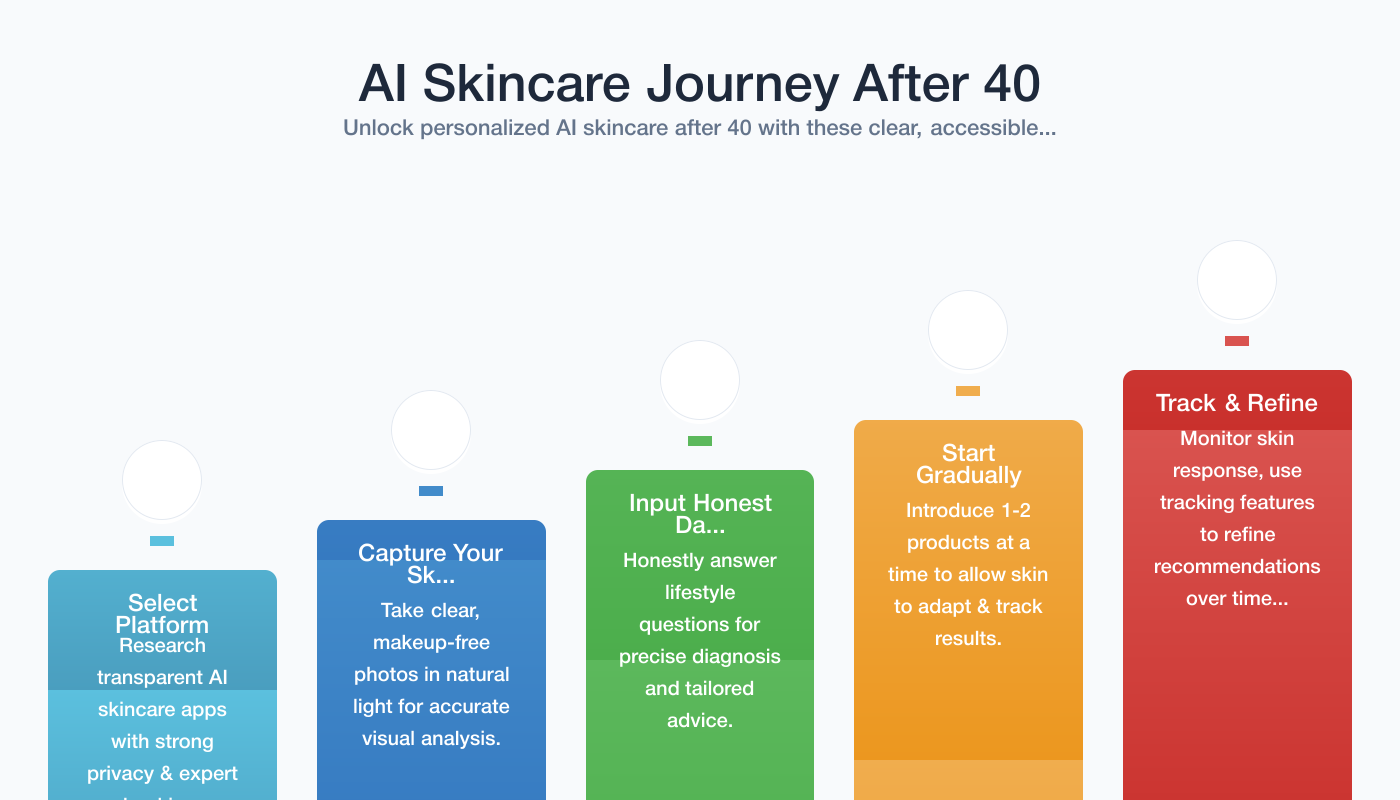
Venturing into AI-driven skincare is an accessible process. It begins with a few intentional steps designed to harness the technology's full potential for your skin. The goal is to provide the AI system with the precise data it needs to function as your virtual skincare advisor.
The efficacy of these platforms is built on vast datasets. For instance, the technology behind the Rodial AI Skin Assistant was developed using a foundation of over one million facial images and 100,000 expert consultations (Fierce Cosmetics Blog, 2023). This extensive training enables the AI to recognize nuanced skin concerns with accuracy.
- Select a Reputable Platform: Begin by researching AI skincare apps or websites. Look for platforms, such as CosmiSkin, that are transparent about their technology, data privacy policies, and the dermatological expertise informing their algorithms.
- Capture Your Canvas: For an accurate analysis, the system needs clear visual data. Take several photos of your face in good, natural daylight, ensuring your skin is clean and free of any makeup.
- Provide Honest Input: Most platforms use a questionnaire to complement the visual analysis. Answering questions about your specific skin concerns, lifestyle habits, and ultimate goals honestly is crucial for a precise skin diagnosis.
- Integrate, Don't Overhaul: When you receive your personalized recommendations, introduce one or two key products at a time. This gradual approach allows your skin to acclimate and makes it easier to identify which new additions are delivering results.
- Track and Refine: Consistent use is key, so monitor your skin’s response. Many tools include a feature for tracking progress. Engaging with this function helps the AI learn and refine its future recommendations.
Embracing this process thoughtfully is the first step toward unlocking a new level of radiance and skin health.
The Future is Radiant: What's Next for AI in Skincare?
Advancements in artificial intelligence are poised to further transform our approach to skin health, especially for women over 40.
AI is rapidly moving beyond current personalization towards a truly dynamic and predictive skincare paradigm. This future will integrate deeply personal biological data with real-time environmental factors. The goal is to shift from reactive treatments to proactive prevention, offering unparalleled precision in managing skin aging. Future AI systems are expected to incorporate data from wearable skin sensors and integrate genetic markers to enhance risk stratification for conditions like premature wrinkling and photoaging (PMC NCBI, 2025).
Here’s what to anticipate from the next wave of AI-driven skincare:
- Genetic Integration: AI will analyze unique genetic predispositions, such as tendencies for collagen degradation, to inform highly targeted preventative strategies.
- Continuous Monitoring: Wearable skin sensors will provide ongoing real-time data on hydration levels, pH balance, and environmental exposure, allowing for immediate adjustments.
- On-Demand Formulations: Expect ultra-precise, custom-formulated products created on demand that adapt daily to your skin's immediate needs.
- Predictive Health: Skincare will become truly predictive, identifying potential issues before visible signs appear and recommending interventions to maintain optimal skin health.
As technology advances, AI is poised to deliver even more deeply personalized and predictive skincare, empowering women over 40 to proactively manage their skin health with unprecedented precision.
We've journeyed through the landscape of AI skincare, revealing how this transformative technology is reshaping the way women over 40 approach beauty. From decoding individual skin needs to powering smart at-home devices, AI offers a new paradigm for achieving radiant, healthy skin.
As we look to the future, remember these core insights:
- AI empowers women over 40 with hyper-personalized skincare routines, leveraging advanced data analysis to precisely target individual concerns like wrinkles and loss of radiance.
- This technology utilizes predictive analytics to anticipate future skin concerns, enabling proactive care and making sophisticated, at-home treatments more accessible through smart devices.
- Crucially, AI skincare is a powerful enhancement tool, designed to optimize your regimen and provide data-driven insights, but it serves as a complement, not a substitute, for the guidance of a board-certified dermatologist.
Embracing AI in your skincare journey means stepping into a future where your routine is as unique as you are. It offers a significant opportunity for precision and efficacy, provided it is approached with an understanding of both its potential and its limitations. If you're ready to explore how data-driven beauty can elevate your routine, begin by researching reputable AI-powered platforms that encourage collaboration with dermatological professionals.
Tags
Related Articles
AI in Skincare: Unlock Your Best Complexion with Cosmi
Demystifying AI in Skincare: Your Guide to Intelligent Algorithms