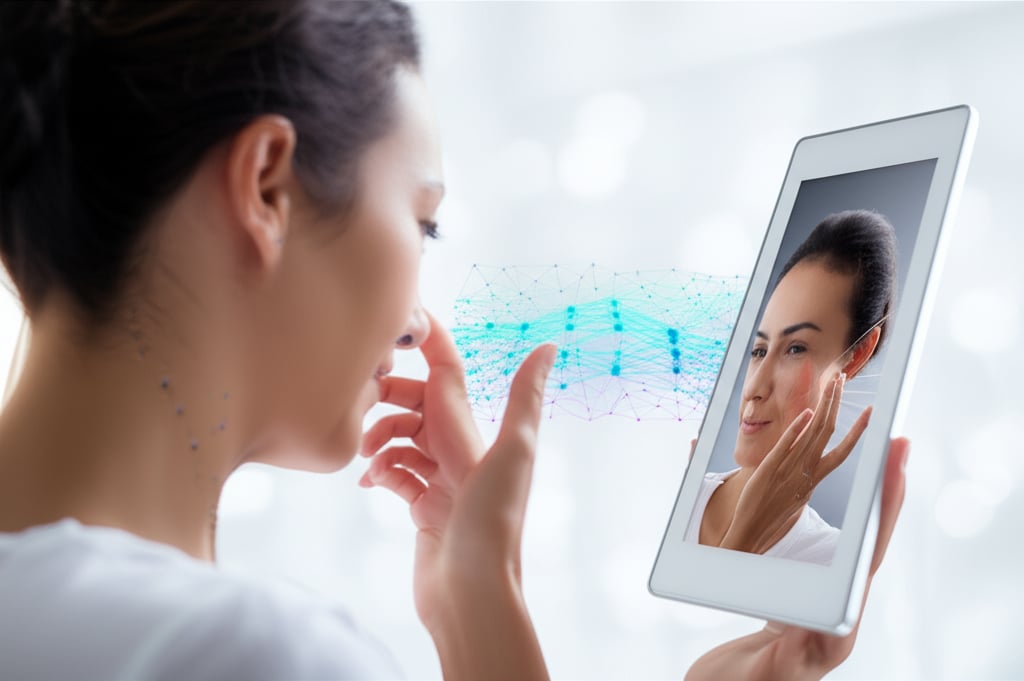
AI's Holistic Skin View: Beyond Products, Towards Wellness
Read about AI's Holistic Skin View: Beyond Products, Towards Wellness on Cosmi Skin
For decades, our understanding of skincare has largely revolved around the search for the 'holy grail' product—the serum, cream, or cleanser promising clear results. We meticulously curate routines and invest in trending ingredients, yet many of us still face persistent concerns, often feeling like we’re playing a game of trial and error. True, sustainable skin health is not simply found in a bottle, but is intricately woven into the fabric of our daily lives, influenced by factors we rarely consider in our beauty regimen.
This shift in perspective is precisely where Artificial Intelligence is transforming personal wellness. No longer confined to generic advice or static product lists, AI is moving us past the era of 'one-size-fits-all' recommendations, offering a deeply personalized understanding that goes far beyond surface-level observations of blemishes or dryness.
AI is fundamentally reshaping skincare by moving beyond product-centric solutions to embrace a truly holistic view of skin health, integrating diverse data points for adaptive, proactive, and personalized care.
In this blog post, we will explore how AI is ushering in a new skincare paradigm, moving away from conventional approaches. We'll delve into the concept of your skin's digital twin—a comprehensive AI-powered profile that sees beyond superficial concerns to understand the intricate connections between your skin, your lifestyle, and your overall wellness. Discover how AI crafts adaptive regimens built to evolve with your daily environment and habits, providing a level of personalized attention previously out of reach. We will also examine why AI acts as an invaluable ally in your skincare journey, providing proactive insights and support, and discuss the critical considerations needed to ensure this powerful technology is applied ethically and equitably.
TL;DR
The conversation around skincare is expanding far beyond the bathroom shelf, moving towards a more integrated vision of health. Artificial intelligence is leading this shift, transforming skincare from a product-focused regimen into a comprehensive wellness practice. This new model analyzes a wide array of personal and environmental data—from selfies to sleep patterns—to offer dynamic solutions. Research confirms a growing consumer need for tech-accelerated holistic beauty, as highlighted in reports from Kantar (2024).
This evolution involves several key changes:
- Comprehensive Data Analysis: AI platforms integrate visual analysis with inputs on diet, sleep, stress, and data from wearables like UV exposure sensors.
- Adaptive Recommendations: Advice is no longer static. Routines and product suggestions can change daily based on real-time environmental factors like pollution and humidity.
- Beyond Products: The focus extends to lifestyle modifications, such as dietary suggestions or stress management techniques, that directly impact skin health.
- Ethical Oversight: The industry must address critical challenges in data privacy and algorithmic bias to ensure equitable and secure applications for all users.
AI is not replacing dermatologists but is becoming a powerful data-gathering partner for achieving long-term skin health.
The End of 'One-Size-Fits-All': A New Skincare Paradigm
For decades, the path to healthy skin began with a simple choice from a limited menu: oily, dry, or combination. This model, while straightforward, overlooked the complex reality of our skin's ecosystem, often leading to a frustrating cycle of trial and error.
The inherent limitations of this generalized approach are giving way to a new paradigm of hyper-personalization. This shift recognizes that skin is a dynamic organ influenced by a vast web of factors, including genetics, lifestyle, diet, and environment. Instead of reactively treating broad symptom categories, the focus is evolving to proactively understand and support an individual's complete wellness profile.
This evolution is a market-wide transformation driven by informed consumers who demand more than superficial solutions. A 2024 report from Zenoti highlights that personalization is no longer a luxury but a core expectation in the beauty and wellness industries. Consumers are actively seeking routines that adapt to their unique biological and contextual needs, moving beyond the guesswork of mass-market products.
| Feature | Traditional Approach | AI-Powered Holistic Approach |
|---|---|---|
| Foundation | Broad skin types (oily, dry) | Individual data (genetics, lifestyle) |
| Goal | Reactive symptom treatment | Proactive wellness management |
| Products | Mass-market, one-size-fits-all | Tailored, adaptive recommendations |
| Factors | Primarily surface-level skin | Comprehensive (diet, stress, environment) |
Artificial intelligence is the core technology enabling this deeper level of care. An AI-driven analysis can process thousands of data points for one person—from local pollution levels and sleep patterns to hormonal fluctuations and stress indicators. By correlating these diverse inputs, AI can identify potential root causes of an issue like inflammation, connecting it to a recent dietary change rather than just recommending a generic anti-redness cream. Advanced platforms like Cosmi.skin provide this level of detailed analysis.
This holistic view marks a significant advancement, reframing skincare not as a battle against isolated imperfections but as an integral part of our overall health. Ultimately, the future of skincare lies in treating the individual, not just the skin type.
Your Skin's Digital Twin: How AI Sees Beyond the Surface
While your mirror reflects a static image of your skin, advanced AI creates a dynamic, living portrait of its underlying health. This process goes far beyond a simple selfie analysis to build a comprehensive understanding of your skin's unique behavior over time.

This intelligent system constructs a digital twin of your skin by synthesizing vast and varied data streams. It uses sophisticated computer vision algorithms to analyze high-resolution images, quantifying factors like fine lines, pore size, and pigmentation with clinical precision. This process moves beyond just identifying visible issues to understanding their severity and evolution, forming the foundation for truly personalized insights.
The efficacy of this approach is grounded in extensive data. AI models are trained on immense datasets, enabling them to recognize patterns that the human eye might miss. Research highlighted by Hale Cosmeceuticals (2024) shows that deep learning algorithms can evaluate skin conditions by referencing millions of annotated images, achieving a high degree of accuracy in their assessments.
To build this holistic profile, the AI integrates information from multiple sources, each providing a crucial piece of the puzzle.
| Data Stream | Source Examples | Key Metrics Analyzed |
|---|---|---|
| Visual Data | High-resolution photos from a smartphone | Wrinkles, texture, pore size, pigmentation, redness |
| Physiological Data | Wearable sensors or smart patches | Skin hydration, pH balance, sebum levels, UV exposure |
| Contextual Data | User-provided logs and questionnaires | Diet, sleep patterns, stress levels, local climate, genetics |
By cross-referencing these inputs, the AI develops a deep understanding of how internal and external factors impact your skin. This multi-dimensional analysis enables a shift from reactive problem-solving to proactive, predictive skincare tailored to your unique biology and lifestyle.
The Holistic Connection: Linking Skin to Overall Wellness
For decades, skincare has been viewed through a narrow lens, focusing almost exclusively on topical treatments for surface-level symptoms. We now understand that our skin is far more than a simple exterior; it is a dynamic organ that reflects our internal state and external environment.

Artificial intelligence is the key that unlocks this complex relationship. It moves beyond isolated symptoms to analyze the vast network of factors influencing skin health, from diet and sleep to pollution and stress. AI's true innovation is its ability to quantify and act upon the intricate links between our skin's condition, our lifestyle choices, and our environmental stressors. This treats the skin not as a separate entity, but as one vital part of a complete wellness system.
This connection is no longer theoretical. AI algorithms can now identify patterns that were previously invisible, correlating logged data points like high stress levels or poor sleep with specific skin responses. An extensive study highlighted by NCBI PMC (2025) used AI to analyze data from over one million women, finding significant correlations between acne severity and internal factors like diet alongside external factors like urban living and climate. This data-driven approach validates what many have long suspected: our skin is a direct messenger for our overall health.
The analysis also extends outward to our immediate surroundings. Advanced platforms now integrate real-time environmental data to provide proactive, location-based guidance. By processing information on the daily UV index, humidity levels, and air quality—including pollutants like PM2.5—AI can offer personalized advice that adapts to your specific environment. It might suggest a more robust antioxidant serum on a high-pollution day or recommend a richer moisturizer when humidity drops. This process, sometimes referred to as digital phenotyping, builds a comprehensive, real-time profile of your unique health and environmental context.
This shift represents a fundamental change in how we approach skincare, moving from a reactive model to a proactive, holistic one. The focus is less on fixing problems after they appear and more on creating an ecosystem of well-being where skin can thrive.
| Aspect | Traditional Skincare | AI-Powered Holistic Wellness |
|---|---|---|
| Primary Focus | Symptom-based (e.g., treating acne) | System-based (e.g., understanding acne triggers) |
| Data Inputs | Visual assessment, product ingredients | Lifestyle logs, environmental data, biometric sensors |
| Approach | Reactive and generalized | Proactive and hyper-personalized |
| Goal | Cosmetic improvement | Sustainable skin health and overall well-being |
This evolution in technology aligns with a growing consumer demand for a more integrated approach to health. Recent market analysis from Kantar (2024) reveals that today's consumers are actively seeking beauty solutions that address their emotional and physical well-being, not just their appearance. AI provides the engine to create and validate that narrative on an individual level.
By connecting the dots between our environment, our habits, and our skin's health, AI transforms skincare from a superficial routine into a deeply personalized wellness practice. It empowers us to listen to what our skin is telling us about our bodies and our lives, fostering a more intuitive and effective path to not just better skin, but better health.
The Adaptive Regimen: Personalized Care That Evolves Daily
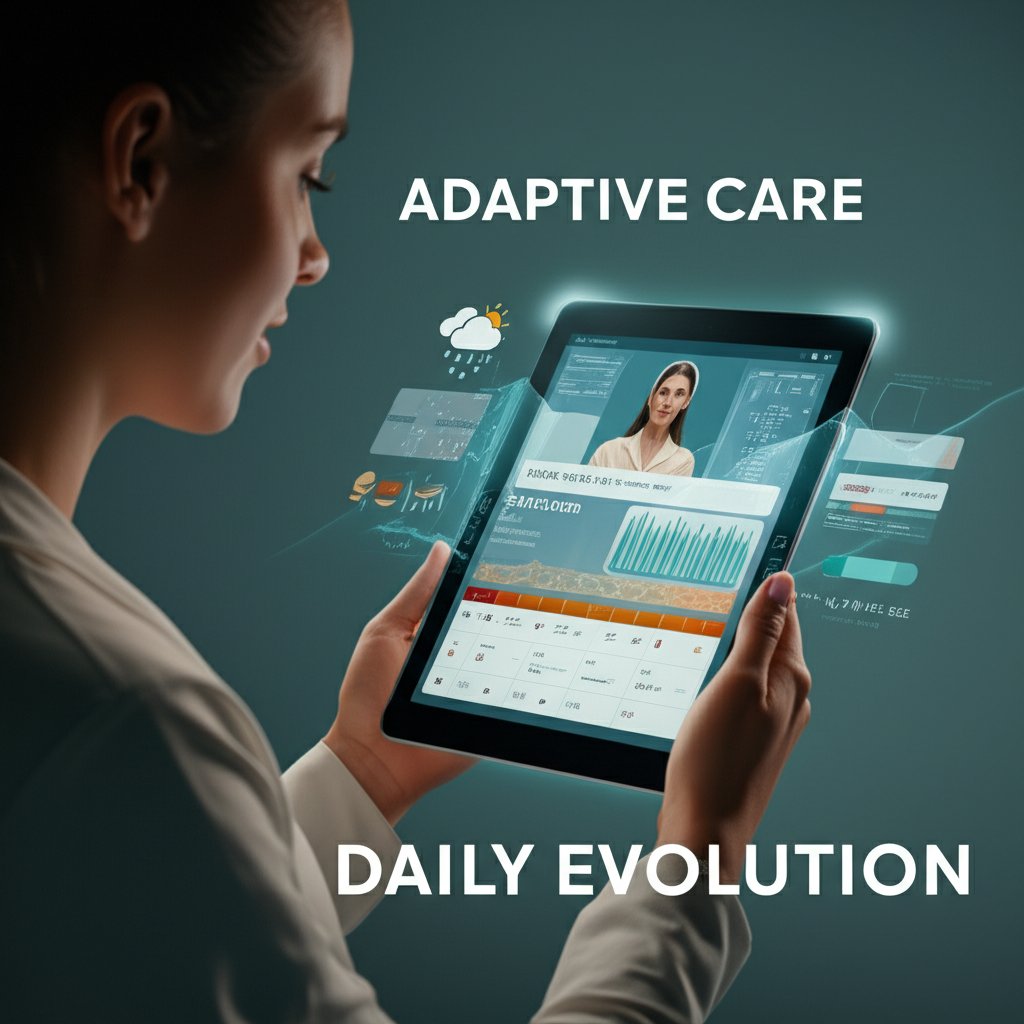
Traditional skincare routines are built on the principle of consistency, using the same products in the same order each day. While routine is valuable, this static approach overlooks a fundamental truth: our skin's needs are not static. They fluctuate constantly in response to our environment, lifestyle, and internal state.
An adaptive regimen is a dynamic care plan that AI tailors to your skin's immediate condition, moving beyond a fixed set of rules. By analyzing a confluence of real-time data—from local weather and air quality to your logged sleep and stress levels—the system intelligently adjusts its recommendations on a daily, or even hourly, basis. This ensures your skincare is always precisely aligned with your present needs, rather than being based on a generalized and often outdated skin type assessment.
This capability for continuous feedback and adjustment is where AI demonstrates its unique strength. Research from Hale Cosmeceuticals (2024) highlights how AI-driven platforms can interpret subtle changes in skin hydration or sensitivity to refine product suggestions dynamically. This is further supported by findings from NCBI PMC (2025), which detail how continuous monitoring allows algorithms to identify emerging concerns before they become visible, recommending preventative action.
This dynamic guidance translates into practical, easy-to-follow daily adjustments that integrate both product use and wellness habits. Here is what a week with an adaptive regimen might look like:
- Monday (High Humidity & Air Quality Alert): The system recommends switching from a heavy cream to a lightweight, gel-based moisturizer to prevent congestion. It also adds an antioxidant serum to the morning routine to counteract environmental aggressors and sends a notification to increase water intake.
- Wednesday (High UV Index): Your regimen prioritizes a broad-spectrum SPF 50 and sends a reminder for reapplication in the early afternoon. The evening routine focuses on repair, suggesting a product with niacinamide to help mitigate potential sun-induced inflammation.
- Friday (Logged Stressful Day & Poor Sleep): The AI detects potential signs of fatigue and stress. It suggests a calming, anti-inflammatory mask in the evening, paired with a lifestyle tip to aim for an additional 30 minutes of sleep to support the skin's natural repair cycle.
- Sunday (Clear & Calm): With no significant external or internal stressors detected, the regimen simplifies to focus on maintenance and nourishment. It recommends a gentle cleanser, a hydrating essence, and a basic moisturizer to support a healthy skin barrier.
This level of personalization transforms skincare from a fixed set of steps into a living dialogue between you and your skin. It ensures that every application and every lifestyle choice is purposeful, targeted, and effective for that specific moment in time.
Holistic AI elevates skincare from a static routine to a dynamic daily practice that provides real-time product and lifestyle guidance tailored to your immediate needs.
The Human in the Loop: AI as an Ally, Not an Oracle
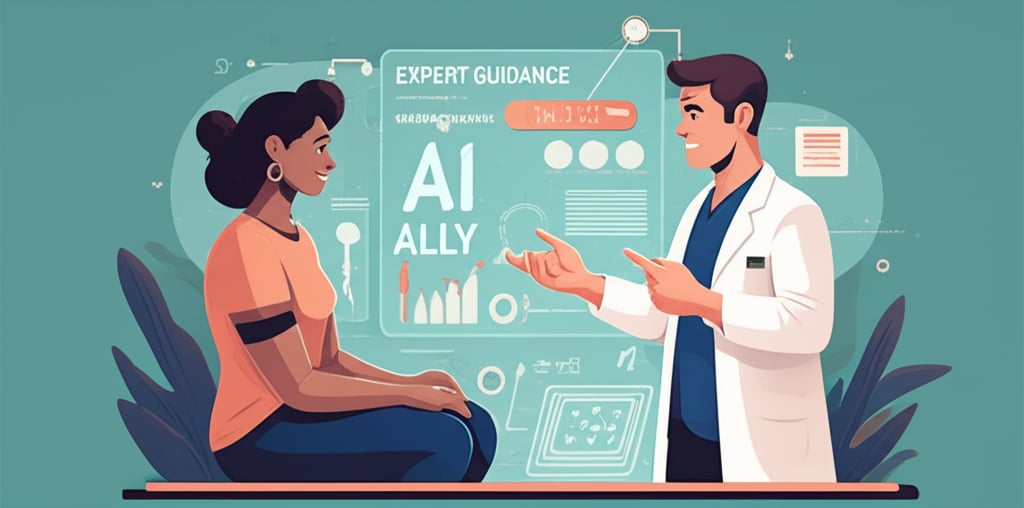
As artificial intelligence integrates into our daily wellness routines, a common question arises: will it replace trusted human experts? The answer in skincare is a definitive no; instead, it promises a more powerful partnership.
AI tools are not designed to replace a dermatologist’s medical diagnosis or nuanced understanding. Their primary function is to serve as a sophisticated data-gathering assistant, meticulously tracking skin changes, lifestyle factors, and product responses over time. This continuous stream of longitudinal data empowers patients to have more informed, productive conversations with their doctors, transforming appointments from brief snapshots into comprehensive reviews.
This collaborative potential is supported by ongoing research. A recent analysis found that an AI algorithm for acne grading achieved a 68% agreement rate with dermatologists, a figure that approximates the typical level of agreement observed between different human specialists (NCBI PMC 2025). This shows AI can provide a consistent baseline, but it does not replicate the crucial diagnostic nuance a physician provides. By automating data analysis, AI allows healthcare professionals to focus on interpretation, patient education, and building trust.
The synergy between patient, AI, and dermatologist unfolds in a clear, beneficial cycle:
- Data Collection: The patient uses an AI-powered tool to log daily photos, product usage, diet, and environmental exposures.
- Pattern Recognition: The AI platform processes this information to identify subtle patterns, correlations, and potential flare-up triggers that might otherwise go unnoticed.
- Informed Consultation: The patient shares a comprehensive, data-rich report during their dermatology appointment.
- Expert Interpretation: The dermatologist leverages this objective, long-term data to validate observations, refine their diagnosis, and personalize treatment plans with greater precision.
Ultimately, the most effective approach to skin wellness combines the robust data-gathering power of AI with the irreplaceable expertise and empathy of a medical professional.
The Fine Print: Navigating Data Privacy and Algorithmic Bias
As we embrace AI for personalized skincare, the data we share—from facial scans to lifestyle habits—becomes the currency of customization. This exchange requires a critical examination of the ethical framework supporting these powerful technologies.
The immense promise of AI is tempered by significant hurdles, primarily data privacy and algorithmic bias. AI platforms require vast amounts of personal health information, creating vulnerabilities if not managed with stringent security protocols. Concurrently, the efficacy of these platforms depends entirely on their training data. If these datasets are not representative of diverse skin tones and types, the AI can perpetuate and even amplify existing disparities in dermatological care, offering less accurate analyses for underrepresented groups.
The risk is not merely theoretical. Research highlights that the collection and storage of sensitive biometric data in cosmetic AI applications pose significant privacy challenges (NCBI PMC 2025). Furthermore, a report from Hale Cosmeceuticals (2024) confirms that AI models trained predominantly on lighter skin tones can generate flawed recommendations for individuals with darker skin, particularly concerning conditions like hyperpigmentation. This erodes confidence, a point underscored by consumer watchdog Glimmer Goddess, which reports that trust declines sharply when users perceive a lack of transparency in how their data is used.
| Ethical Challenge | Description | Potential Impact on User |
|---|---|---|
| Data Privacy | Collection and storage of sensitive personal data, including facial images, health history, and lifestyle inputs. | Risk of data breaches, unauthorized use of personal images, or sale of health information to third parties. |
| Algorithmic Bias | AI models trained on non-diverse datasets that over-represent certain skin tones (typically lighter). | Inaccurate skin analysis, ineffective product recommendations, and failure to correctly identify conditions on darker skin. |
| Over-Reliance | Treating AI recommendations as a substitute for professional medical diagnosis from a dermatologist. | Misdiagnosis of minor issues, or failure to detect serious underlying conditions like melanoma that require expert evaluation. |
Addressing these issues requires a multi-pronged approach encompassing robust industry regulations, transparent corporate data policies, and a commitment to building ethically sound, inclusive AI. For the user, the path forward involves engaging with these tools critically, demanding transparency, and always viewing AI as a supplement to, not a replacement for, professional dermatological care.
The Future is Proactive: What's Next for Skin Wellness?
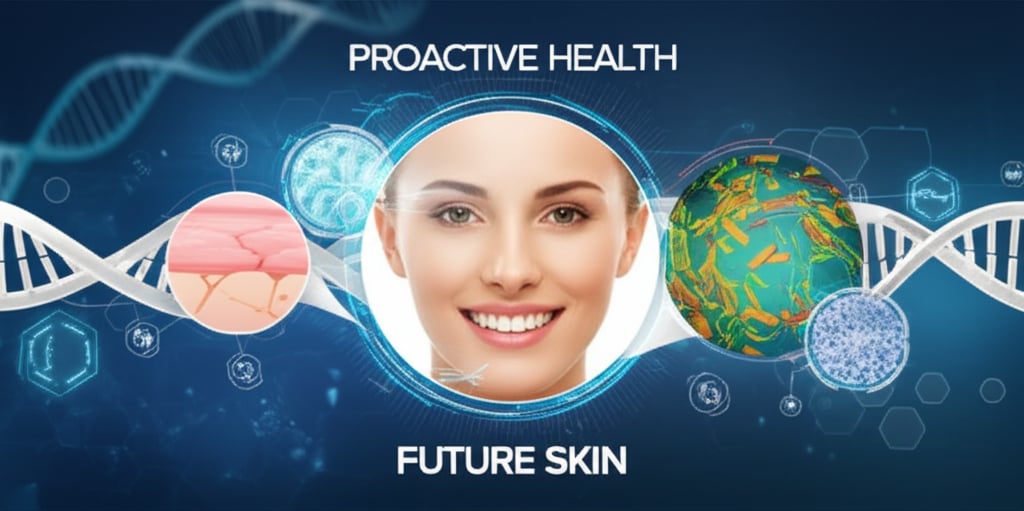
Our journey with AI in skincare has already transformed how we understand and manage skin health. Yet, this is merely the beginning of a profound shift towards truly proactive and personalized wellness.
The evolution of AI is pushing us towards a future where skin health is managed as a dynamic part of our overall well-being. This paradigm shift emphasizes preventative and predictive models, moving beyond reactive treatments to anticipate and mitigate concerns before they arise. This hyper-personalized approach will empower individuals with unprecedented control over their lifelong skin vitality.
Future innovations will integrate genetic data to predict individual predispositions to specific skin conditions, offering highly targeted preventative strategies (Hale Cosmeceuticals, 2024). Furthermore, advancements like real-time skin microbiome analysis are expected to provide unprecedented insights into the skin's delicate bacterial balance, allowing for dynamic adjustments to care routines (NCBI PMC, 2025).
- Genetic Integration: Future innovations will likely include integration with genetic data to predict an individual's predispositions to certain skin conditions, enabling highly targeted preventative strategies.
- Microbiome Mapping: Real-time skin microbiome analysis could provide unprecedented insights into the skin's delicate bacterial balance, allowing for dynamic, immediate adjustments to care routines.
- Preventative Health Ecosystems: The convergence of beauty tech, preventative health, and wellness will deepen, creating a single, integrated ecosystem for personal care.
- AI as Co-Creator: AI is set to revolutionize product development by acting as a co-creator, analyzing consumer feedback and preferences to shape future products.
The convergence of beauty tech, preventative health, and wellness will deepen, creating a single, integrated ecosystem where maintaining optimal skin health is seamless and intuitive.
As we've explored, Artificial Intelligence is fundamentally redefining our relationship with skin health, moving far beyond the simplistic recommendation of products. We are entering an era where skincare is no longer a guessing game but a precise, data-driven journey towards true wellness.
Here are the key shifts AI brings to your skincare journey:
- Holistic Integration: AI moves skincare beyond surface-level concerns, integrating crucial lifestyle, environmental, and wellness data to offer a truly holistic skin view.
- Dynamic Personalization: Leveraging digital twins and diverse data inputs, AI creates adaptive, evolving skincare regimens that perfectly align with your skin's unique and changing needs.
- Empowered Partnership: AI serves as an intelligent ally, empowering individuals and dermatologists with deeper insights, fostering proactive care and informed decisions while emphasizing ethical data practices.
This transformative shift ensures that your skincare is as unique as you are, responsive to daily fluctuations, and deeply connected to your overall well-being. It promises a future where skincare isn't just about what you apply, but how you live, fostering skin health from the inside out.
For those eager to embrace this new frontier, consider exploring advanced AI-powered skincare solutions that offer personalized analyses and adaptive routines. Engaging with these smart tools can provide unprecedented insights into your skin's unique story and guide you towards achieving your most radiant, healthy complexion yet.
Tags
Related Articles

Unlock Your Natural Glow: AI's Holistic Approach to Skin Health
Demystifying AI in Skincare: Your Guide to Intelligent Algorithms